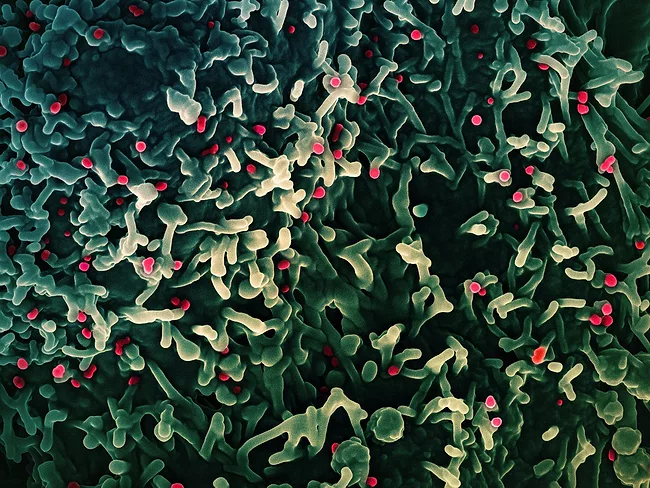
Researchers from Rhodes University and collaborators identified MMV-1645152 after screening the Medicines for Malaria Venture (MMV) pandemic response box for non-cytotoxic inhibitors of Kaposi's sarcoma-associated herpesvirus (KSHV) replication.
Clostridioides difficile has been traditionally isolated from healthcare facilities' inpatients, but it is increasingly being identified in people who have not recently been hospitalized and is more and more found in community settings. Investigators from Perelman School of Medicine at University of Pennsylvania have developed an mRNA-LNP vaccine with promising results in preventing and controlling C. difficile infection.
Tonix Pharmaceuticals Holding Corp. has entered into an artificial Intelligence and machine learning research collaboration with X-Chem Inc. to accelerate development of Tonix’s oral broad-spectrum antivirals for medical countermeasures.
The COVID-19 pandemic pushed the urgency for effective antiviral drugs against coronaviruses. Researchers from Europe conducted machine learning and in vitro validation experiments for the identification of potential antiviral drugs effective against coronaviruses.
It was hypothesized that the MEK1/2 inhibitor ATR-002 could reduce inflammation and clear Staphylococcus aureus infection during cystic fibrosis, thus potentially showing a dual effect.
RTI International has divulged vancomycin derivatives with siderophore modification reported to be useful for the treatment of gram-negative and gram-positive bacterial infections.
Gigagen Inc., a subsidiary of Grifols SA, has been awarded a contract by the U.S. Biomedical Advanced Research and Development Authority (BARDA) to develop a recombinant polyclonal antibody therapy for botulinum neurotoxins and a second biothreat of interest yet to be determined.
 RSS
RSS