Researchers at Centre Hospitalier Universitaire de Grenoble Alpes, Centre National de la Recherche Scientifique, Commissariat à l’Energie Atomique, Institut National de la Santé et de la Recherche Médicale, Université Grenoble Alpes and Université Libre de Bruxelles have synthesized calix[4]arene compounds reported to be useful for treatment of cancer, metastatic cancer, and bacterial, viral, fungal and parasitic infections.
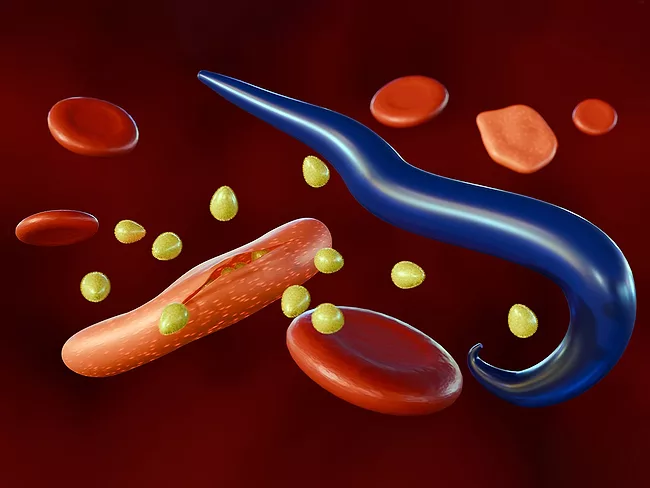
Novel antimalarials are urgently needed to face the challenge of increasing parasite resistance. The isoprenoid precursor biosynthesis pathway is an attractive target for developing novel antimalarial drugs, being an essential and specific pathway in apicomplexan parasites.
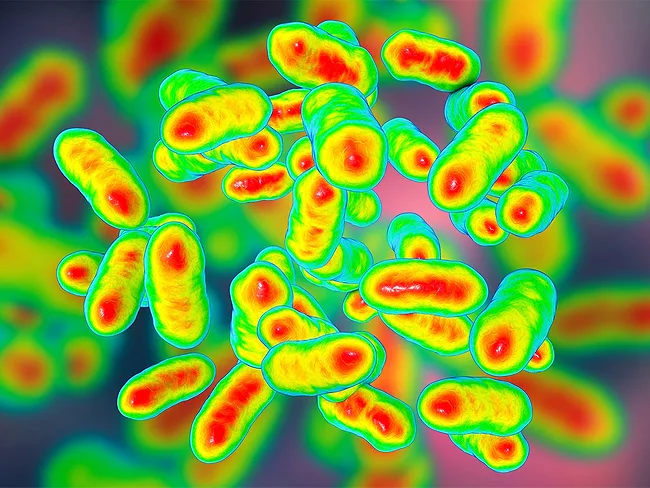
Methicillin-resistant Staphylococcus aureus (MRSA) is one of the main causes of both community-acquired and hospital-acquired infections and has become resistant to almost all known available antibiotics. Researchers from Hong Kong Polytechnic University and collaborators reported on a new series of indole-benzosulfonamide oleanolic acid derivatives with the potential to be used against multidrug-resistant bacteria.
The gastrointestinal tract could be key to developing new drugs to combat resistant bacteria. Computational analysis of the human microbiome has revealed a new class of peptides with antimicrobial potential that, once synthesized, inhibited the growth of several microorganisms in vitro and in vivo.
Researchers at De Montfort University and Loughborough University have identified trifluoroquinazolines acting as lysyl tRNA synthetase (KARS) inhibitors reported to be useful for the treatment of parasitic infections.
Rockefeller University has disclosed non-structural protein 3 (nsp3; PL-PRO) (SARS-CoV-2; COVID-19 virus) inhibitors reported to be useful for the treatment of SARS-CoV-2 infection (COVID-19).
Following the World Health Organization’s escalation of mpox to a public health emergency of international concern on Aug. 14 and the emergence of what appears to be a more severe strain of the orthopoxvirus, the spotlight has focused on a handful of companies working on vaccines and antivirals. Shares of Geovax Labs Inc., Emergent Biosolutions Inc. and Tonix Pharmaceuticals Inc. were all trading up Aug. 19.
Researchers have identified a gene associated with whether patients hospitalized with respiratory viral infections recover rapidly or face life-threatening complications. The gene has the potential to be used as a diagnostic tool or biomarker, which could help triage patients suffering from severe respiratory infections. Having such a biomarker would help clinicians in their early risk assessments to manage their intervention strategies.
Human rhinoviruses (hRVs) are associated with upper respiratory tract infections such as the common cold, otitis media or sinusitis. In immunocompromised individuals or older people, hRVs can exacerbate existing pulmonary conditions such as asthma or chronic obstructive pulmonary disease.
“There are hundreds of strains of bird flu, and most of them don’t infect humans, or even mammals,” Stephen Cusack told BioWorld. “There are two main reasons for that.” To be able to cause an infection, a virus “has to be able to get into the cell, and for that it needs a receptor,” Cusack said. For influenza viruses, those receptors are hemagglutinin receptors, and they differ in subtle but important ways between birds and mammals.

 RSS
RSS