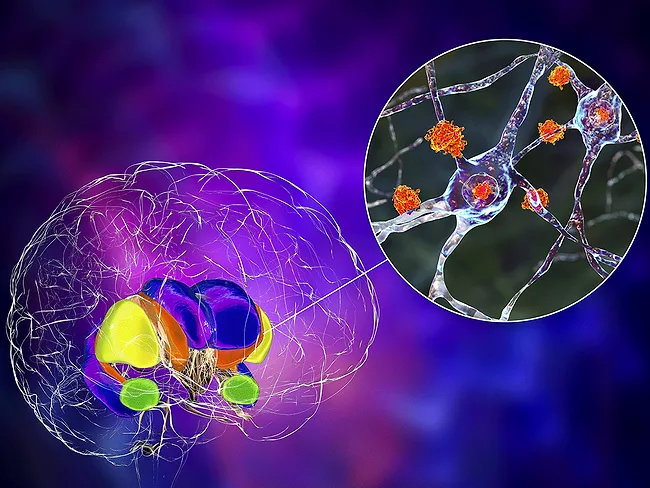
The gene for Huntington’s disease “was cloned in 1993, and everyone thought there was going to be a treatment right around the corner,” Sarah Tabrizi told the audience at the 2023 Annual Meeting of the Society for Neuroscience. Then, “it took 25 years for the first trial targeting the Huntington gene.”
Paxmedica Inc.’s shares (NASDAQ:PXMD) surged by 179% in early trading Nov. 7 after reporting the publication of phase II autism spectrum disorder results for PAX-101 (suramin) intravenous infusions. Suramin, an anti-trypanosomal and anti-purinergic agent introduced in 1923 for East African sleeping sickness, showed a statistically significant improvement at the 10-mg/kg dose in a secondary endpoint of Clinical Global Impressions – Improvement scale vs. placebo.
Electrical stimulation of the spinal cord has restored the ability to walk normally to a patient whose chronic Parkinson’s disease (PD) had led to severe motor deficits, researchers reported in the Nov. 6, 2023, online issue of Nature Medicine.
The latest firm to brave the rough IPO market, Lexeo Therapeutics Inc. made its Nasdaq debut after pricing about 9.1 million shares at $11 per share, raising proceeds of $100 million to advance its early clinical work on gene therapies for cardiovascular and neurological diseases.
The pivotal phase III study of brilaroxazine from Reviva Pharmaceuticals Holdings Inc. for adults with schizophrenia hit its primary endpoint and two key secondary endpoints, following positive phase II data in 2021. The serotonin-dopamine signaling modulator, the company’s lead candidate, is a once-daily treatment. Results from the study showed brilaroxazine demonstrated reductions in all major symptom domains for the patients and the secondary endpoints at week 4 when comparing the 50-mg dose with placebo.
ABVC Biopharma Inc. entered a multiyear, global licensing agreement for its CNS drugs to treat major depressive disorder and attention deficit hyperactivity disorder. The license deal with Aibtl Biopharma Inc. would cover clinical trial, registration, manufacturing, supply and distribution rights. The products were valued at $667 million by a third party, according to ABVC.
Bioxcel Therapeutics Inc. said a third-party audit of data from its Tranquility II phase III study came back clean, potentially positioning the firm to submit the statistically significant results in a supplemental NDA seeking approval of BXCL-501 in treating agitation associated with dementia in probable Alzheimer’s disease.
Royalty monetization is a financing tactic that is becoming increasingly popular during challenging times, and PTC Therapeutics Inc. is the latest firm to leverage a marketed drug to pay off debt and fuel its development pipeline. The South Plainfield, N.J.-based company agreed to sell up to $1.5 billion of its Evrysdi (risdiplam) royalty stream to Royalty Pharma plc, of New York. Evrysdi is a survival motor neuron 2 RNA splicing modifier approved by the U.S. FDA in 2020 to treat spinal muscular atrophy.
Monte Rosa Therapeutics Inc. has cut a deal with Roche Holding AG that brings the molecular glue degrader-based medicines developer an up-front $50 million and the possibility of more than $2 billion in milestone payments. The Boston-based company coupled the deal by releasing positive interim data from the phase I dose-escalation portion of its phase I/II open-label, multisite study of MRT-2359 in Myc-driven solid tumors.
The EMA is standing firm on its refusal to recommend approval of the amyotrophic lateral sclerosis (ALS) treatment Albrioza in Europe after re-examining Amylyx Pharmaceuticals Inc.’s marketing authorization application and remaining unconvinced that the main study demonstrated the drug effectively slows disease progression.
 RSS
RSS