Eli Lilly and Co. plans to buy Centessa Pharmaceuticals plc for $6.3 billion in up-front cash and another potential $1.5 billion through contingent value rights, gaining access to a pipeline of orexin receptor 2 agonists for sleep disorders. The Indianapolis-based pharma is re-entering a field that has multibillion-dollar potential and one that could emulate the success seen with its obesity program. Centessa, of Boston and London, has a lead candidate, cleminorexton (formerly ORX-750), with positive phase IIa data in narcolepsy types 1 and 2 and idiopathic hypersomnia.
Montclair State University and the University of Maryland have discovered new dual 3’,5’-cyclic-AMP and -GMP phosphodiesterase 11A4 (PDE11A4) inhibitors potentially useful for the treatment of cognitive disorders.
Marvel Biosciences Corp., together with its wholly owned subsidiary Marvel Biotechnology Inc., has announced nondilutive funding from the Alberta Innovates CarE (AICE) market access program to support progression into the clinic and phase I testing of lead compound, MB-204. MB-204, a fluorinated derivative version of istradefylline, offers potential as a new approach totreating autism spectrum disorders and related conditions, addressing socio-behavioral symptoms through a differentiated mechanism.
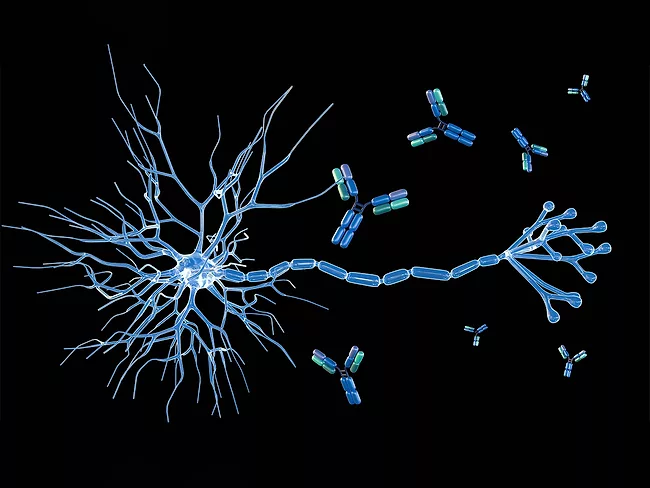
Certain cancers, such as triple-negative breast cancer, produce antibodies that, although they help fight the tumor, can cross the blood-brain barrier and alter the function of NMDA receptors (NMDAR) in the brain, which are essential for neuronal signaling. Scientists at Cold Spring Harbor Laboratory (CSHL) have identified their origin and described how this process is linked to the maturation of these antibodies, which can activate or inhibit the receptor, causing neurological and psychiatric symptoms.
Otsuka Pharmaceutical Co. Ltd. is taking a neuroplastogen approach to posttraumatic stress disorder (PTSD) through its planned $1.22 billion acquisition of Transcend Therapeutics Inc. The deal gives Tokyo-headquartered Otsuka access to Transcend’s lead asset, TSND-201, an oral neuroplastogen that has begun patient recruitment for a phase III study in the U.S.
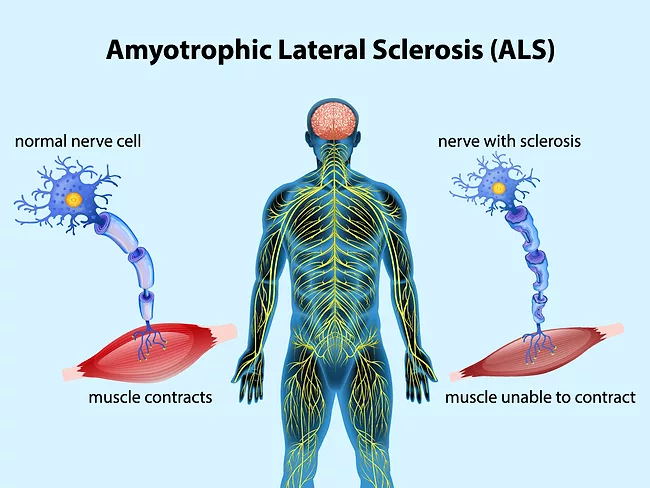
Amyotrophic lateral sclerosis (ALS) is a fatal neurodegenerative disease characterized by the progressive degeneration of motor neurons, leading to muscle wasting and paralysis, among others. Due to its high clinical heterogeneity, effective therapies are still not available.
Parkinson’s disease is a progressive neurodegenerative disorder best known for its motor symptoms. However, a proportion of patients also develop dementia as the condition advances. Yet the biological divide between those who experience this cognitive decline and those who do not has remained an open question. Are they different conditions or simply stages of the same disease?
Microglia play a central role in the neuroinflammation associated with Alzheimer’s disease (AD). At the 20th International Conference on Alzheimer’s and Parkinson’s Diseases (AD/PD), scientists focused on TREM2, a microglial receptor that regulates immune responses, exploring new ways to address neuroinflammation.
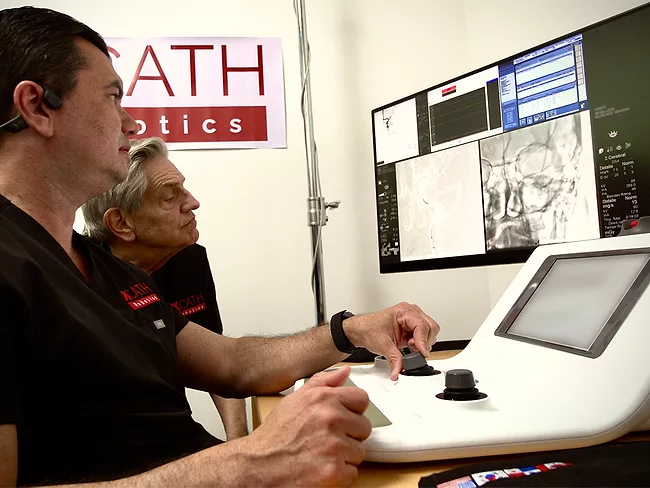
As robotic-assisted surgery platforms increasingly demonstrate that they can perform telesurgery safely, the question now is how soon remote operations will become part of routine clinical care. Eduardo Fonseca, CEO of Xcath Robotics Inc., reckons that within a decade the company’s Iris Surgical Robotic System could be in widespread use.
 RSS
RSS