The U.K. is setting up a nationwide registry of people with dementia, who will be pre-screened and consented, to speed up recruitment to clinical trials and collect real-world evidence of effectiveness once therapies are approved.
Vastpro (Shanghai) Pharmaceutical Technology Development Co. Ltd. has patented new voltage-gated sodium channel blockers potentially useful for the treatment of pain.
Researchers from Connecta Therapeutics SL and the Centre for Genomic Regulation (Barcelona Institute of Science and Technology) recently presented preclinical results on CTH-120, a potential first-in-class allosteric modulator of tropomyosin receptor kinase B (TrkB) designed to enhance neuroplasticity and restore neuronal function in fragile X syndrome.
Researchers from United Arab Emirates University presented the preclinical characterization of ST-2657, a dual G9a/H3R modulator, in a preclinical model of autism.
The Alzheimer’s Association International Conference (AAIC) is the world’s biggest dementia conference. And at the AAIC 2026 meeting, there is big buzz around tau. Sunday’s plenary speaker Ryan Watts, CEO of Denali Therapeutics Inc., highlighted tau-lowering agents as being among the most exciting themes of the conference. “At this conference, we’re going to see additional clinical data that may validate [tau as] a second target in Alzheimer’s disease, amyloid being the first,” he told the audience.
Vailima Peninsula Pty Ltd. has discovered new nuclear factor erythroid 2-related factor 2 (NFE2L2; NRF2) activators potentially useful for the treatment of neurodegeneration and inflammatory disorders.
Researchers from Flavii Therapeutics SL and collaborators presented preclinical data on FLAV-27, a G9a inhibitor designed to target G9a-mediated epigenetic dysregulation.
Mindbeam AI has leveraged generative AI to accelerate the discovery of novel pain therapeutics predicted to have improved liver safety compared to acetaminophen.
The Advanced Research Projects Agency for Health (ARPA-H), an agency within the U.S. Department of Health and Human Services, has announced the teams for the THRIVE (Treating Hereditary Rare diseases with In Vivo prEcision genetic medicines) program. With a commitment of up to $160 million over 5 years, THRIVE aims to accelerate solutions for rare genetic pediatric diseases across multiple technological approaches, clinical trial designs and deployment models.
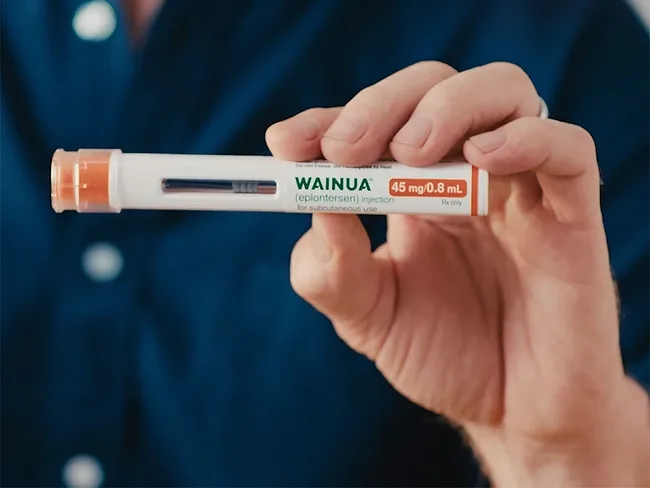
News of the unexpected phase III failure of the gene silencing drug Wainua (eplontersen) in the treatment of transthyretin-mediated amyloid cardiomyopathy sent Astrazeneca plc’s shares (NYSE:AZN) down $10.88 to close July 9 at $178.40.
 RSS
RSS