X-tosis Inc. has been awarded a $2.74 million grant from The Michael J. Fox Foundation for Parkinson’s Research (MJFF) to support advancement of XTS-001, the lead candidate from the company’s Mitoxts platform, toward clinical development for the treatment of Parkinson’s disease. The grant will support confirmatory studies, biomarker development and IND-enabling work.
Some proteins embedded in the structure of prions may have antimicrobial activity, according to a study led by scientists at the University of Pennsylvania. An AI analysis of millions of fragments from prion-related proteins has revealed more than a thousand peptides that disrupt bacterial membranes and reduce infection in animal models, suggesting these proteins could be an unexpected source of new antibiotics.
Tissium SA secured €60 million (US$68 million) in a financing package, which includes €30 million in a series D2 round and a €30 million facility from the European Investment Bank. The funds will be used to support the company's commercial and clinical activities, as well as its pipeline development and expansion of its platform technology, which removes the need for sutures and leads to better nerve repair.
SK Biopharmaceuticals Co. Ltd. is doubling down on AI-powered drug discovery through a new collaboration with Insilico Medicine Inc. valued at more than $2.5 billion. The milestone-heavy deal, announced at the BIO International Convention in San Diego June 22, will pair Insilico’s Pharma.AI platform with SK Biopharm’s central nervous system (CNS) drug development and commercialization capabilities, underscoring Korean and global biopharma efforts to embed AI across the entire R&D lifecycle.
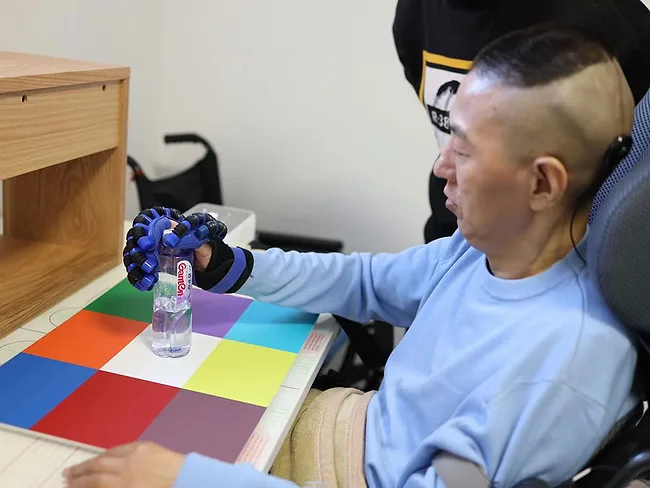
Decades of research are helping unravel the “black box” of the brain. The second article in BioWorld’s series on the Brain-Computer Interface (BCI) field looks at how simultaneous breakthroughs in AI technology are pushing the BCI field from a theoretical concept to a potential real-world, clinical option for individuals, particularly in China where the National Medical Products Administration greenlighted the world’s first invasive BCI system – Neuracle Medical Technology Co. Ltd.’s Neural Electronic Opportunity – for clinical use in March 2026.
Janssen Pharmaceutica NV has synthesized endosomal/lysosomal proton channel TMEM175 activators reported to be useful for the treatment of Parkinson’s disease.
Matricelf Ltd. has initiated a pivotal IND-enabling efficacy study evaluating its engineered human neural tissue implant for the treatment of chronic spinal cord injury.
Researchers from Bayer AG reported the discovery and preclinical characterization of BAY-439, a potent and selective hPLA2-G5 inhibitor, in models of pain.
Anhorn Medicines Co. Ltd. has obtained IND clearance from the FDA for its lead neuroprotective candidate, AH-008, for the prevention of chemotherapy-induced peripheral neuropathy.
Lys Therapeutics SAS is advancing LYS-241 toward the clinic with the support of more than €25 million (US$33 million) in funding raised since the company’s inception in 2021. The financing includes a grant of more than $5 million from The Michael J. Fox Foundation.
 RSS
RSS