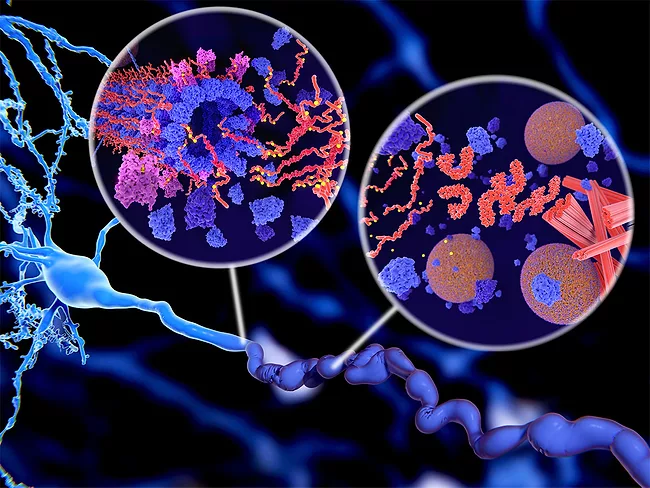
Microglia play a central role in the neuroinflammation associated with Alzheimer’s disease (AD). These cells act as the brain’s immune system and respond to damage signals such as amyloid accumulation. When the process starts, the initial microglial response can be protective. However, in later stages, this response becomes dysfunctional and contributes to disease progression. At the 20th International Conference on Alzheimer’s and Parkinson’s Diseases (AD/PD), scientists focused on TREM2, a microglial receptor that regulates immune responses, exploring new ways to address neuroinflammation.
The Institute of Materia Medica Chinese Academy of Medical Sciences and the Peking Union Medical College have reported magnolol/honokiol nitrone derivatives acting as nitric oxide (NO) production inhibitors for the potential treatment of amyotrophic lateral sclerosis, traumatic brain injury, cerebral infarction, autoimmune disease, and respiratory tract and skin inflammation, among others.
To overcome the limitations regarding conventional immunotherapy for treating tauopathies, researchers from Sanofi SA aimed to improve brain exposure and targeting pathological tau species by optimizing antibody design.
Gene editing holds promise for treating neuromuscular disorders such as limb-girdle muscular dystrophy, but its clinical translation remains challenging due to a lack of complementary delivery tools for the extensive network of skeletal muscles in the human body. A team at University of Massachusetts Chan Medical School compared editing outcomes mediated by either Cas9 mRNA and RNP delivery to skeletal muscle via local injection in the context of the previously described selective organ targeting (SORT) lipid nanoparticles (LNPs) platform.
Discoveric Bio Alpha Ltd. and collaborators have presented data regarding the rationale and design of NIDB-3101, a third-generation, human IgG1 anti-tau biparatopic antibody for the treatment of Alzheimer’s disease (AD).
AI and advanced biotechnology are reshaping South Korea’s med-tech sector, but great technology alone is not enough to build a successful medical device company, speakers said at MedTech Innovator’s Medtech Spotlight: New Impact Korea 2026.
At BioEurope Spring 2026, pharma representatives and investors shared their thoughts about current and future landscapes of different disease areas, and on how to move toward success – both at the level of individual companies and for indications as a whole.
Soluble amyloid-β oligomers (AβOs) are known early drivers of Alzheimer’s disease pathogenesis. Acumen Pharmaceuticals Inc. has recently presented data generated in the development and characterization of anti-AβO antibodies with high selectivity for AβO over Aβ monomers.
Insitro Inc. has expanded its strategic collaboration with Bristol Myers Squibb Co. to advance a broadened portfolio of therapeutic programs for amyotrophic lateral sclerosis (ALS).
AI and advanced biotechnology are reshaping South Korea’s med-tech sector, but great technology alone is not enough to build a successful medical device company, speakers said at MedTech Innovator’s Medtech Spotlight: New Impact Korea 2026.
 RSS
RSS