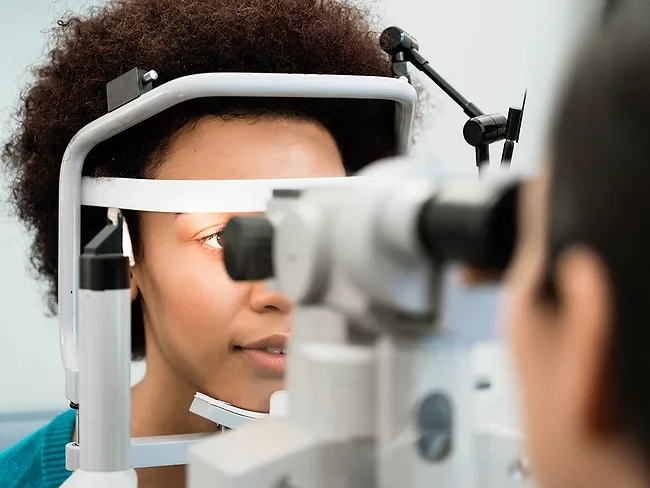
Researchers are closer to better diagnosing and treating age-related macular degeneration (AMD) after discovering new genetic signatures of the disease by reprogramming stem cells to generate high-resolution disease models.
Frontera Therapeutics Inc. raised $160 million in a series B funding round to develop its lead gene therapy product candidate for retinal disease, FT-001, for which INDs have been approved by the U.S. FDA and China NMPA.
China’s National Medical Products Administration (NMPA) approved Ocumension Therapeutics Ltd.’s and Eyepoint Pharmaceuticals Inc.’s drug-device combination product, Yutiq (fluocinolone acetonide intravitreal implant), for chronic non-infectious uveitis affecting the posterior segment of the eye.
Kriya Therapeutics Inc. has raised a $270 million series C financing to further develop its pipeline of gene therapies for treating cancer, ophthalmological problems, and rare and chronic diseases. The Redwood City, Calif.-based company has greatly expanded its employee roster, from about seven people to around 160 people, since its $80 million series A in May 2020 and scaled its learning-enabled tech and cloud computing abilities. It also further solidified its technology, manufacturing, R&D, and therapeutics units, something it plans to continue with the series C money.
Although gene therapy is now “a clinical reality,” it still remains an early stage therapeutic modality. That’s the view of Caroline Man Xu, CEO and co-founder of Vigeneron GmbH, a German gene therapy company that has maintained a low profile while steadily staking out a promising position in gene therapies for inherited retinal disease.
Visus Therapeutics Inc. has out-licensed phase III candidates Brimochol and Carbachol to Hong Kong’s Zhaoke Ophthalmology Ltd. to develop and commercialize its long-acting, presbyopia-correcting eye drops in greater China, South Korea and select Southeast Asian territories.
Askgene Pharma Inc., which less than two weeks ago reported positive initial data from an ongoing phase I/II trial testing its claudin 18.2-targeting candidate, ASKB-589, added $20 million in a series A round, intended to advance the company’s clinical pipeline and support further development of its Smartkine cytokine drug platform.
Shares in Oxurion NV dropped 40.3% percent May 9 on news that one of its two clinical-stage assets, THR-687, failed to demonstrate efficacy in a phase II trial in diabetic macular edema (DME). The candidate, a small-molecule pan integrin receptor antagonist, failed to demonstrate efficacy in Part A of the trial, called Integral, in which treatment-naïve patients received one of two doses of THR-687.
IPOs continue to be sluggish but two companies, Pepgen Inc. and Bausch & Lomb Corp., that began trading May 6 managed to sidestep the turbulence despite having to lower their expectations before the market opened. Pepgen stock (NASDAQ:PEPG) closed at $12.89 per share May 6, up 7.4% on the day. Bausch & Lomb also had a solid IPO launch May 6 as shares (NYSE:BLCO) closed 11.1% upward at $20 each.
Ashvattha Therapeutics Inc. secured $69 million in a series B financing that it said will strengthen its ability to develop hydroxyl dendrimer-based medicines and accelerate efforts to advance its candidates to the clinic.
 RSS
RSS