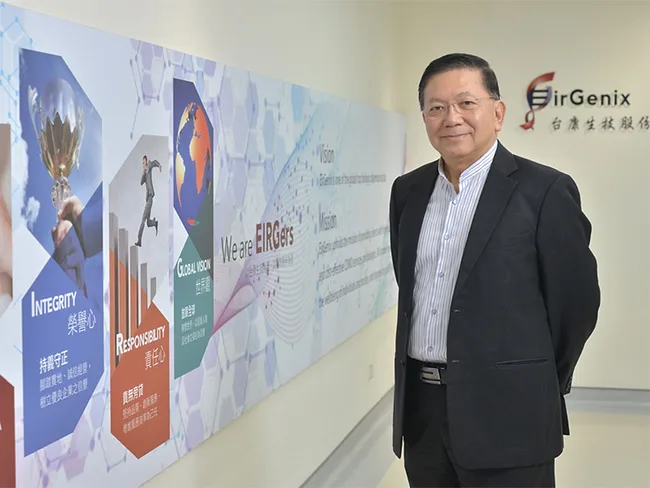
Taiwan’s biotechnology sector was built around domestic health needs, including vaccines and drug manufacturing, but it is increasingly looking outward – to international partnerships, licensing, clinical development and a bigger role in the global biomedical ecosystem.
Taiwan’s biotechnology sector was built around domestic health needs, including vaccines and drug manufacturing, but it is increasingly looking outward – to international partnerships, licensing, clinical development and a bigger role in the global biomedical ecosystem.
Tidalsense Ltd. raised $19 million in a funding round for N-Tidal Diagnose, its AI-based diagnostic platform, which can identify chronic obstructive pulmonary disease (COPD) in as little as five minutes. The test requires an individual to breathe normally into a handheld device for 75 seconds and it captures a carbon dioxide breath waveform, which is analyzed by AI to detect COPD. The funds will be used to support commercialization in the U.K., Ireland and Europe, on preparations for U.S. market entry and for expansion of the platform into additional respiratory conditions, including asthma.
Shijiazhuang Yiling Pharmaceutical Co. Ltd. has divulged new lysophosphatidic acid receptor 1 (LPAR1; EDG2) antagonists potentially useful for the treatment of pulmonary fibrosis.
Teikyo University has synthesized new neutrophil elastase (ELANE; leukocyte elastase) inhibitors potentially useful for the treatment of acute lung injury.
Insmed Inc. has delivered further evidence of the advantages of its once-daily pulmonary arterial hypertension (PAH) drug TPIP (treprostinil palmitil inhalation powder), with data from an open-label extension of the phase IIb trial showing patients in the treated arm maintained the benefits over 24 months.
GSK plc’s walk-away from refractory chronic cough prospect camlipixant because of dicey phase III results opened the door wider for Trevi Therapeutics Inc. with Haduvio (oral nalbuphine ER), which yielded positive phase II data in June. Shares of Trevi (NASDAQ:TRVI) closed July 17 at $19.07, up $1.71, or 9.9%. London-based GSK reported findings with camlipixant, a P2X3 receptor antagonist, from the Calm-1 and Calm-2 trials. The first met its primary endpoint, with camlipixant 50 mg twice daily showing statistically significant reductions in 24-hour cough frequency vs. placebo when measured at week 12.
Astrazeneca plc has added a dual PDE3/4 inhibitor candidate to its chronic obstructive pulmonary disease (COPD) portfolio via a deal worth up to $2.1 billion with Chia Tai Tianqing Pharmaceutical Group Co. Ltd., a Sino Biopharmaceutical Ltd. subsidiary.
Guangzhou Respiratory Medicine Engineering Technology Co. Ltd. has disclosed new cathepsin C (dipeptidyl peptidase I) and neutrophil elastase (ELANE; leukocyte elastase) inhibitors potentially useful for the treatment of asthma, diabetes, psoriasis, nasal polyps, cystic fibrosis and more.
 RSS
RSS