Boehringer Ingelheim Pharma GmbH & Co. KG and Immunitas Therapeutics Inc. have signed a global licensing agreement for a preclinical antibody program being developed for chronic inflammatory and autoimmune diseases.
Beone Medicines Ltd. gained an exclusive option to develop cancer immunotherapy HH-160 worldwide in a deal potentially worth more than $2 billion for Huahui Health Ltd., the developer of the trispecific antibody.
Aventera Antibodies AB has successfully raised SEK14.5 million (US$15.6 million) in a funding round to support the preclinical development of the company’s lead drug candidate for life-threatening streptococcal infections.
The major histocompatibility complex class I polypeptide-related sequences A and B (MICA/B) are frequently expressed by cancer cells. In a recently published study, researchers from Icahn School of Medicine at Mount Sinai hypothesized that the therapeutic efficacy of anti-MICA/B antibodies could be enhanced through Fc optimization with three point mutations in the Fc region: G236A, A330L and I332E (GAALIE).
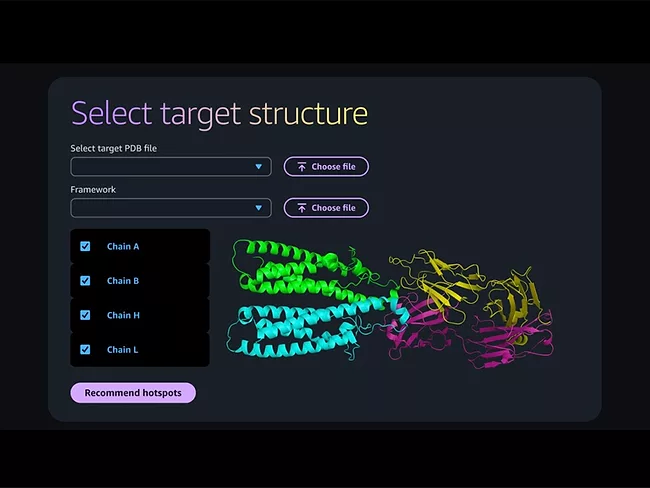
Amazon is extending the reach of its “everything store” into drug R&D with the launch of an artificial intelligence-powered Bio Discovery business. The company has compiled a catalogue of 40-plus foundation models that have been trained on extensive biology datasets and are able to generate and evaluate drug molecules in silico. For now, this covers antibodies only, but it is intended to move into other modalities.
SARS-CoV-2 utilizes the angiotensin-converting enzyme 2 (ACE2) receptor for cell entry and triggers ACE2 ectodomain shedding, which results in elevated vasoconstrictor angiotensin II (Ang-II) while depleting the protective Ang-(1-7). This effect can lead to acute respiratory distress syndrome, hypertension, acute kidney injury and organ damage.
Innovent Biologics Inc. has presented preclinical data on IBI-3055, a trispecific T-cell engager for the treatment of autoimmune diseases. This trispecific antibody targets CD19, BCMA and CD3, and features an innovative 1+1+1 T-cell engager design with CD3 masking to minimize non-specific T-cell activation.
Just over a month after emerging from stealth and disclosing a $150 million series A, Korsana Biosciences Inc. is making the leap to the public market via a merger with Cyclerion Therapeutics Inc. The agreement, which is backed by a $370 million private placement from Korsana’s investors, solidly positions the newly merged company as it heads toward the clinic with KRSA-028, a next-generation shuttled antibody targeting amyloid beta for the treatment of Alzheimer’s disease, and builds out a pipeline of neurodegenerative disease candidates.
Infinimmune Inc. has recently presented results at the annual American Academy of Dermatology conference regarding their anti-IL-22 antibody IFX-101 for the treatment of atopic dermatitis.
 RSS
RSS