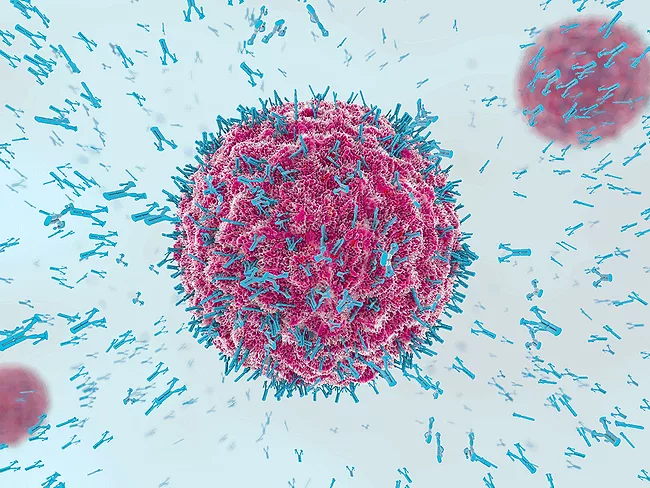
Ibio Inc. has announced data from a non-GLP, nonhuman primate (NHP) pharmacokinetic (PK) study of IBIO-600, the company’s lead asset and a potentially best-in-class long-acting anti-myostatin antibody designed for subcutaneous administration. Results suggest the antibody could provide a significantly extended half-life in humans and a weight loss treatment option while preserving and promoting muscle growth.
The first disease modifying therapies for Alzheimer’s may have limited utility in some senses, but they will be a force for change, providing momentum and altering the way governments as payers, and health systems as carers, think about the disease.
CEPI is partnering with Astrazeneca plc to advance VHH-based multispecific antibodies targeting influenza, while Harbour Biomed Ltd. has entered into a global strategic collaboration with Astrazeneca to discover and develop next-generation multispecific antibodies for immunology, oncology and other diseases.
Maxion Therapeutics Ltd. has raised $72 million (£58 million) in a series A financing to support its development of antibody-based Knotbody drugs for ion channel- and G protein-coupled receptor (GPCR)-driven diseases.
Mabylon AG recently provided preclinical data for MY-006, a half-life extended trispecific anti-peanut antibody being developed for the treatment of peanut allergy.
At the recent annual congress of the European Association for Haemophilia and Allied Disorders, researchers from Novalgen Ltd. presented the discovery and preclinical characterization NVG-444, a potentially first-in-class next-generation FVIII mimetic antibody equipped with autoregulation to reduce prothrombotic risks that is being developed for the treatment of hemophilia A.
Chinese researchers and their collaborators have published data on the bifunctional antibody JS-201, which exerts dual targeting of PD-1 and TGF-β signaling, for the potential treatment of cancer and its protective role against radiation-induced lung injury.
Scientists at the University of Pittsburgh have tested a broadly neutralizing antibody that binds the stem of a protein against H5N1 avian influenza, which prevented severe disease in nonhuman primates and was effective for at least 8 weeks. The scientists remark on the potential of the design developed by Astrazeneca plc against a possible outbreak of the influenza A virus.
Ypsilon Therapeutics has been awarded $2.7 million in seed funding from Cancer Prevention & Research Institute of Texas (CPRIT). The award will allow Ypsilon to advance its lead therapeutic program, a next-generation T-cell receptor mimic (TCRm) antibody, to drug candidate nomination, with the aim of developing treatments for patients with solid tumors, such as triple-negative breast cancer, non-small-cell lung cancer and gastric cancer.
Ibio Inc. has expanded its cardiometabolic and obesity treatment development program by in-licensing a long-acting anti-myostatin antibody from Astralbio Inc. The antibody, now named IBIO-600, was identified by Astralbio using Ibio’s proprietary technology stack.
 RSS
RSS