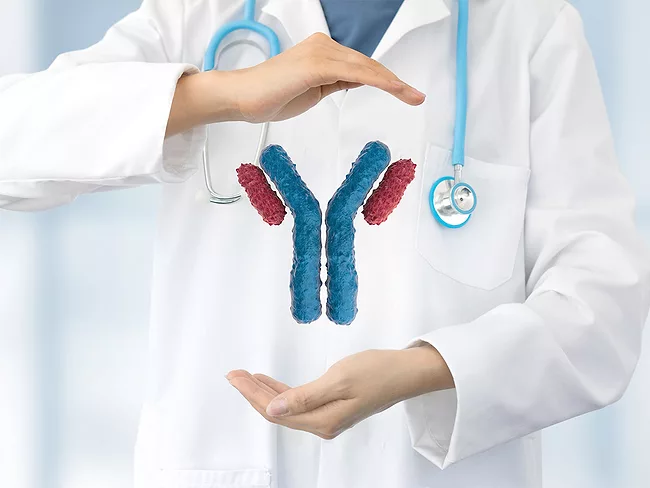
Chugai Pharmaceutical has reported a new humanized antibody (Ab, SOF-10) that targets latent TGF-β1 and selectively blocks protease- and integrin αVβ8-mediated latent TGF-β1 activation.
At the ongoing AACR Immuno-Oncology Conference (AACR IO) in Los Angeles, Ampersand Biomedicines Inc. gave a presentation on promising results in the field regarding AMP-410, an anti-VEGF/4-1BB antibody construct that limits 4-1BB activation in VEGF-rich tumor types, thus achieving durable efficacy.
Nektar Therapeutics Inc. has established an academic research collaboration with the University of California, San Francisco (UCSF) to explore the role of tumor necrosis factor receptor 2 (TNFR2) agonism in models of multiple sclerosis (MS) with the aim of supporting progression of NKTR-0165, Nektar’s first-in-class TNFR2 agonist antibody.
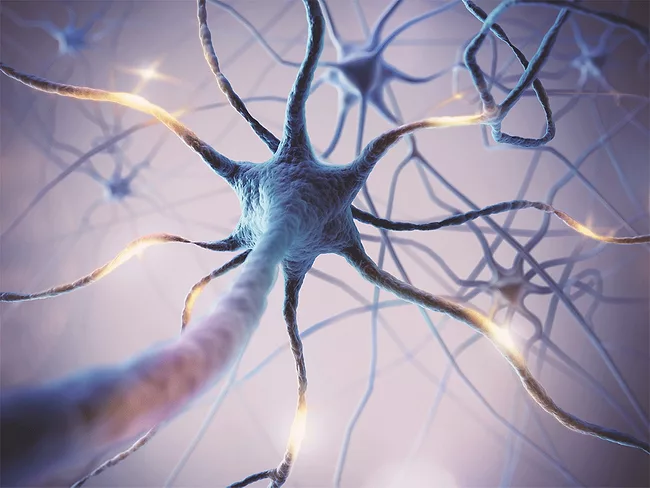
Newco Vesalic Ltd. has formed to take forward research indicating extracellular vesicles secreted by skeletal muscle cells carry toxic payloads that are key drivers of motor neuron diseases, including amyotrophic lateral sclerosis. The discovery of this process, which is largely external to the brain and the central nervous system, has opened up new targeting possibilities, and Vesalic is now working on in vivo studies to demonstrate preclinical proof of concept.
Galux closed a ₩42 billion (US$29 million) series B round Feb. 10, led by Yuanta Investment to bring AI-driven “rational design” to the protein drug development process, already heavily influenced by human engineering.
Galux closed a ₩42 billion (US$29 million) series B round Feb. 10, led by Yuanta Investment to bring AI-driven “rational design” to the protein drug development process, already heavily influenced by human engineering.
Galux closed a ₩42 billion (US$29 million) series B round Feb. 10, led by Yuanta Investment to bring AI-driven “rational design” to the protein drug development process, already heavily influenced by human engineering.
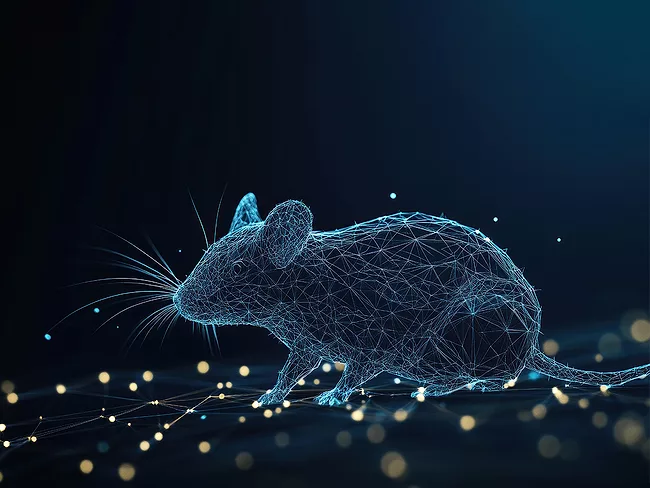
Scientists at Ghent University have created a mouse model that incorporates human versions of the receptors that recognize the fragment crystallizable region of immunoglobulin G, one of the most abundant antibodies in the blood and a key mediator of essential immune functions such as cellular activation, pathogen elimination and the regulation of inflammatory responses.
Third Arc Bio Inc. has closed a $52 million series A extension to advance its pipeline of multifunctional antibodies for a range of oncology and immunology & inflammation (I&I) indications.
Scientists at Ghent University have created a mouse model that incorporates human versions of the receptors that recognize the fragment crystallizable (Fc) region of immunoglobulin G (IgG), one of the most abundant antibodies in the blood and a key mediator of essential immune functions such as cellular activation, pathogen elimination and the regulation of inflammatory responses. These human Fcγ receptors allow the humanized mouse to more accurately reproduce IgG-driven biology, enabling more reliable and safer preclinical assays before evaluating monoclonal antibodies in clinical trials with people.
 RSS
RSS