Immuneoncia Therapeutics Inc. raised ₩33.9 billion (US$24 million) from its Kosdaq listing May 19. Shares closed at ₩7,500 – 108% higher than its offering price of ₩3,600 per share. Immuneoncia, a joint venture founded in 2016 between Seoul, South Korea-based Yuhan Corp. and San Diego-based Sorrento Therapeutics Inc., noted that the funds will support R&D operations until 2026.
The recent 8-1 adcom vote against the U.S. applicability of Genentech Inc.’s Starglo trial is being seen as a warning signal expanding beyond the confirmatory trial for Columvi (glofitamab) as a treatment for relapsed/refractory diffuse large B-cell lymphoma.
Immuneoncia Therapeutics Inc. raised ₩33.9 billion (US$24 million) from its Kosdaq listing May 19. Shares closed at ₩7,500 – 108% higher than its offering price of ₩3,600 per share. Immuneoncia, a joint venture founded in 2016 between Seoul, South Korea-based Yuhan Corp. and San Diego-based Sorrento Therapeutics Inc., noted that the funds will support R&D operations until 2026.
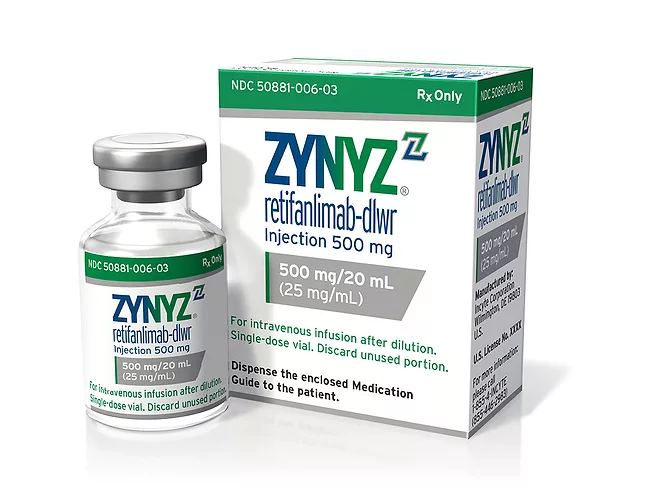
Incyte Corp.’s Zynyz (retifanlimab-dlwr) has received another U.S. FDA approval and put some distance between it and a 2021 complete response letter. The FDA gave the humanized monoclonal antibody targeting PD-1 the nod for first-line treatment of adults with inoperable locally recurrent or metastatic squamous cell carcinoma of the anal canal. That makes it the only approved first-line treatment for this cancer.
TIGITs took another tumble with GSK plc’s decision to end a development program and a collaboration with Iteos Therapeutics Inc. New top-line results from a phase II study in non-small-cell lung cancer using belrestotug, an anti-TIGIT monoclonal antibody, were disappointing so the companies are calling it a day.
With positive phase IIa cardiovascular disease results in hand, Marea Therapeutics Inc. said it is ready to move on to a phase IIb study sometime in the second quarter of 2025. MAR-001, a monoclonal antibody targeting the protein coding gene ANGPTL4, produced an up to a 52.5% placebo-adjusted mean reduction in remnant cholesterol and up to a 52.7% placebo-adjusted mean reduction in triglycerides at 12 weeks.
Innovent Biologics Inc.’s efdamrofusp alfa (IBI-302) met the primary endpoint in phase II, showing a gain of 10 or more letters in visual acuity from baseline at one year in Chinese patients with neovascular age-related macular degeneration.
The U.S. FDA approval of Johnson & Johnson’s Imaavy (nipocalimab-aahu) for myasthenia gravis brings the monoclonal antibody into a treatment space that teems with competition, both approved and in-development candidates. The human Fc receptor inhibitor was approved to treat generalized myasthenia gravis in patients who are 12 years and older. Patients must be anti-acetylcholine receptor [AChR] or anti-muscle-specific kinase [MuSK] antibody positive. Anti-AChR and anti-MuSK antibody-positive individuals make up more than 90% of all antibody-positive gMG patients.
The intriguing VEGFxPD-1 bispecific antibody space gained oomph with phase III results disclosed April 23 by Akeso Pharmaceuticals Inc. related to Harmoni-6, testing ivonescimab in combination with platinum-based chemotherapy compared with Tevimbra (tislelizumab, Beigene Ltd.), a PD-1 inhibitor also paired with platinum-based chemo in patients with locally advanced or metastatic squamous non-small-cell lung cancer irrespective of PD-L1 expression. Those data were followed by a green light from the U.S. FDA April 24 for marketing the PD-1 monoclonal antibody penpulimab in combination with cisplatin or carboplatin and gemcitabine for the first-line treatment of adult recurrent or metastatic non-keratinizing nasopharyngeal carcinoma.
 RSS
RSS