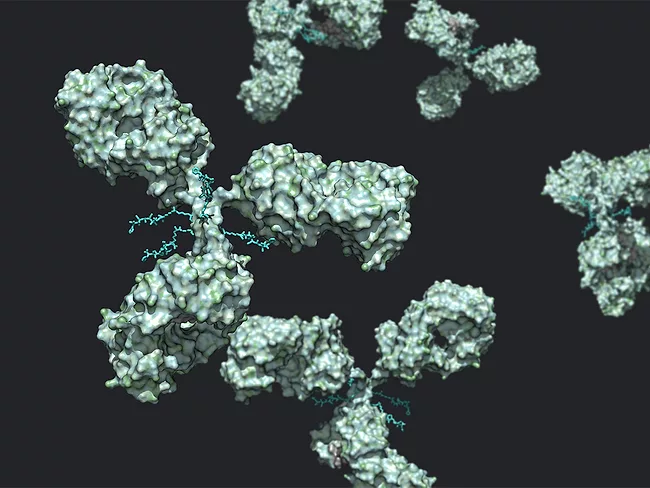
Researchers from Vicero Inc. have developed a Vincobody platform, which allows for design of novel proprietary VHH antibody fragments that possess the efficacy of dual checkpoint blockade while mitigating the toxicity limitations of current monoclonal antibody therapies.
Researchers from Apogee Therapeutics Inc. and Paragon Therapeutics Inc. have reported the preclinical characterization of APG-333, a half-life extended monoclonal antibody targeting thymic stromal lymphopoietin (TSLP), a cytokine secreted by epithelial cells that acts as an alarmin in response to environmental insults.
Antibody-drug conjugate (ADC)-focused Callio Therapeutics debuted on March 3 with the closing of a $187 million series A financing round based on cancer drug technology and assets in-licensed from Hummingbird Bioscience Pte Ltd.
Radiance Biopharma Inc. bought its way into the ROR1 antibody-drug conjugate (ADC) space through a potential $1 billion-plus licensing deal, including a $15 million up-front payment, with CSPC Megalith Biopharmaceutical Co. Ltd. for rights to RB-164 (SYS-6005) in the U.S. and select countries.
Qyuns Therapeutics Co. Ltd.’s monoclonal antibody targeting IL-17A, QX-002N, met both primary and secondary endpoints in a phase III trial in ankylosing spondylitis.
Radiance Biopharma Inc. bought its way into the ROR1 antibody-drug conjugate (ADC) space through a potential $1 billion-plus licensing deal, including a $15 million up-front payment, with CSPC Megalith Biopharmaceutical Co. Ltd. for rights to RB-164 (SYS-6005) in the U.S. and select countries.
Dealmaking in the Asia Pacific (APAC) region took off this week, with the latest showcasing Genome & Co.’s licensing deal with Ellipses Pharma Ltd. for GENA-104, a phase I-ready immuno-oncology asset, under undisclosed terms Feb. 11.
Dealmaking in the Asia Pacific (APAC) region took off this week, with the latest showcasing Genome & Co.’s licensing deal with Ellipses Pharma Ltd. for GENA-104, a phase I-ready immuno-oncology asset, under undisclosed terms Feb. 11.
The European Commission on Feb. 5 cleared Shanghai Henlius Biotech Inc.’s serplulimab (HLX-02) under the brand name of Hetronifly as a first-line combination therapy with carboplatin and etoposide to treat extensive-stage small-cell lung cancer.
Novartis AG is paying nearly $1 billion up front to buy privately held Anthos Therapeutics Inc. in a deal that eventually could top out around $3.1 billion. Novartis, coming back to where it started as it and Blackstone Life Sciences founded Anthos in 2019, is entering a crowded space.
 RSS
RSS