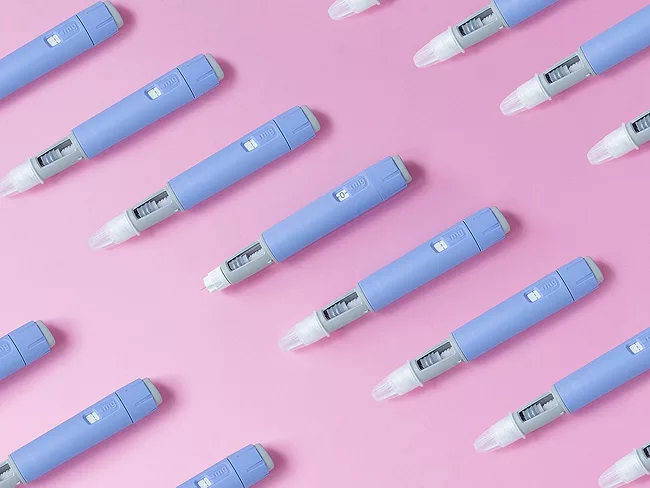
Chinese pharmaceutical and biotech companies are leading development of glucagon-like peptide-1 receptor agonists as Novo Nordisk A/S and Eli Lilly and Co. edge closer to launching blockbuster therapies in China. At the heart of the GLP-1 boom is a nationwide obesity problem driven by a confluence of factors, including the rise of a modern, sedentary lifestyle, according to Clarivate. Despite the rising prevalence of obesity and type 2 diabetes, the gap in obesity therapeutics is “substantial and leaves a solid market opportunity for weight loss drugs,” Karan Verma, principal analyst of healthcare research & data analytics at Clarivate, said.
In the wake of shortages for Novo Nordisk A/S’ Ozempic (semaglutide), Australia’s Therapeutic Goods Administration has announced that Wegovy, which has the same active ingredient, is now available in Australia and is advising prescribers to stop prescribing Ozempic off-label for weight loss.
Neuren Pharmaceuticals Ltd.’s NNZ-2591 met the primary endpoints in a phase II trial in children with Angelman syndrome, with improvements seen in clinically important aspects of the disease, including communication, behavior, cognition and motor abilities, Neuren CEO Jon Pilcher said during an Aug. 9 conference call.
Gan & Lee Pharmaceuticals’ long-acting GLP-1 receptor agonist (GLP-1 RA), GZR-18, achieved as much as 17.29% weight loss in a phase IIb trial in obese and overweight Chinese patients. Developed independently by Shanghai-based Gan & Lee, GZR-18 is a once-weekly or potentially biweekly GLP-1 RA being developed to treat adults with type 2 diabetes and for weight management for obese or overweight patients.
Neuren Pharmaceuticals Ltd.’s NNZ-2591 met the primary endpoints in a phase II trial in children with Pitt Hopkins syndrome, with improvements seen in communication, social interaction, cognition and motor abilities, according to top-line results.
Homerun success of Novo Nordisk A/S’ semaglutide, which recently became the U.S.’s biggest blockbuster drug, is serving as an “inflection point” for obesity therapeutics and fueling the drive for new and improved therapies, speakers said at Bio Korea 2024 on May 8.
Osaka, Japan-based Shionogi & Co. Ltd. said May 13 that ensitrelvir fumaric acid (Xocova), its oral antiviral for COVID-19, showed no statistical difference against placebo in completely resolving 15 common COVID-19-related symptoms in a global phase III Scorpio-HR trial.
Innovent Biologics Inc.’s glucagon-like peptide-1 receptor (GLP-1R) and glucagon receptor dual agonist, mazdutide, met the primary endpoint of superiority in a head-to-head phase III trial in Chinese patients with type 2 diabetes compared to Eli Lilly and Co.’s GLP-1, dulaglutide, for glycemic control.
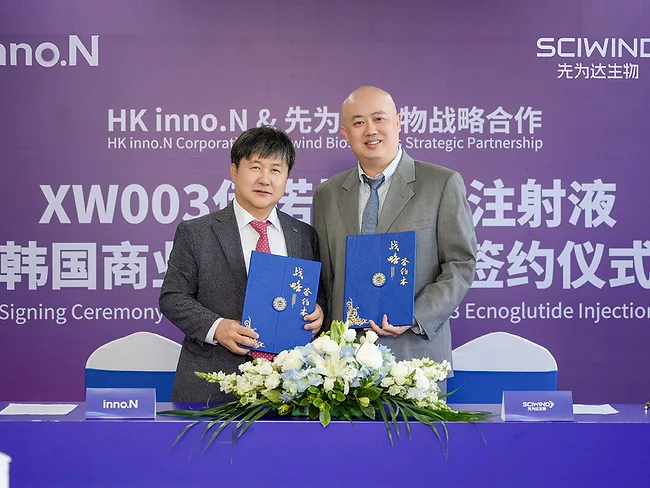
South Korea’s HK Inno.N Corp. said on May 2 that it gained exclusive development and commercial rights to Hangzhou, China-based Sciwind Biosciences Co. Ltd.’s once-weekly, injectable glucagon-like peptide-1 (GLP-1) agonist, XW-003 (ecnoglutide), in South Korea to treat type 2 diabetes and obesity.
Novartis Pharma AG continues to build up its radiopharmaceutical powerhouse and has expanded a peptide discovery collaboration with Peptidream Inc. in a deal worth up to $2.71 billion. Under the multi-program agreement, Kawasaki, Japan-based Peptidream will use its peptide discovery platform system technology to identify and optimize novel macrocyclic peptides against targets selected by Novartis for potential conjugation to radioligand therapies or other applications for both therapeutic and diagnostic purposes.
 RSS
RSS