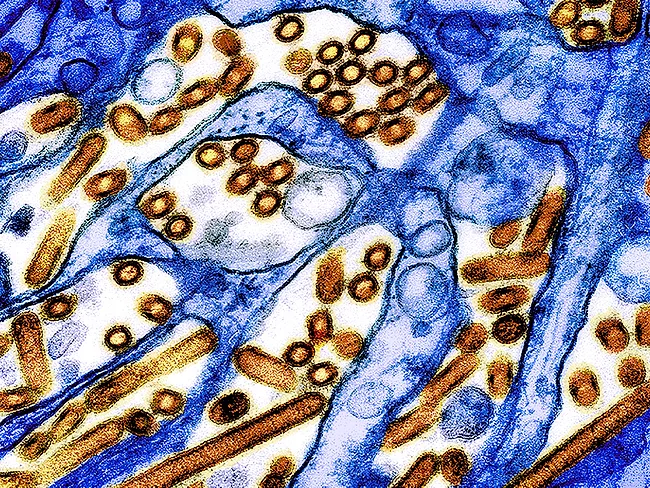
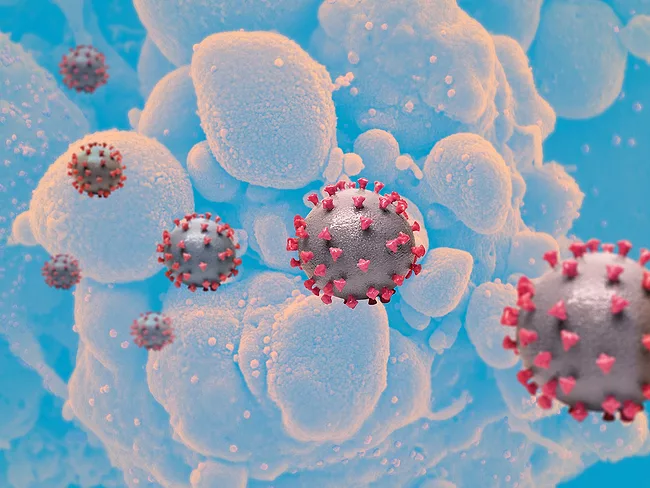
The Nipah virus (NiV) from the Henipavirus genus is a bat-borne zoonotic pathogen that causes encephalitis and acute respiratory distress syndrome in humans. NiV infections have a very high fatality rate. No approved vaccine or therapeutics against NiV infection exist for use in humans despite its dangerous potential for causing larger epidemics.
The threat of another influenza pandemic arising from bird-to-human and then human-to-human transmission drives continuing efforts to develop effective vaccines against avian influenza. In the latest advance in this area, researchers at Novavax Inc. have reported a new vaccine against avian influenza strain A(H5N1) clade 2.3.4.4b.
SK Bioscience Ltd. announced that the company has submitted an investigational new drug (IND) application to the South Korean Ministry of Food and Drug Safety.
As of May 2023, the WHO recommends the use of a monovalent XBB.1 descendent lineage, such as omicron XBB.1.5, as the vaccine antigen for COVID-19 vaccines. However, BA.2.86 and its descendent lineages, such as JN.1, have emerged and rapidly spread worldwide.
Evaxion A/S has added a new vaccine program, named EVX-B4, to its pipeline for prevention of group A Streptococcus (GAS) infections. Invasive GAS infections can cause diseases such as sepsis, toxic shock, rheumatic heart disease and necrotizing fasciitis.
A global consortium led by Adaptvac ApS aims to design and test a new vaccine that could offer broad protection against several filoviruses, including Zaire ebolavirus, Sudan ebolavirus and Marburg virus.
Researchers from Purdue University and the U.S. Centers for Disease Control and Prevention have recently developed a novel influenza vaccine candidate that uses a bovine adenoviral (BAd) vector to deliver nucleoprotein (NP) antigens from both influenza A and B viruses, along with an autophagy-inducing peptide (C5) to enhance cellular immune responses, particularly T-cell responses.
Drug resistance to epidermal growth factor receptor (EGFR) tyrosine kinase inhibitors, occurring via secondary mutations or bypass pathways, is frequent among non-small-cell lung cancer patients.
Researchers from the Access to Advanced Health Institute and collaborating institutions have developed a promising new bivalent vaccine candidate that can protect against both yellow fever and Zika viruses. The study demonstrates that the vaccine elicits robust humoral and cellular immune responses in mice and hamsters and provides complete protection against lethal viral challenges.
 RSS
RSS