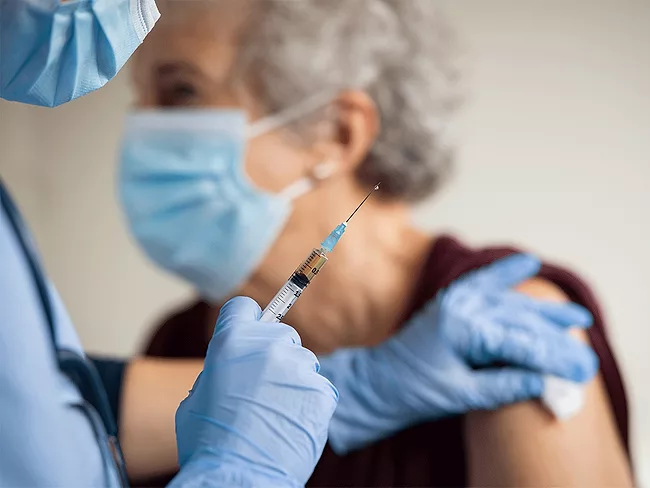
In recent years, messenger RNA (mRNA) vaccines have shown significant success in preventing viral and bacterial infections, as well as in cancer immunotherapy and other disease applications. In particular, the development of lipid nanoparticle (LNP)-encapsulated mRNA has revolutionized vaccine development thanks to several advantages, including elevated immunogenicity, rapid manufacturing and a generally favorable safety profile compared to viral vectors and traditional adjuvant-based vaccines.
Cansino Biologics Inc. has obtained clinical trial approval from China’s National Medical Products Administration (NMPA) for the company’s 24-valent pneumococcal polysaccharide conjugate vaccine (CRM197/tetanus toxoid) (PCV24).
Excessive production of pro-inflammatory cytokines or aging-related chronic inflammation disrupts immunity and diminishes the efficacy of vaccines, although the underlying mechanisms remain unknown. Moreover, these pro-inflammatory cytokines are linked to adverse vaccine reactions. These two issues can lead to vaccine hesitancy, resulting in lower vaccination rates.
Driven by a deeply antiscientific political agenda, the current U.S. government is not just sabotaging some of the most groundbreaking technology that has been developed in the past decades. It is also destroying the country’s past successes, such as measles elimination and the reduction of hepatitis B infections in infants to near zero.
BioWorld’s 2022 end-of-year highlights included a toast to the future – of universal vaccines. Even before SARS-CoV-2 vaccines were developed in record time and saved countless lives during the COVID-19 pandemic, vaccines were a rare bright spot in the fight against infectious diseases. Bacteria are becoming multidrug resistant far faster than new classes of antibiotics are being developed, viral spillover events and vector ranges are increasing, and climate change is helping bacteria and fungi alike breach human thermal protections against infections.
Advances in antiretroviral therapy (ART) now allow people living with HIV to lead normal lives with undetectable and nontransmissible levels of the virus in their blood. Yet that reality is limited to those with access to treatment. More than 40 million people worldwide live with HIV, with over a million new infections and hundreds of thousands of deaths each year, underscoring that major challenges remain.
The cardiomyositis that is a rare adverse effect of mRNA-based COVID vaccines is due to immune cell activity as a result of increased levels of the chemokines CXCL10 and interferon-γ (IFN-γ). Blocking CXCL10 and IFN-γ could prevent muscle cell damage in cell culture, and cardiomyositis in animal models. The findings, reported in the Dec. 10, 2025, issue of Science Translational Medicine, suggest a way of mitigating the risk of cardiomyositis.
A consortium including Korea Disease Control and Prevention Agency (KDCA), International Vaccine Institute (IVI), ST Pharm Co. Ltd. and Seoul National University (SNU) is joining forces with CEPI to advance a new AI-designed mRNA vaccine to protect against tick-borne severe fever with thrombocytopenia syndrome (SFTS) virus, or Dabie bandavirus. CEPI is providing up to US$16 million to the project, led by IVI, to test the vaccine’s safety and ability to generate a suitable immune response in healthy adults in preclinical and phase I/II trials in Korea.
Researchers at the Institut Pasteur have developed a vaccine that spurred the production of autoantibodies to immunoglobulin E (IgE) antibodies, protecting vaccinated mice from anaphylaxis. In their paper, which they published in Science Translational Medicine on Dec. 3, 2025, the authors noted that the polyclonal antibodies generated by their vaccine lasted “for up to 12 months postvaccination with a similar avidity as the approved anti-IgE mAb omalizumab [Xolair, Roche AG].”
Changes to a U.S. CDC website regarding autism and vaccines has sparked a backlash from numerous scientific and other groups, placing HHS Secretary Robert F. Kennedy Jr. (RFK) in the spotlight once again for appearing to break promises made earlier this year to secure his nomination.
 RSS
RSS