Point-of-care (POC) diagnostics startup Chronus Health Inc. reeled in $22 million in a series A round led by Tarsadia Investments. The company plans to use the funds to scale its research, engineering and data science teams and hasten product and technology development. Monta Vista Capital, Sosv and Savantus Ventures also participated in the financings, along with an unidentified strategic investor.
Illumina Inc. and Agendia NV are joining forces for a multiyear partnership to develop diagnostic tests for breast cancer. The collaboration will unite lllumina’s Miseq Dx sequencing platform, with Agendia's flagship genomic test, Mammaprint, which identifies a patient’s breast cancer recurrence risk. Illumina has been steadily signing partnerships over the past few years and currently has more than 30 IVD partners and 40 sequencing-based solutions for cancer under development.
The existence of prior art isn’t always readily evident when companies in the device and diagnostic spaces file patent applications with the U.S. Patent and Trademark Office (PTO). As it turns out, literature describing that prior art need not be widely distributed to invalidate a patent as Quest Diagnostics Inc., of Secaucus, N.J., recently discovered, an object lesson for all in the med-tech space that research for prior art must be exhaustive if a patent is to hold up over time.
Freenome Holdings Inc. has landed $290 million from Basel, Switzerland-based Roche Holding AG to advance its multiomics platform for early cancer detection. The multimillion financing deal brings San Francisco-based Freenome’s total funding to more than $1.1 billion, securing its status as a unicorn company. It comes on the heels of a series D raise in December 2021, which netted Freenome $300 million from investors including Perceptive Advisors and RA Capital Management.
The FDA reported a class I recall of the Wirion embolic protection device by Cardiovascular Systems Inc. (CSI), of St. Paul, Minn., due to reports of nine instances of device malfunction. The agency said the filter portion of the device can be difficult to withdraw under some circumstances and thus lead to separation, although the FDA noted that no deaths have been reported in association with the issue despite the risk of embolization. The FDA’s device center also posted a Jan. 11 notification against the use of two tests by Lusys Labs Inc., of San Diego, for the SARS-CoV-2 virus.
Where’s the plan? That was the underlying question Jan. 11 as Biden administration health officials faced frustration and tough questions from both Democrats and Republicans on the Senate Health, Education, Labor and Pensions (HELP) Committee about how the U.S. government is responding to the surge of COVID-19 infections caused by the omicron variant.
In vitro diagnostic (IVD) company Virtue Diagnostics (Suzhou) Co. Ltd. has raised $100 million in a series B round to develop its clinical diagnostics and bring them to other markets. “With the latest funding, Virtue Diagnostics will hire talent, introduce technology, and expand to other markets,” said Johnson Zhang, CEO of Virtue Diagnostics.
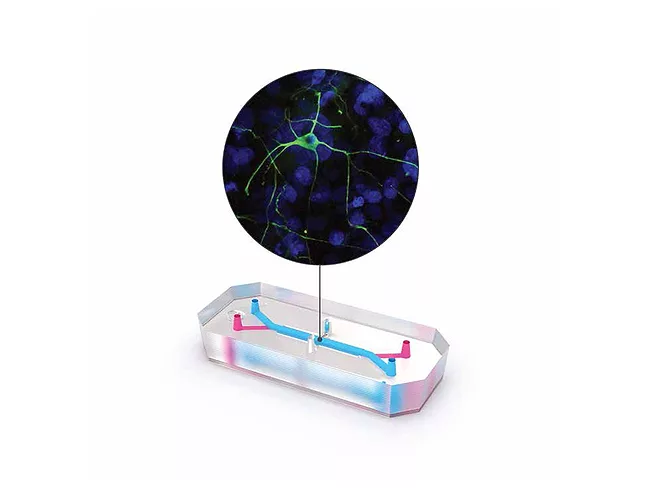
Space travel has known effects on human health and biology. Some, such as loss of bone density, are well understood, while others, like inflammation, are not. Now, organ-on-a-chip maker Emulate Inc. is conducting experiments on the International Space Station U.S. National Laboratory (ISS-NL) aimed at revealing clues to how the brain functions in microgravity.
University of California San Diego engineers have developed tiny 2D sensors that pop up to become a 3D assemblage of microscopic sensors for directly measuring the movement and speed of electrical signals inside the heart. According to nanoengineering professor Sheng Xu, the nanotechnology has enormous implications for heart doctors anxious to better diagnose and treat arrhythmia, heart attack and other diseases.
Cancer trials that stratify patients using biomarkers increase their likelihood of proceeding to the next phase more than 500% compared to trials run without biomarkers, Canadian researchers recently determined, and biotech companies have invested heavily in identifying new biomarkers for a wide range of applications. Genialis Inc. has tackled the problem of huge investment in biomarkers with little return by developing a platform that combines artificial intelligence and machine learning.
 RSS
RSS