The parent company of digital health unicorn Everlywell Inc. is expanding its portfolio of women’s health products through the acquisition of Charleston, S.C.-based startup Natalist Inc. The purchase marks Everly Health’s third acquisition of the year following agreements to buy national clinician network PWN Health and home lab testing company Home Access Health Corp. Financial terms of all deals were not disclosed. Headquartered in Austin, Texas, Everly Health will add Natalist’s suite of reproductive products to its existing tests for menopause, fertility hormones and sexual health.
The COVID-19 testing rebound driven by the Delta variant’s extended surge pushed Abbott Laboratories’ earnings per share for the third quarter nearly 50% higher than consensus estimates. Sales climbed to $10.928 billion, up 15% from expected estimates of $9.564 billion. COVID-19 testing accounted for $1.9 billion in sales, but even without that boost, the company posted year-over-year growth of 11.7% compared to the third quarter of 2019. With COVID testing included, Abbott had organic sales growth of 22.4% compared to the same quarter of 2020 and up 35% compared to the third quarter of 2019. With the third-quarter results, the company announced an increase in the full-year guidance to $5 to $5.10, nearly 40% higher than last year.
Castle Biosciences Inc. is acquiring gastrointestinal (GI) diagnostics company Cernostics Inc. in a transaction valued up to $80 million. The deal marks a move from Castle’s focus on dermatology diagnostics to include GI disorders and could expand its estimated U.S. total addressable market by approximately $1 billion, the company said. Shares of Castle Biosciences (NASDAQ:CSTL) jumped 7.8% to close at $67.58 on Tuesday Oct. 19.
Patent subject matter eligibility has emerged as arguably the most controversial patent policy theme of the past two decades, one which has been most keenly felt in the world of in vitro diagnostics (IVDs). A new study pending publication suggests that venture capital (VC) investment in IVDs would have been $9.3 billion higher in the four years following the Supreme Court’s decision in Mayo v. Prometheus, a finding which the author said leads inevitably to the conclusion that the subject matter eligibility crisis “should receive Congress’ immediate attention.”
The FDA issued an Oct. 18 reminder to the diagnostics industry that the agency still requires test developers to register with an institutional review board (IRB) for all studies of human subjects. This still pertains to studies that make use of leftover, de-identified specimens in FDA-regulated studies, an alert to industry which suggests that enforcement actions may be in the near offing.
Natera Inc. added its Prospera assessment for lung transplant patients to its portfolio, joining the company’s tests for rejection of kidney and heart transplants. The test uses donor-derived cell-free DNA (dd-cfDNA) to detect acute rejection as well as chronic rejection and infection in stable patients. Results of the VALID study presented at CHEST 2021 demonstrated that the Prospera Lung test had a negative predictive value of 97.33%, sensitivity of 89.06% and area under the curve of 0.91.
LONDON – Inivata Ltd. is extending efforts to bring its liquid biopsies into routine use, in two new clinical trials in lung cancer. The first will attempt to show increased speed in getting advanced non-small-cell lung cancer (NSCLC) patients on to the most appropriate therapies. The second study aims to demonstrate that detecting circulating tumor DNA (ctDNA) will single out those early-stage lung cancer patients who have residual or recurring disease after surgery and need further treatment with chemo- or immuno-therapies.
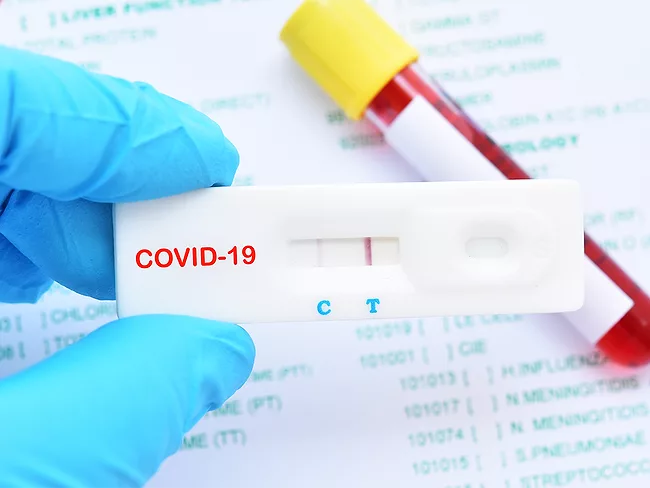
The U.S. National Institutes of Health reported Oct. 14 that it has awarded contracts in the amount of $77.7 million for development and manufacture of a dozen new rapid tests for the SARS-CoV-2 virus. The monies were awarded under the NIH’s Rapid Development of Diagnostics (RADx) program, and will add seven viral antigen detection and five viral RNA detection tests to the suite of offerings. all with an eye toward more rapid turn-around of test results. The news of the new round of RADx grants was followed by 24 hours the announcement that the Department of Health and Human Services has extended the public health emergency (PHE) for the COVID-19 pandemic for another three months.
A genetic biomarker-based diagnostic test developed by Inbiomotion SL to identify treatment for early-stage
breast cancer could significantly improve patient survival, a study has found. Data from the phase III NSABP-B34 study published in the Journal of the National Cancer Institute Cancer Spectrum, showed that in patients with MAF-negative (mutation biomarker) tumors – determined with Inbiomotion’s MAF Test – adjuvant treatment with clodronate was associated as having the greatest benefit compared to placebo-treated control patients receiving the same standard of care.
Oncology genomic testing company Berry Oncology Corp.’s latest research results showed promising data for its Hifi platform-based technology, its CEO Jun Zhou said during the first International Biopharma Industry Week held in Shanghai. With the Hifi liquid biopsy test, users can receive early screening of six cancers, including liver cancer, lung cancer, gastric cancer, colorectal cancer, esophageal cancer, and pancreatic cancer, with an overall sensitivity of 87.6%, specificity of 99.1%, and overall tissue of origin precision in 82% of positive cancers.
 RSS
RSS