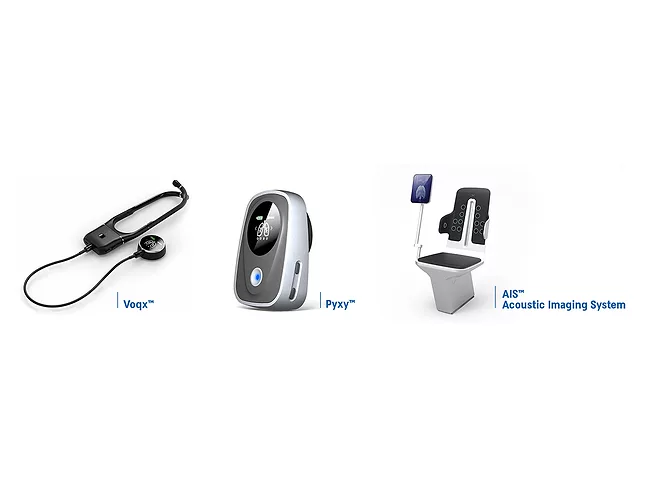
HONG KONG – Whether bats are the source of COVID-19 is a debatable point; however, using sound to navigate like them could prove key for diagnostics and disease monitoring. Bat-Call Ltd. is using its auscultation technology in the battle against the pandemic. It said its patented artificial intelligence (AI) infra-sound analysis and deep learning classification technologies can support the early detection and monitoring of COVID-19 patients.
BOGOTA, Colombia – Alivecor Inc., of Mountain View, Calif., is taking its Kardiamobile solution to capture medical-grade ECGs to the Mexican market after receiving clearance from the Comisión Federal para la Protección contra Riesgos Sanitarios, that country’s health care authority.
COVID-19 has disrupted science in the way it has disrupted everything else. In the short term, universities have largely closed shop as a way to maximize social distancing, and lots of science – or at least, lots of bench work – is not getting done.
Palo Alto, Calif.-based Varian Medical Systems Inc. is no stranger to machine learning applications. It rolled out its first such software to guide photon-based radiotherapy treatment planning more than five years ago. Now, it’s expanding a similar approach for machine learning-driven patient matching and treatment guidance in proton treatment planning.
COVID-19 has disrupted science in the way it has disrupted everything else. In the short term, universities have largely closed shop as a way to maximize social distancing, and lots of science – or at least, lots of bench work – is not getting done.
The novel coronavirus pandemic has been managed with widely varying degrees of success around the world. Artificial intelligence (AI), which can help to power all sorts of efforts, has been enlisted thus far in limited ways. But researchers at a virtual conference held on April 1 by the Stanford Institute for Human-Centered Artificial Intelligence explored some of the ongoing and potential applications of AI to systematize efforts to fight COVID-19.
An artificial intelligence-based system can accurately detect COVID-19 using thoracic CT scans in patients with respiratory symptoms, according to a preprint study published on arXiv.org. The system can also help monitor patients with the disease. Other teams have employed AI to speed diagnosis and develop clarity on the signature appearance of the disease in the lungs of symptomatic patients.
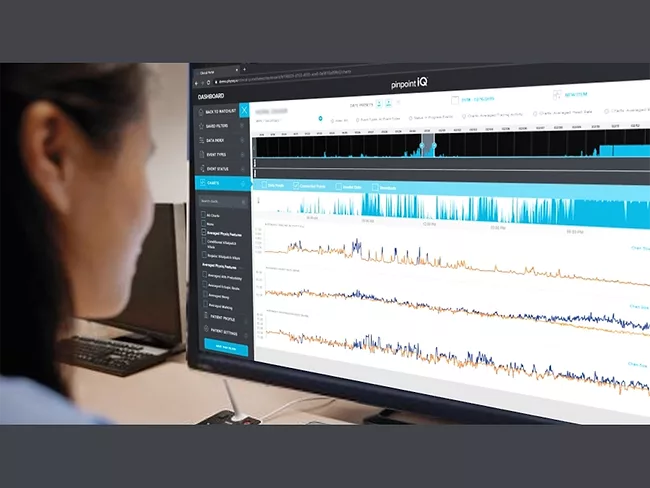
The U.S. FDA has OK’d expanded labeling for Physiq Inc.’s continuous remote monitoring system, Pinpointiq, for use during the COVID-19 pandemic. The machine learning-based platform, including Multivariate Change Index (MCI), will allow clinicians to track physiologic changes in homebound, quarantined or high-risk patients with confirmed or suspected COVID-19 – freeing up hospital beds for the most severe cases and reducing exposure of doctors and nurses to the highly contagious disease.
More than a dozen robotics researchers expressed the need for robots to play a greater role in managing the ongoing coronavirus pandemic, as well as in future preparedness. They pointed to three broad medical areas where robots can make a difference: clinical care with applications such as telemedicine and decontamination; logistics for delivery and handling of medical waste; and reconnaissance such as quarantine enforcement.
LONDON – Behold.ai Ltd. has secured U.S. FDA 510(k) approval for use of its Red Dot image recognition algorithm in the automatic diagnosis of life-threatening pneumothorax (collapsed lung). The product completes the analysis immediately, sending an alert to the radiologist as soon as an X-ray is taken. “It does in 30 seconds what would normally take up to 30 minutes,” said Simon Rasalingham, CEO of London-based Behold.ai.
 RSS
RSS