Children with autism spectrum disorder (ASD) can face a lifetime of frustration because of challenges with communication, social behaviors and flexibility of thought. Early intervention can improve outcomes, but nailing a diagnosis of ASD often takes years. Cognoa Inc. wants to change that with its digital ASD Diagnostic and is on track to apply for U.S. FDA clearance before the end of the year.
Two studies seek to answer the most pressing question for physicians examining a patient with COVID-19: What's this person's risk of death? Mount Sinai researchers presented their clinical prediction model in The Lancet Digital Health and a team from Johns Hopkins published their risk calculator in the Annals of Internal Medicine.
The field of artificial intelligence (AI) is stretching the boundaries of conventional med-tech regulation, and several regulatory agencies are working to cut that Gordian knot. Marc Lamoureaux, director of digital health at Health Canada’s (HC) medical device directorate, said on a Sept. 21 webinar that legislation passed in 2019 gives the agency a “regulatory sandbox” in which to experiment with AI regulation, a mechanism he said may bring these algorithms to market much more rapidly than would otherwise be the case.
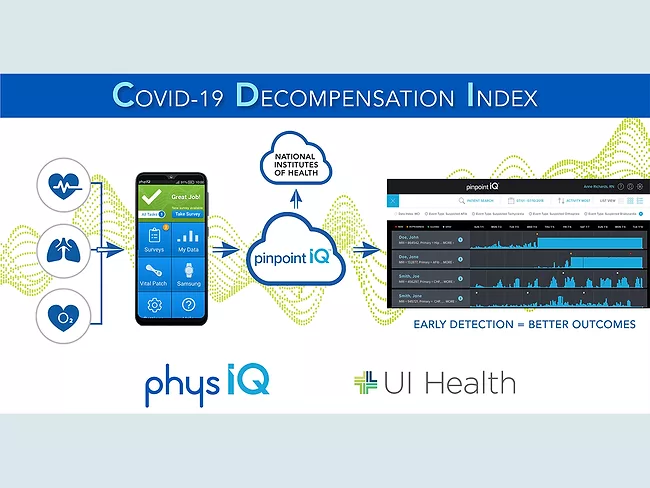
The digital medicine company Physiq Inc. has received a contract from the NIH to develop an artificial intelligence (AI)-based index that can provide an early warning that a patient with COVID-19 is in decline and needs medical treatment. The index, called the COVID-19 Decompensation Index (CDI) Digital Biomarker, will run on Physiq’s existing Accelerateiq computing platform, analyzing physiological data from FDA-cleared wearable devices to create a personalized baseline for patients who have tested positive for COVID-19.
Israeli startup Olive Diagnostics Pvt. Ltd. is aiming to disrupt at-home urinalysis testing with a hands-free, noninvasive, artificial intelligence (AI)-based solution that provides remote diagnostics by detecting urine’s molecular composition. K2, as the device is called, attaches easily to the toilet rim to generate secure, personalized diagnostic data that directly links to a mobile app.
TORONTO – “With COVID-19 it’s not been an easy time to raise capital.” In virtually the same breath Joshua Liu, CEO of Toronto-based health-tech startup SeamlessMD Inc. credited the pandemic with nudging investors to spend CA$4 million (US$3 million) to grow his company’s cloud-based patient engagement app, boosting a library of digital plans for surgery, cancer and chronic care and adding machine learning-based risk prediction to remote patient monitoring.
The BioWorld Artificial Intelligence price-weighted index, which includes biopharmaceutical companies, medical devices and health care services companies, has climbed in value and is currently up almost 37% year-to-date.
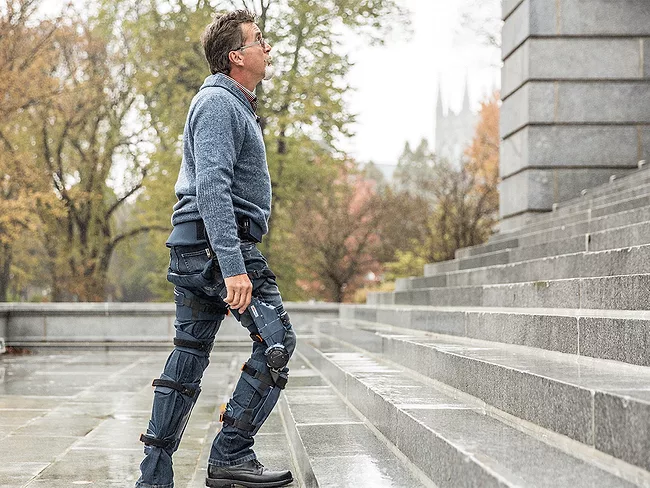
B-Temia Inc.’s Keeogo mobility device is on the move in the U.S. now that it has received 510(k) clearance from the U.S. FDA. Unlike currently available exoskeletons that move for patients, the Keeogo (keep on going) Dermoskeleton system amplifies signals from patients who can initiate movement but need additional assistance.
The BioWorld Artificial Intelligence price-weighted index, which includes biopharmaceutical companies, medical devices and health care services companies, has climbed in value and is currently up almost 37% year-to-date.
RapidAI, which focuses on imaging for stroke, has launched the Rapid Web App to help stroke teams stay updated on imaging results and communicate securely. Using the app, team members can receive real-time browser notifications of new cases, preview Rapid results and source files and engage in workflow communications via a desktop or laptop computer.
 RSS
RSS