New artificial intelligence capabilities will be integrated into widely used genomic testing for breast cancer under a new partnership formed by Agendia Inc. and Paige.ai. The two companies are working together to enhance the genomic information from Agendia's Mammaprint and Blueprint diagnostic tests with AI-based digital diagnostics provided by Paige with the goal of redefining precision oncology.
The U.S. FDA cleared Alivecor Inc.'s Kardia AI V2 interpretive electrocardiogram (ECG) algorithm for use in its personal ECG app and devices. Currently, the Kardia line permits consumers to take a 30-second medical grade ECG at home and instantly see whether they are exhibiting symptoms of atrial fibrillation, bradycardia, tachycardia or have normal heart rhythm.
The European Commission has awarded the CE mark to Hologic Inc. for its Genius Digital Diagnostics system for cervical cancer screening. According to the company, it is the first digital cytology platform to combine a new artificial intelligence (AI) algorithm with advanced digital imaging to assist cytotechnologists and pathologists in detecting precancerous lesions and malignant cells in women.
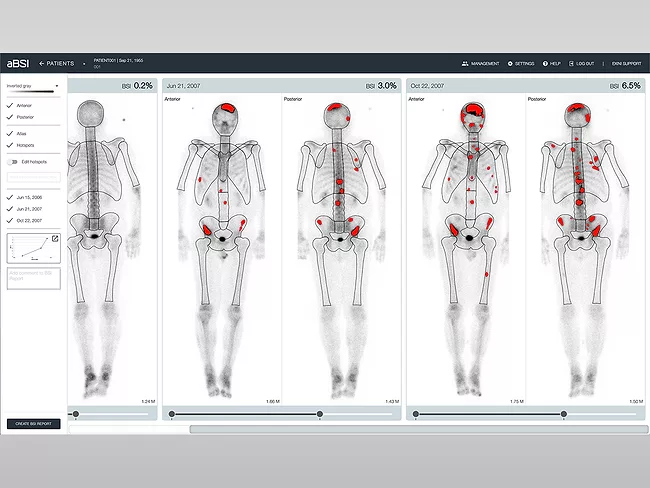
The U.S. FDA granted 510(k) clearance to Lantheus Holdings Inc.'s artificial intelligence (AI)-enhanced automated bone scan index (aBSI) product for prostate cancer on GE Healthcare's Xeleris platform. ABSI improves quantification and management of disease progression in advanced prostate cancer patients.
Varian Medical Systems Inc. has invested $10 million in and inked a collaboration agreement with Cota Inc., a Boston-based curator of oncology clinical data. The radiation oncology company will now offer its customers access to Cota’s oncology real-world analytics and data curation services, which aggregate electronic health record (EHR) data to yield meaningful insights.
As cases skyrocket and more questions arise about the high rate of false negatives returned by rapid testing in COVID-19 cases, a simple, new diagnostic test offers far greater accuracy. Researchers around the globe have found that artificial intelligence can detect coronavirus infections in recorded forced coughs, with nearly 100% accuracy in asymptomatic or presymptomatic cases, making it an ideal quick screening test. Forced cough or voice analysis shows strong results in other conditions, too, including pulmonary hypertension and, surprisingly, Alzheimer's disease.
The U.S. FDA has given its nod to a new solution that aims to help with the temporary reduction of sleep disturbance related to nightmares in certain people. Specifically, the agency reviewed the device, from Minneapolis-based Nightware Inc., through the de novo premarket review pathway and now is permitting its use in patients aged 22 years of age or older who are suffering from nightmare disorder or have nightmares from post-traumatic stress disorder (PTSD). The agency previously granted the solution breakthrough device designation.
The latest global regulatory news, changes and updates affecting medical devices and technologies, including: NICE reviews Dexcom’s G6; Ortho claims EUA for antigen test with 100% sensitivity.
By analyzing patients’ reactions to treatment, Oncohost Ltd.’s proteomics-based platform enables earlier prediction of paradoxical responses to immunotherapy that promote tumor growth in certain cancers. The artificial intelligence-powered host response profiling platform, called Prophet, could help identify the best combination of therapies and minimize adverse effects from treatments that are unlikely to be beneficial.
Castle Biosciences Inc.'s Decisiondx Diffdx-Melanoma test is now commercially available to help dermatopathologists better characterize melanocytic lesions. About 15% of suspicious pigmented skin lesions cannot be definitively determined to be benign or malignant using common methods. The new gene expression profile test reduces the number of indeterminate results by more than 70%.
 RSS
RSS