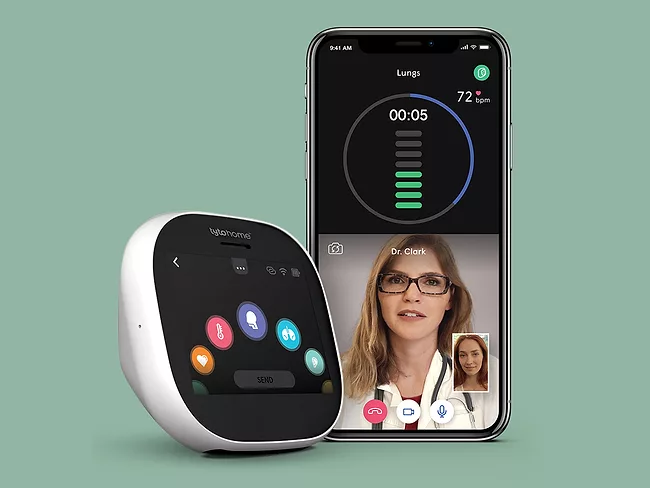
Over the last seven months, the pandemic starkly illuminated both the tremendous potential and the significant limitations of telehealth today. Tyto Care Ltd. benefited tremendously from the increase in physician visits using its proprietary all-in-one modular device and examination platform as patients tried to avoid exposure to the novel coronavirus. It also recognized the opportunity to improve the quality of remote interactions with artificial intelligence (AI).
Intervenn Biosciences said it has identified stark differences in the glycoproteomic profile of COVID-19 patients who became very sick and people infected with the SARS-CoV-2 virus who were either asymptomatic or experienced only minimal effects. The contrast could help clinicians better understand the biological mechanisms of the disease and triage patients at risk of responding detrimentally to early treatments and more intensive care.
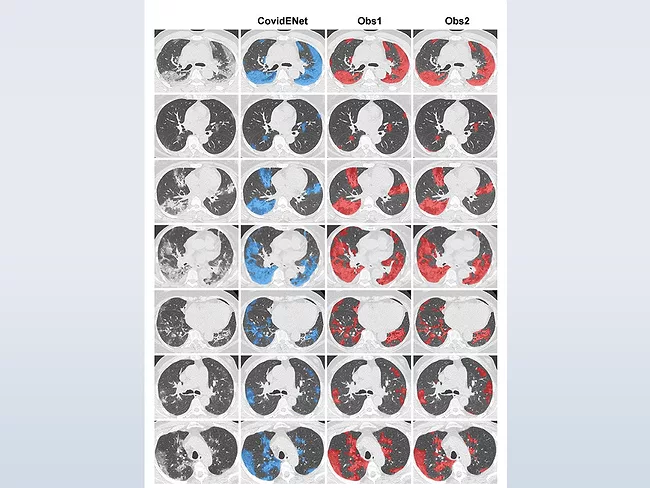
PARIS – A consortium that includes Therapanacea SAS, GE Healthcare France SAS, Orange Healthcare SA, the AP-HP group of 39 hospitals in the Paris region and the French academic society for thoracic imaging has created a database for COVID-19.
Belong.Life has expanded its digital clinical trial matching program to include patients with multiple sclerosis (MS). The technology uses advanced artificial intelligence (AI) that processes a patient's medical data and determines which trials in its global database are appropriate. The app typically returns results, which are prescreened by a clinical trial coordinator, in less than two days. More than 8,000 cancer patients have used the program so far.
COVID-19 stalled clinical trials, halted elective surgeries, and body slammed many med-tech companies’ revenues. Despite that, an industry report released by Ernst & Young (EY) finds that the pandemic also drove some positive changes in the med-tech industry including long-neglected attention to enterprise-wide business continuity.
An artificial intelligence machine learning model that mines electronic health record data could help physicians fight the opioid epidemic by targeting non-opioid pain treatments to patients experiencing severe pain after surgery, according to new research presented at the Anesthesiology 2020 annual meeting.
LONDON – French venture capital firm Kurma Partners has announced the first closing at €50 million (US$58.6 million) of its second fund to be wholly devoted to seed and early stage investment in diagnostics. Kurma Diagnostics 2 (KDx2) will be invested in molecular and digital diagnostics technologies being spun out of universities and research centers across Europe, backing a total of 15 companies.
PARIS – Gleamer SAS has secured $8.75 million in series A financing for its CE-marked artificial intelligence (AI) application that automatically detects all types of fracture in radiography. “This funding will allow us to move forward with launching Boneview around the world,” Christian Allouche, CEO and co-founder of Gleamer, told BioWorld.
HONG KONG – Novartis AG was cited during the recent 2020 KoNECT-MOHW-MFDS International Conference as an example of a biopharma firm staying ahead of the artificial intelligence curve.
HONG KONG – Novartis AG was cited during the recent 2020 KoNECT-MOHW-MFDS International Conference as an example of a biopharma firm staying ahead of the artificial intelligence curve. During this week’s 2020 Bioplus Interphex Korea conference, Won Kim, head of innovation at Novartis Korea, described some of the firm’s latest forays into AI, including negotiations with potential partners to develop an AI image analysis solution for retinal diseases.
 RSS
RSS