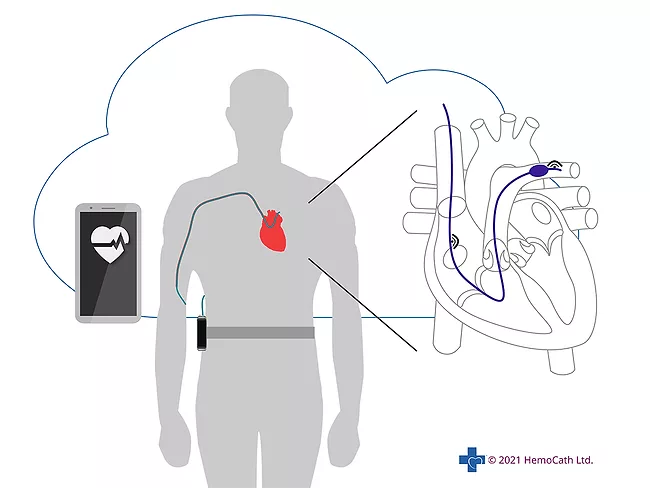
TORONTO – Hemocath Ltd. is gearing up for a first-in-human trial of a device that addresses two critical metrics for the treatment of heart failure: pulmonary artery and central venous pressure. Hemocath’s pulmonary artery catheter (PAC) is part of a larger heart failure monitoring platform and is intended to assess fluid status in patients with severe or worsening congestive heart failure. The hope is to replace larger, more invasive catheters inserted into a patient’s neck.
COVID-19 continues to dramatically reconfigure medicine as an ever-broadening array of digital therapies rolls out and telemedicine tackles increasingly complex applications. Abbott Laboratories’ newly launched Neurosphere Virtual Clinic exploits both trends to make management of chronic pain and movement disorders easier for patients.
Inflammatix Inc. raised $102 million in series D financing to advance development and commercialization of its novel immune response diagnostics portfolio. D1 Capital Partners led the round, with additional funds provided by existing investors Northpond Ventures LLC, Khosla Ventures, Think.Health GmbH, and OSF Healthcare Ventures, among others.
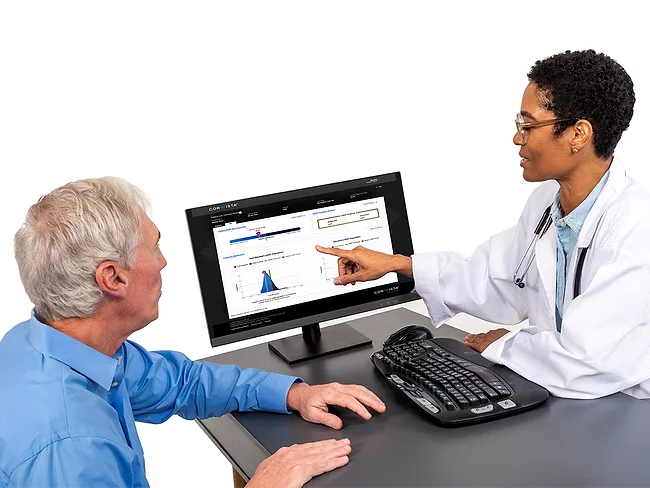
Corvista Health Inc., a subsidiary of Toronto-based Analytics for Life Inc., reported closing on $65 million in series C equity financing, bringing total cash raised for a new cardiac diagnostics device to nearly $100 million. The Corvista system is described as noninvasive, point-of-care diagnostic system for coronary artery and other cardiovascular diseases.
MIT Media Labs spinoff Empatica Inc. secured the CE mark for its Aura system, a wearable solution for the monitoring and early alert of respiratory infections, including COVID-19. For use with people 14 and older, Aura is commercially available in Europe and the U.K., and for pilot purposes in the U.S. – pending FDA authorization. Aura’s algorithm analyzes vital signs from Empatica smartwatches, comparing data against the wearer’s historical baselines. In validation studies, Aura was able to detect patients with possible H1N1 influenza, rhinovirus or SARS-CoV-2 infection with 0.94 sensitivity. Detection occurred on average two days after infection.
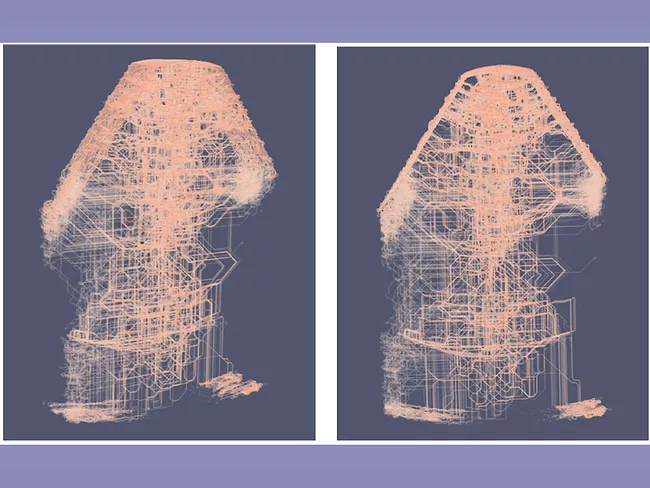
Medi-Scan Inc. has emerged from stealth mode with cloud-based software that converts the data on ultrasound analog 2D grayscale images into a digital 3D high-definition (HD) format in less than two minutes. The company is currently focusing its efforts on the heart and lungs, with the aim of providing quick, point-of-service evaluation and triaging of patients with heart disease and other conditions, including COVID-19.
HONG KONG – The Korea Advanced Institute of Science and Technology (KAIST) is making headway with its 3D holotomography technology, which enables a more accurate and systematic way to view cell-to-cell interactions. This could be a game changer for assessing cell therapy.
PARIS – Median Technologies SA has unveiled a new clinical development plan for its Ibiopsy platform to provide early diagnosis of lung cancer in at-risk populations using low dose CT scans. Median executives said they hope to demonstrate the potential of deep learning in identifying lung lesions and characterizing them as malignant or benign.
Corvista Health Inc. has raised $65 million in a series C equity financing led by Ambix Life Science Fund I LP. The new funds are earmarked for ongoing research, product development and commercialization of the company’s noninvasive, point-of-care (POC) solution for rapid detection of heart disease. Joining Ambix in the round were Medventure Partners and several new and existing investors. With this latest infusion, Corvista has raised a total of nearly $100 million.
A bad patient experience with telehealth can blunt adoption regardless of the incentives for developers and doctors. Griffin Mulcahey, chief compliance officer at Wheel Health Inc., of Austin, Texas, said during a recent webinar that users of these digital health apps and telemedicine programs may need assistance to get up to speed on an application, a critical effort that may make the difference between success and failure in telehealth.
 RSS
RSS