TORONTO – Radialis Medical Inc. has submitted FDA premarket notification for a positron emission tomography system (PET) that targets specific organs for low dose imaging and may be flexible enough to assess many different diseases. The Radialis PET camera is under clinical investigation at Toronto’s University Health Network and Princess Margaret Cancer Center for its ability to assess anomalies in breast cancer.
The FDA has granted clearance of Siemens Medical Solutions Inc.’s photon-counting computed tomography (CT) scanner, Naeotom Alpha. The new diagnostic imaging device uses a photon-counting detector that measures individual X-rays that pass through a patient's body, as opposed to current systems that use detectors that measure the total energy contained in X-rays at once. The scanner then transforms the information from the X-ray photons into a detailed three-dimensional image, which can be used by physicians to assist diagnosis or treatment preparation planning.
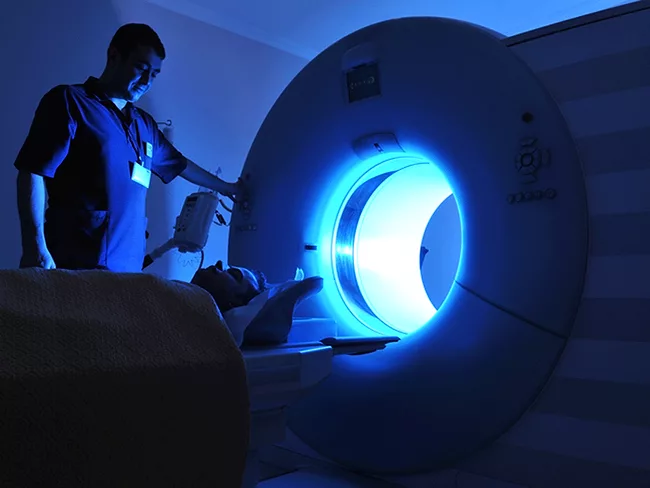
LONDON – A pan European research project is working with manufacturers and clinicians to set measurement standards that will transform magnetic resonance images from 2D and pictorial, to 3D and quantitative, significantly increasing their diagnostic power. The project, led by the U.K. metrology body, the National Physical Laboratory (NPL), aims to introduce consistency and specificity for diagnosing specific conditions, by setting independently verifiable ways of noninvasively measuring lesions and the composition of different tissues and organs.
Lightpoint Medical Ltd. is stepping up commercialization activities and collaborating with Telix Pharmaceuticals Ltd. on radio-guided cancer surgery. The companies plan to initiate prostate cancer clinical trials evaluating Lightpoint’s Sensei with Telix’s investigational prostate cancer single photon emission computed tomography (SPECT) imaging agent TLX599-CDx.
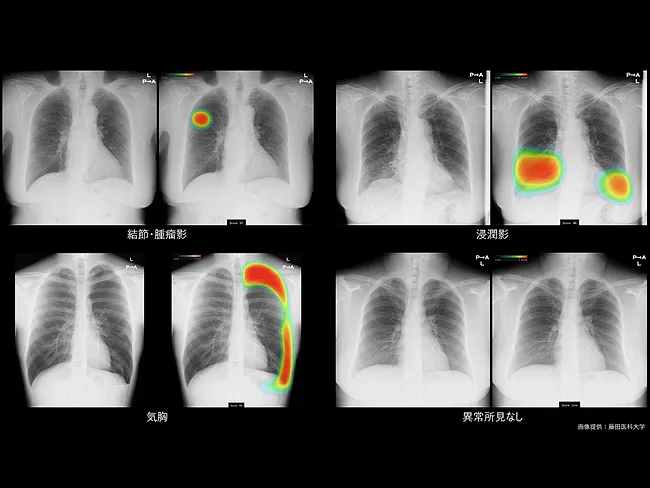
Fujifilm Holdings Corp. has bagged the Japanese Pharmaceuticals and Medical Devices Agency (PMDA)’s approval for CXR-AID, its artificial intelligence (AI) powered chest X-ray analysis system developed in collaboration with Lunit Inc.
Pulse Medical Imaging Technology (Shanghai) Co. Ltd. has raised more than $100 million in a series C funding round to accelerate the R&D, clinical trials and commercialization of its products. “Pulse plans to use the funds to accelerate the commercialization of its fractional flow reserve (FFR) estimating systems,” Xiaojie Lin, marketing director of Pulse, told BioWorld. FFR is a method to measure blood pressure and flow within a coronary artery to check on the possibility that the stenosis impedes oxygen delivery to the heart muscle.
The FDA has given the green light to Spintech Inc. for its STAGE (strategically acquired gradient echo) magnetic resonance imaging device. The post-processing software platform allows MRI technicians to capture higher-quality brain images in significantly less time than standard approaches.
Continuing its push to streamline the imaging industry from equipment to vertical integration, Nano-x Imaging Ltd. (Nanox) agreed to acquire Zebra Medical Vision Ltd. and signed a letter of intent to buy Usarad Holding Inc. and its related company Medical Diagnostics Web. The timing of the transactions, designed to create an end-to-end radiology solution, was not announced.
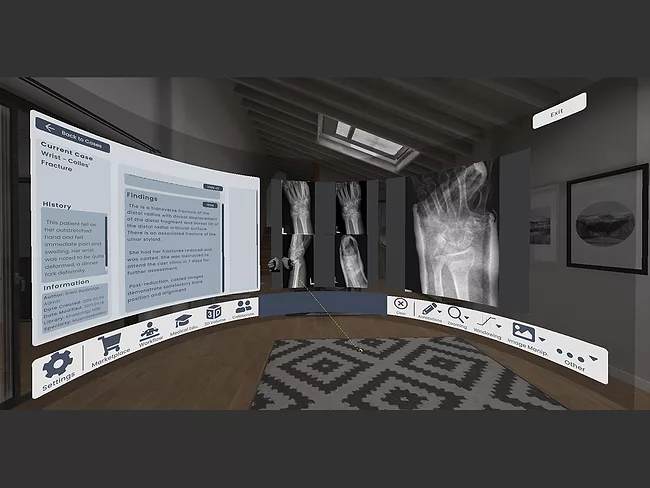
TORONTO – Health Canada has green-lighted an all-in-one virtual reality (VR) platform for use in diagnostic radiology. Software developer Luxsonic Technologies Inc. said the award of a class II medical device license to its mobile Sievrt suite of diagnostic tools is the first time a VR system of this kind has been approved by a national regulatory agency.
Rsip Vision Ltd. has maintained its momentum with a couple of new software module releases, one focused on sports medicine and another for robotic assisted surgery. The most recent release is a software module that enables deep learning-based segmentation of joint cartilage from MRI scans of hips, knees and ankles. “It's about using AI-based auto segmentation to provide clinically valuable measurements,” Moshe Safran, the CEO of Rsip Vision U.S., told BioWorld.
 RSS
RSS