Taiwan’s FDA rolled out two new supplementary regulations on periodic safety updates and adverse event notifications for medical devices in October. They are part of its Medical Device Management Law that was reported on Jan. 15. As Taiwan is stepping up innovation of and regulation for medical devices, the nation for the first time decided to separate the regulation of medical devices from pharmaceutical products.
Patient perspectives on medical device development are becoming much more central to the U.S. FDA’s regulation of devices, thus the August 2020 draft guidance for selection of patient-reported outcome instruments for device evaluation.
Intersect ENT Inc., a sinusitis implant company, reported $22.7 million in third quarter revenue, driven largely by a rebound in procedures with its Propel implants for chronic rhinosinusitis. This figure marks a 6% decline from the $24.1 million reported in the third quarter of 2019.
Patient perspectives on medical device development are becoming much more central to the U.S. FDA’s regulation of devices, thus the August 2020 draft guidance for selection of patient-reported outcome (PRO) instruments for device evaluation. However, the draft is sufficiently vague on the question of when an existing PRO can be tweaked without an entirely new validation study to prompt the Advanced Medical Technology Association (Advamed) to press the agency for more clarity on that point.
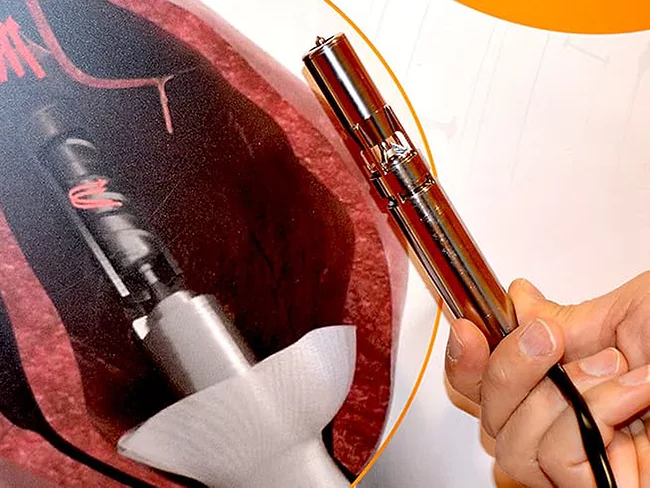
PARIS – Fineheart SA has announced the success of a 30-day preclinical trial to evaluate its implantable cardiac output management system (ICOMS) for patients suffering from severe heart failure. The device was well-tolerated with no related adverse events seen during the 30 days.
The PMA for the Neovasc Reducer device for treatment of drug-refractory angina faltered at an Oct. 27 U.S. FDA advisory committee, but it wasn’t for lack of support from star-power cardiologists. Gregg Stone, of the Cardiovascular Research Foundation, gave an impassioned plea for approval, pointing out that these patients have few options if they are poor candidates for bypass grafting or percutaneous coronary intervention. Stone said, “this is really a desperate patient cohort,” adding that a two-class improvement in angina severity “is a robust reduction.”
Abbott Laboratories saw improvement with its medical devices and diagnostics in the third quarter, which featured wins in the areas of COVID-19, diabetes, and structural heart. The company revealed its quarterly results on a Oct. 21 call, during which management said it was increasing its guidance for full-year adjusted earnings per share (EPS) to at least $3.55.
PERTH, Australia – During the COVID-19 pandemic, 90% of Australia’s clinical trials were put on hold, and the market cap of biotech and medical device companies on the Australian Securities Exchange dropped 5% to AU$11 billion (US$7.78 billion), according to a recent report by Australia’s Medical Technologies and Pharmaceuticals Industry Growth Centre.
PERTH, Australia – During the COVID-19 pandemic, 90% of Australia’s clinical trials were put on hold, and the market cap of biotech and medical device companies on the Australian Securities Exchange dropped 5% to AU$11 billion (US$7.78 billion), according to a recent report by Australia’s Medical Technologies and Pharmaceuticals Industry Growth Centre.
As with many conferences, the Cleveland Clinic’s 2020 Medical Innovation Summit went virtual this year. Still, the event featured the hotly anticipated top 10 list of innovations for 2021 that saw a range of therapies. Ranked in order of expected importance, the list was led by gene therapy for hemoglobinopathies. The top three innovations, including a novel drug for primary-progressive multiple sclerosis and smartphone-connected pacemaker devices, were highlighted in a special presentation.
 RSS
RSS