Diagnosis and treatment of infections typically occurs after people exhibit obvious signs of illness, such as fever or a cough. By then, they may already have exposed others and are well on the way to developing more serious symptoms themselves. In the military, such delays can hamper medical countermeasures to contain potential outbreaks and reduce downtime among active duty personnel. Now, Amsterdam-based Royal Philips NV and the U.S. Department of Defense's Defense Threat Reduction Agency and Defense Innovations Unit have built an early warning algorithm – using artificial intelligence – to detect infection before a person shows any signs or symptoms of infection.
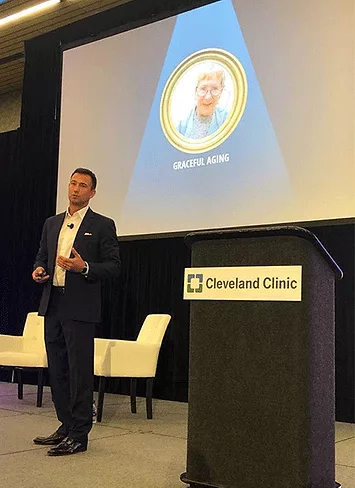
CLEVELAND – What are some of the biggest challenges related using to artificial intelligence (AI) in health care? A panel of experts tackled that question during a session Tuesday during the 2019 Medical Innovations Summit, while also discussing what their organizations have done in this space to advance patient care.
LONDON – A U.K. national plan to upgrade population cancer screening will see greater adoption of genomics and biomarker-based testing, and the use of artificial intelligence to help interpret results. There will be moves to make it easier to pilot and adopt novel diagnostics and to do more targeted screening to identify and follow people who are shown to be at greater risk of developing specific types of cancer.
The U.S. FDA has given 510(k) clearance to the Advanced Intelligent Clear-IQ Engine (AiCE) for Canon Medical Systems USA Inc.'s Aquilion Precision CT scanner. The regulatory green light brings artificial intelligence (AI)-based image reconstruction capabilities to the world's first ultra-high resolution CT imaging system.
CLEVELAND – Monday featured a big announcement during the 2019 Medical Innovation Summit, with the Cleveland Clinic and American Well revealing that they are partnering to create a joint venture (JV) focused on telehealth. The venture, dubbed The Clinic for now, was conceived "in order to achieve our joint vision and our ambitions in how to revise the delivery of care and to be at the forefront of it," said Semih Sen, chief business development officer, Cleveland Clinic, as part of a keynote delivered by Roy Schoenberg, president and CEO of Boston-based American Well.
HONG KONG – Singapore's Tan Tock Seng Hospital and Lucence Diagnostics Pte. Ltd. have teamed up to develop a next-generation decision support tool for liver cancer patients. The visualization tool, known as Liver3D, was designed to reduce the risks associated with liver cancer surgery. It does so by developing machine learning models based on radiology images of liver cancer patients for clinical decision support.
Sky Medical Technology Ltd. has cinched FDA clearance for a third indication for its geko device, a noninvasive, battery-powered wearable technology designed to increase blood flow in the deep veins of the lower legs. The Daresbury, U.K.-based company already had the agency's blessing for geko's use immediately after surgery to stimulate the calf muscles to prevent venous thromboembolism (VTE) and preoperative reduction of edema. Now the FDA has granted geko 510(k) clearance for stimulation of calf muscles to curb venous thrombosis in nonsurgical patients at risk of VTE.
Magnetic resonance imaging (MRI) machines typically require a dedicated shielded room, as well as an additional room with electronics for analytics. That makes MRI, with a typical costly system that requires whole body immersion and elaborate facilities, not particularly feasible for many health care settings.
Palo Alto, Calif.-based startup Doc.ai is training its sights on the $9.5 billion global epilepsy market, with the aim of using artificial intelligence to help patients find the best medication to control their seizures. To that end, the company is teaming up with the Stanford University School of Medicine and the Stanford Epilepsy Center on a digital health trial to develop a predictive treatment model that will identify the right treatment at the right time for individuals living with epilepsy.
PARIS – Incepto Medical SAS, of Paris, raised $6.2 million from three French venture capital funds – Axa Venture Partners, Bpifrance through its Patient Autonome Fund, and Cap Decisif – to develop its artificial intelligence (AI) medical imaging platform. "This funding round is a first step toward accelerating [the] rollout of our [AI] medical imaging solutions on a grand scale throughout France," Incepto CEO Antoine Jomier told BioWorld MedTech.

 RSS
RSS