Brainaurora Medical Technology Ltd. debuted on the Hong Kong stock exchange Jan. 8 with a HK$583.18 million (US$74.93 million) IPO, offering about 181.11 million shares at HK$3.22 per share.
Makers of digital health apps are not often subject to the provisions of the Health Insurance Portability and Accountability Act (HIPAA), but any such liabilities may soon become more onerous. The Department of Health and Human Services released a draft update for HIPAA cybersecurity mandates – the final version of which is sure to be accompanied by much more vigorous enforcement.
The Asia Pacific med-tech market is projected to reach $140 billion in 2025 in value, growing roughly 5% per year, driven largely by a rising demand for advanced and personalized medical technologies, including telemedicine and precision medicine.
The U.K. government will unveil its 10-year health plan to transform the national health service (NHS) in the coming months. At the center of this transformation is expected to be the adoption of artificial intelligence, digital and medical technologies. However, challenges in the NHS around its ‘core technology’, data capture and interoperability must be addressed before the government’s ambition can be realized.
The device industry is extraordinarily dependent on administrative activity where Medicare coverage is concerned, and this was exceptionally evident in 2024 when software and digital health coverage policies remained bogged down.
AI pulled in major financings and approvals for Asia med-techs in 2024 as Asia Pacific countries played to individual strengths to maximize AI’s applications in the health care sector. While breakaway AI technologies like OpenAI’s ChatGPT reshaped and boosted many industries, AI also drove major financings for APAC med-techs weathering a wider macroeconomic downturn, with AI-based companies accounting for five out of 11 IPOs tracked on BioWorld’s med-tech IPOs list.
The Asia Pacific med-tech industry is expected to grow to $225 billion by 2030. Despite that rosy outlook, the landscape become increasingly challenging as med-tech investment saw a notable downturn since its peak in 2021, with venture financing and M&A deals decreasing by 22% and 37%, respectively, over the past two years.
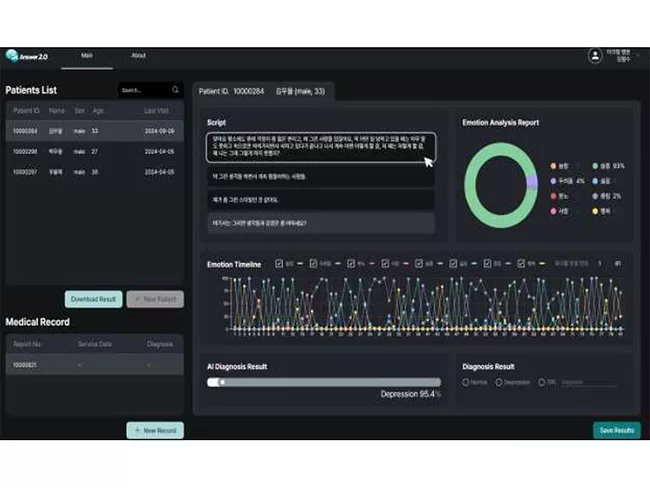
South Korea’s Ministry of Food and Drug Safety cleared Acryl Inc.’s Acryl-D01 as the country’s first AI-based digital therapeutic software solution to aid depression screening and diagnosis on Dec. 20. Approved as a class II software as a medical device, Acryl-D01 utilizes a patient’s medical records to quantify and analyze the individual’s emotional response and assess the probability of having clinical depression based on the data.
Promise Bio Ltd. emerged from stealth with $8.3 million in seed investment for its precision medicine platform, which addresses immune-mediated diseases. The funding will be used to accelerate the development of the company’s technology that analyzes proteins and their post-translational modifications to predict the treatment responses of patients with immune-mediated diseases.
Promise Bio Ltd. emerged from stealth with $8.3 million in seed investment for its precision medicine platform, which addresses immune-mediated diseases. The funding will be used to accelerate the development of the company’s technology that analyzes proteins and their post-translational modifications to predict the treatment responses of patients with immune-mediated diseases.
 RSS
RSS