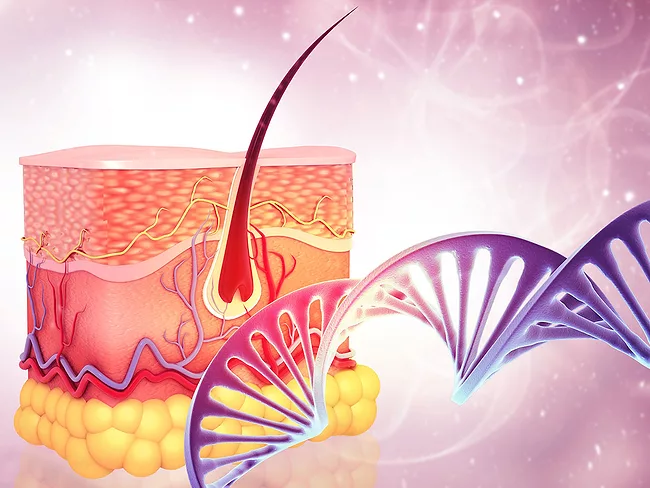
Dermatology specialist Leo Pharma A/S is moving into gene therapy with the $50 million acquisition of Replay Holdings LLC, a seed-stage company that is developing high capacity herpes simplex virus vectors to treat rare inherited diseases.
Microbiome specialist Enterobiotix Ltd. has raised £19 million (US$25.7 million) to fund phase IIb development of its lead program EBX-102-02 in the treatment of irritable bowel syndrome with constipation (IBS-C).
In its largest acquisition to date, Chiesi Group is buying Kalvista Pharmaceuticals Inc. for $27 per share, a roughly 40% premium to the previous day’s closing price, putting the total deal value at about $1.9 billion. In return, the Italian pharma firm adds to its rare disease franchise Kalvista’s recently approved hereditary angioedema (HAE) drug, plasma kallikrein inhibitor Ekterly (sebetralstat), which has gotten off to a strong commercial launch as the only orally available, on-demand treatment for HAE.
Sun Pharmaceuticals Industries Ltd. will pay $11.75 billion cash to acquire Organon & Co. The transaction is expected to close in early 2027. The addition of Organon’s women’s health products, legacy drug brands and biosimilars are expected to boost Mumbai, India-based Sun’s global reach. The all-cash buy is also expected to relieve Jersey City, N.J.-based Organon of an $8.6 billion debt pile, accumulated after its debt-laden 2021 spinout from Merck & Co. Inc.
Pilatus Bio Inc. is working to address a major under-addressed target of current checkpoint inhibitors: metabolic stress within solid tumors. “Traditional immunotherapies release immune ‘brakes,’ but they do not address the underlying metabolic stress in tumors,” Pilatus CEO and cofounder Raven Lin said. “That’s why more than 60% of solid tumor patients do not respond to treatment.”
New U.K. clinical trials regulations coming into force today, April 28, aim to reduce the time taken to get approval for studies and introduce a category of lower risk trials which will be automatically assessed in 14 days. The key measure to cut timelines is the Combined Review, under which sponsors will be able to submit a single application for regulatory review by the Medicines and Healthcare products Regulatory Agency and ethics review by the Health Research Authority, the body responsible for managing ethics committees.
The funding momentum that was building at the end of 2025 was maintained in the first quarter (Q1) of 2026, with a rebound in venture capital (VC) investment in U.K. biotech. Overall investment in the sector during Q1 was £552 million (US$748 million), of which £516 million was in VC.
Sun Pharmaceuticals Industries Ltd. will pay $11.75 billion cash to acquire Organon & Co. The transaction is expected to close in early 2027. The addition of Organon’s women’s health products, legacy drug brands and biosimilars are expected to boost Mumbai, India-based Sun’s global reach. The all-cash buy is also expected to relieve Jersey City, N.J.-based Organon of an $8.6 billion debt pile, accumulated after its debt-laden 2021 spinout from Merck & Co. Inc.
A flurry of deals focused on the neurological disease space in 2026 suggest large biopharma companies are searching for the next best therapeutics for everything from epilepsy and narcolepsy to post-traumatic stress disorder and hyperphagia.
Four months after receiving a complete response letter from the U.S. FDA for tolebrutinib to treat non-relapsing secondary progressive multiple sclerosis, Sanofi SA received a positive opinion recommending approval in the EU.
 RSS
RSS