Those who are burdened with Marfan syndrome face a lifetime of multi-organ system issues including potential aortic aneurysm, but help may be on the way in the U.K. The National Institute of Health and Care Excellence (NICE) has issued a recommendation that these patients be treated with personalized external aortic root support (PEARS) to treat both aortic root expansion and aortic dissection, although the agency indicated that this procedure is not quite ready for routine use in the National Health Service.
Endotronix Inc. reported positive data from the SIRONA 2 clinical trial evaluating safety and efficacy of its Cordella pulmonary artery pressure sensor system in New York Heart Association (NYHA) class III heart failure (HF) patients.
With drug shortages becoming a fact of life during the pandemic, the U.K.’s Medicines & Healthcare Products Regulatory Agency (MHRA) is issuing two guidances to help ensure access to essential medicines in Great Britain and Northern Ireland, especially during shortages and public health emergencies.
The French and German governments have just announced a major project to develop a digital platform for the early detection of new respiratory pathogen epidemics, and then monitor their spread and inform decisions on appropriate counter measures. The COVID-19 crisis has confirmed the need for a resilient multi-stakeholder surveillance and control system to manage current and future epidemics or pandemics.
Primary care doctors in England have been told by the National Institute for Health and Care Excellence (NICE) to prescribe a digital therapeutic instead of sleeping tablets for patients suffering with insomnia. Sleepio, an app developed by London-based Big Health Ltd. that uses an algorithm to provide personalized cognitive behavioral therapy (CBT), could benefit up to 800,000 people, according to NICE. It is recommending use of the app as an effective alternative to drugs such as zolpidem and zopiclone, after weighing evidence from 28 studies, including 12 randomized controlled trials.
Detecting the spread of cancer is a high priority for most health systems, but the U.K. National Health Service currently has a limited range of options when it comes to detecting breast metastases. That may change soon thanks to a review by the National Institute of Health and Care Excellence (NICE), which may endorse the use of the Sentimag system with Magtrace.
The first therapies for several rare diseases were among medicines given the green light by European regulators at their monthly meeting. The EMA’s Committee for Medicinal Products for Human Use (CHMP) gave a positive opinion for Sanofi SA’s Xenpozyme (olipudase alfa) for two types of Niemann-Pick disease and Eiger Biopharmaceuticals Inc.’s Zokinvy (lonafarnib) for children with Hutchinson-Gilford progeria syndrome or progeroid laminopathies. PTC Therapeutics Inc.’s Upstaza (eladocagene exuparvovec), the first medicine for adults and children with aromatic L-amino decarboxylase deficiency, was also backed by the CHMP.
Shares in Bavarian Nordic A/S jumped after the company received an order of its monkeypox vaccine from an “undisclosed European country.” The order comes amid a small but growing number of cases of monkeypox in Europe, with nine reported in the U.K. and further cases in Portugal and Spain, bringing the total in the continent to more than 20.
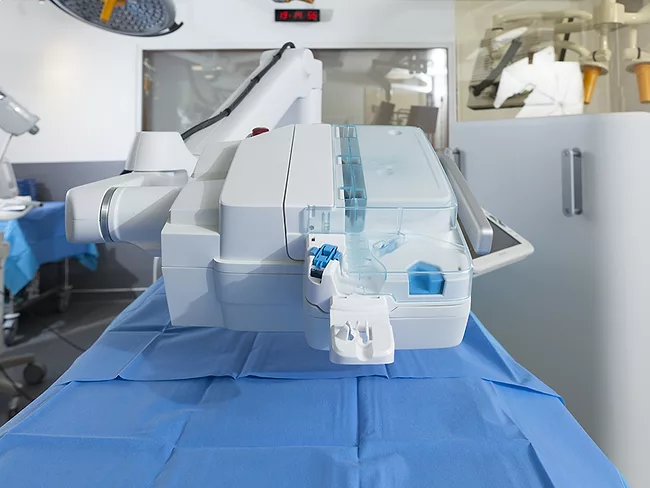
Robocath SAS presented results from the R-Evolution European clinical study assessing the safety and efficacy of its R-One robot for coronary angioplasty procedures. The study, which included 62 patients across six European centers, met all three primary endpoints, showing 100% clinical success, >95% technical success, and 84.5% average reduction in physician radiation exposure.
The European Commission (EC) has proposed new legislation directed toward formation of a European Health Data Space (EHDS), which is nominally intended to address some perceived gaps in the General Data Protection Regulation (GDPR). While this legislative proposal seems to interact with both the GDPR and pending EU legislation on artificial intelligence, the EHDS takes on the massive challenge of compulsory interoperability of electronic health records (EHRs). The EC unveiled the proposal with an emphasis on health data accessibility, although both the European Council and the European Parliament will now have their say over how the legislation will ultimately read.
 RSS
RSS