PARIS – Pcube-Lab BV has closed a $4.75 million funding round to deploy its eye tracking technology, Neuroclues, in Europe and the U.S. This technique helps with early diagnosis of neurological disorders such as Parkinson's, multiple sclerosis and Alzheimer's disease.
The European Investment Bank (EIB) pumped €15 million (US$17 million) into Xeltis BV to accelerate clinical programs for its polymer-based technology platform for cardiovascular restoration. The Eindhoven, Netherlands-based company is developing three types of cardiovascular implants. These are a pulmonary heart valve, coronary artery bypass graft and hemodialysis access grafts. The devices use a therapeutic approach called endogenous tissue restoration (ETR), which causes the patient’s own body to naturally restore a new blood valve. As the patient’s healing system develops a functional valve, Xeltis’ implant is gradually absorbed by the body.
Fujirebio Europe NV launched two new cerebrospinal fluid (CSF)-based immunoassays for Alzheimer’s Disease (AD) on its Innotest platform. It’s the first product launch for the company following a collaboration agreement signed with Adx Neurosciences NV in September 2020. The assays will test for neuronal pentraxin-2 (NPTX2) and soluble triggering receptor expressed on myeloid cells 2 (STREM2). Both neurology biomarkers are linked to synaptic dysfunction and neuroinflammation which are considered core features of AD progression. Fujirebio said the new tests will support existing research for AD drug development.
LONDON – Medical research charities that form an integral part of the U.K. health research system are still reeling from the impact of COVID-19 and now expect it will be three years before funding returns to pre-pandemic levels.
Glyconics Ltd. landed £1.5 million (US$2 million) in an Enterprise Investment Scheme funding round to finance a clinical trial of its diabetes screening tool, Glyconics-SX. The Cambridge, U.K.-based diagnostics company is developing a point-of-care, hand-held device using miniaturized infrared (IR) spectrometry. The technology scans fingernails, assessing glycation to identify diabetes within minutes.
LONDON – The first commercial implantations of Istar Medical SA’s minimally invasive Miniject supraciliary glaucoma drainage device have taken place in Germany, following European CE approval for the product.
The European Union’s Medical Device Coordination Group (MDCG) continues to churn out guidances for the new Medical Device Regulations (MDRs), but there are several nagging questions about devices granted market access under the legacy system. MDCG has clarified that these devices will be subject to postmarket surveillance requirements under the MDR system rather than the previous system, although it is not a simple process to determine when this approach does and does not apply.
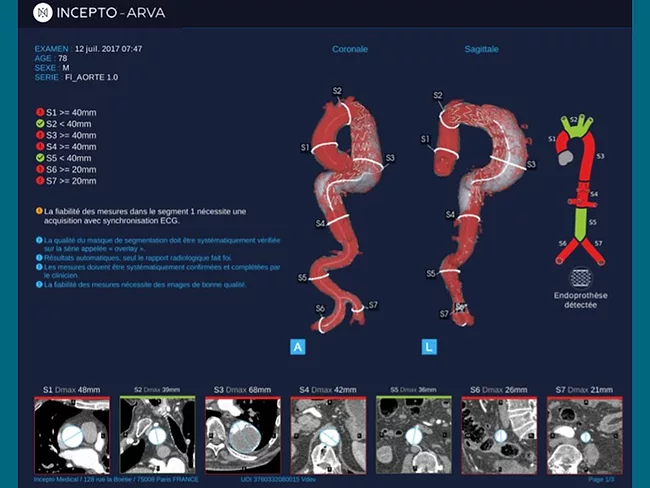
PARIS – Incepto Medical SAS, in partnership with Marie-Lannelongue Hospital, is developing an automated system to measure maximum aorta diameter. Called ARVA (Augmented Radiology for Vascular Aneurysm), it’s hosted in the cloud and is CE marked as a class I device. “Our tool uses the first algorithm to provide automatic measurement of external aortic diameter along the entire aorta, from ascending aorta to the iliac arteries,” Antoine Jomier, co-founder and CEO of Incepto, told BioWorld. This new tool for radiologists and surgeons will be used to diagnosis and monitor aneurysms.
NHS England has struck new pricing agreements that expands access in the U.K. to blood thinning direct oral anticoagulants (DOACs) to tackle strokes in patients with atrial fibrillation. Though still available to NHS clinicians, Boehringer Ingelheim GmbH’s blockbuster DOAC Pradaxa (dabigatran) is notably not involved.
A European approval for Alzheimer’s drug aducanumab by year-end looks even more in doubt. A week after being called in before the EMA’s Committee for Medicinal Products for Human Use (CHMP) for an oral explanation of the trial data, Biogen Inc. said it received a “negative trend vote” on the marketing authorization application. A formal opinion by the CHMP is expected at its December meeting, but analysts are not optimistic.
 RSS
RSS