LONDON – There is “a realistic possibility” that infection with the B 1.1.7 variant of SARS-CoV-2 is associated with a 30% to 40% increased risk of death compared to earlier variants of the virus, according to scientists on the U.K. government’s New and Emerging Respiratory Virus Threats Advisory Group. That conclusion is based on studies by three university groups, linking community PCR testing to mortality.
The implementation date for the European Union’s In Vitro Diagnostic Regulation (IVDR) is a mere 16 months away, although there is widespread interest in a delayed implementation date. Nonetheless, Warren Jameson, principal regulatory consultant for North American Science Associates (NAMSA) of Toledo, Ohio, urged test makers to conduct a gap analysis of the conformity of their currently marketed tests to the new regulations because a large percentage of the underlying dossiers would not pass muster under the terms of the new regulatory regime.
PARIS – France’s Comité Economique des Produits de Santé (CEPS), which reports to the Ministry of Health, has released its latest financial figures for medical device reimbursement. Health insurance expenditures amounted to $11.6 billion during the last full financial year reported by CEPS, representing annual growth of 4.66%. Over the last two years, more than half of expenditures have focused on four therapy areas: orthopedics, pulmonology/ENT, cardiac and vascular systems, and diabetes.
LONDON – A new national consortium of virologists has been set up to systematically assess how mutations in SARS-CoV-2 affect key outcomes such as effectiveness of vaccines and therapies, transmissibility of the virus and the severity of COVID-19 infections.
LONDON – A new national consortium of virologists has been set up to systematically assess how mutations in SARS-CoV-2 affect key outcomes such as effectiveness of vaccines and therapies, transmissibility of the virus and the severity of COVID-19 infections. Now is the critical time to do this, as the level of both natural and vaccine-conferred immunity that might drive natural selection is increasing, said Wendy Barclay, head of the department of infectious disease at Imperial College London, who is leading the G2P-UK (Genotype to Phenotype-UK) project.
LONDON – The U.K. has launched a nationwide free testing program to diagnose COVID-19 in people who are asymptomatic, in the latest attempt to stem the tide of infection. Through the program, all local authorities will provide rapid testing using lateral flow devices. In addition, companies will be provided with free tests to set up workplace screening. Initially, the focus of both strands will be on getting people who cannot work from home to come forward for regular checks.
LONDON – The 1,246 pages that make up the U.K./EU post-Brexit trade deal have “one paragraph we can build on,” said Steve Bates, chief executive of the Bioindustry Association (BIA), giving his initial reaction to the document published late on Dec. 24. That one paragraph refers to the setting up of a joint working group on medicinal products. It says the EU and the U.K. “shall endeavour to cooperate with a view to strengthening, developing and promoting adoption and implementation of internationally agreed scientific or technical guidelines.”
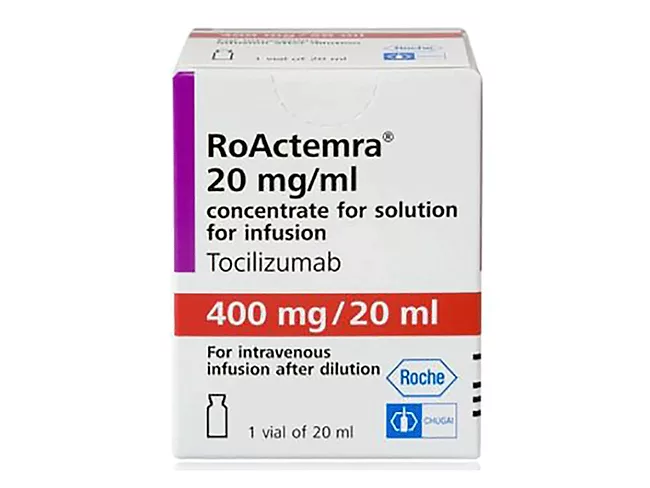
LONDON – The U.K. is to make treatment with interleukin-6 (IL-6) inhibitors standard of care for critically ill COVID-19 patients after a randomized trial found the arthritis drugs significantly improve survival.
LONDON – The EMA has recommended approval of Moderna Inc.’s COVID-19 vaccine, becoming the fourth western regulator to do so, after Israel approved the product on Jan. 5 and the FDA and Health Canada in December.
LONDON – Controversy has erupted over COVID-19 vaccines dosing after the U.K. said it is to prioritize giving as many people as possible a single dose of the two currently approved products, rather than two doses three or four weeks apart, as scheduled on their labels. The move prompted a sharp rebuke from FDA Commissioner Stephen Hahn and Peter Marks, director of FDA’s Center for Biologics Evaluation, who said any such change “is not rooted in the science.”
 RSS
RSS