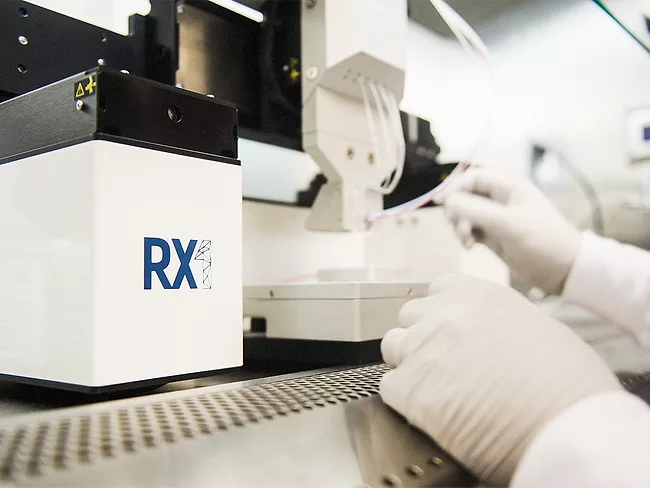
TORONTO – Kitchener, Ontario-based Nicoya Life Sciences Inc. has followed up CA$10 million (US$7.6 million) in series A funding raised in January with its launch of “the world’s first digital benchtop surface plasmon resonance (SPR) system” to boost development of drug therapies.
TORONTO – Vancouver, British Columbia-based Aspect Biosystems Inc. has raised CA$26 million (US$20 million) in series A funding to help develop 3D bioprinter technology that uses the science of microfluidics to create fresh human tissue.
Researchers at the Riken Center for Advanced Intelligence Project in Japan developed artificial intelligence (AI) technology that found previously unknown features related to prostate cancer occurrence in unannotated pathology images.
TORONTO – One year ago, medical device companies were threatening to leave Canada over a new mandatory audit program they felt was too onerous and expensive. Ottawa vowed to crack down on faulty implants which it said had helped kill more than 14,000 Canadians the previous decade.
TORONTO – Imagin Medical Inc., which has a presence near Boston and in Vancouver, British Columbia, will have verified and built a device in early January that meets all functional, electrical safety and radiated emission requirements for a new way of visualizing bladder cancer. Jim Hutchens, Imagin Medical’s president and CEO, said the i/blue imaging system should dramatically improve surgeons’ ability to visualize cancerous bladder cells by producing higher quality images more quickly compared with current methods.
The FDA took concrete steps Wednesday in mapping out import routes for prescription drugs by issuing a notice of proposed rulemaking and a draft guidance. If finalized, the proposed rule, for the first time, would implement a 20-year-old provision of the Federal Food, Drug and Cosmetics Act that gives the Health and Human Services (HHS) secretary the authority to authorize the import of certain small molecule drugs from Canada. However, the proposal is getting pushback from Canada.
The FDA’s proposed rule would, for the first time, implement Section 804 of the Federal Food, Drug and Cosmetics Act (FDCA), which allows certain small-molecule drugs approved in Canada to enter the U.S. market – if the Health and Human Services secretary certifies that the drugs would pose no additional risk to public health and safety and that they would result in a significant reduction in cost.
TORONTO – “I don’t want this to die in the lab. We’re putting a lot of effort into this and we have to commercialize it.” With those words Oleksandr Bubon, chief technology officer of Thunder Bay, Ontario-based startup Radialis Inc., in 2016 reported ambitious plans for an imaging device that detects early stage cancer tumors in the densest breast tissue. Not only will its novel “gapless” design prevent radiation needed to treat cancer cells from escaping, a common problem in conventional positron emissions tomography (PET), its manufacture and commercialization starts here in a northern Ontario city of just over 110,000 people.
TORONTO – Montreal’s Dialogue Technologies Inc. has received class 1 CE marking for artificial intelligence (AI)-powered software that enables the company’s existing telehealth platform to reduce the time required to triage patients in emergencies. The new AI-driven Dialogue Intake software also has “human-in-the-loop” capability ensuring real-time medical intervention to verify the accuracy of information provided physicians during telehealth consultation.
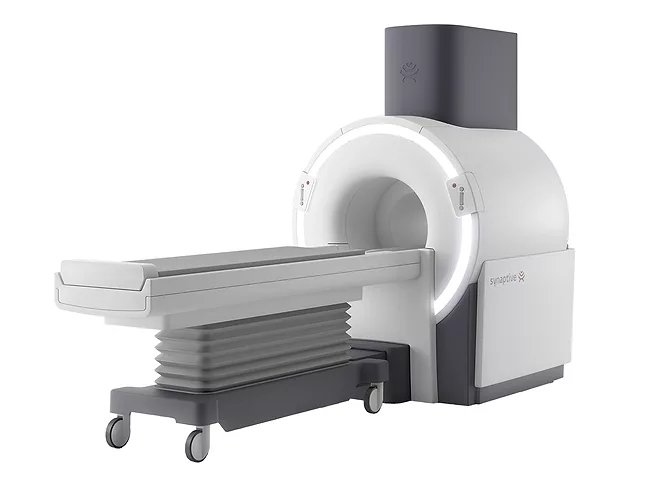
TORONTO – Synaptive Medical Inc. has completed the first round of a new preferred equity investment totaling $25 million led by Guelph-Ontario-based Linamar Corp., which also entered into a manufacturing agreement with Synaptive, and Calgary’s Audible Capital Corp.
 RSS
RSS