Johnson & Johnson (J&J) and its U.S.-based Janssen Pharmaceutical Cos. bowed out of an opioid trial set for June 28 in New York by reaching a last-minute settlement with the state.
The FDA’s recent release of documents related to its accelerated approval of Aduhelm (aducanumab) did little to reduce the controversy surrounding that decision and the U.S. pricing of Biogen Inc.’s Alzheimer’s drug.
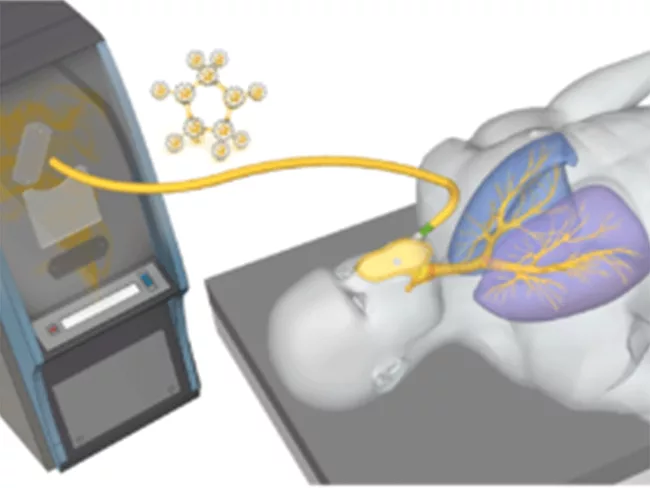
PERTH, Australia – Cyclopharm Ltd. said it received a complete response letter (CRL) from the FDA for its Technegas NDA for pulmonary embolisms. The CRL relates to better defining and validating production and delivery of the Technegas particle and other aspects of crucible manufacturing and dosimetry that need to be addressed before the NDA can be approved.
The U.S. House Appropriations subcommittee passed an appropriations bill for the FDA that would add $257 million to the agency’s budget authority for fiscal year 2022, an increase of 8% over the currently enacted level. The Alliance for a Stronger FDA said in a June 25 statement that it will work to ensure the Senate comes up with similar numbers, characterizing the push to fully fund the agency as “a multi-year marathon, not a sprint.”
The follow-up to the U.S. 21st Century Cures Act, dubbed Cures 2.0, encodes several anticipated features such as a Medicare coverage mechanism for breakthrough devices and the Advanced Research Projects Agency for Health (ARPA-H). Less expected was a provision for the use of real-world evidence in evaluation of the safety and effectiveness of drugs and biologics after FDA approval, a provision that could prove useful in post-approval evaluations of products such as Biogen’s Aduhelm.
In a split decision delivered June 21, the U.S. Supreme Court resolved the dilemma created by the constitutional non-reviewability of decisions rendered by the Patent Trial and Appeal Board (PTAB). The Supreme Court’s solution is to make those PTAB decisions reviewable by the director of the Patent and Trademark Office (PTO), although the PTO director’s discretion regarding which PTAB cases should be reviewed may itself prove highly controversial in the months and years to come.
In denying cert to Abbvie Inc. v. FTC June 21, the U.S. Supreme Court may have strengthened an FTC tool for going after biopharma companies that try to protect their patents. The high court’s refusal to hear the case reinforces a September decision by the U.S. Court of Appeals for the Third Circuit that the biopharma industry has said will make it more difficult for drug companies to pursue patent infringement cases in keeping with Hatch-Waxman.
The U.S. Supreme Court will not take up Amarin Corp. plc’s appeal of a September Federal Circuit decision that opened the door for generics of the company’s fish oil-derived cardiovascular drug, Vascepa (icosapent ethyl), to enter the U.S. market.
Biogen Inc.’s $56,000-a-year list price for its newly approved Alzheimer’s drug, Aduhelm (aducanumab), is sending tremors through the prescription drug pricing debate that could shift the epicenter of those discussions to drugs granted accelerated approval based on surrogate endpoints.
The U.S. Supreme Court, in a 7-2 opinion dismissing a challenge to the Affordable Care Act (ACA), removed a threat to the future of the Biologics Price Competition and Innovation Act (BPCIA) and the biosimilars pathway it created.

 RSS
RSS