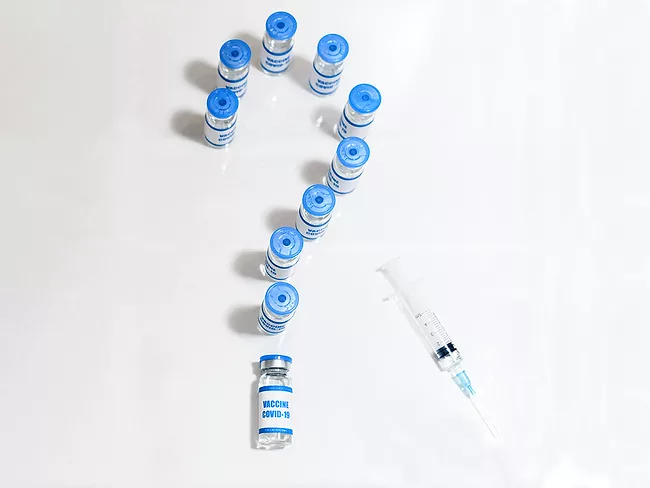
As members of the White House COVID-19 Response Team talk about COVID-19 boosters as if they are a fait accompli for Americans even before the FDA completes its evaluation of the data, the controversy continues to roil around the need for another vaccine dose.
The U.S. Federal Trade Commission (FTC) has taken a more assertive stance regarding enforcement of several considerations, most conspicuously about mergers and acquisitions. However, the agency’s push for less cumbersome processes has now been applied to a host of considerations pertinent to the life sciences, including bias found in artificial intelligence algorithms, abuse of drug patents, and repairs for medical equipment, a signal that more frequent and more rapid FTC enforcement is on the near horizon.
The Biden administration’s haste to roll out an eight-month COVID-19 vaccine booster program next week is bumping up against the reality of the data and the regulatory process.
With the U.S. logging more than 4 million new COVID-19 cases in the past few weeks, federal purchasing of antibody cocktails from Regeneron Pharmaceuticals Inc. and Eli Lilly and Co. is continuing to grow. The government has placed orders for $2.94 billion worth of Regeneron's REGEN-COV (casirivimab and imdevimab) and about $330 million of Lilly's etesevimab to complement doses of bamlanivimab it previously purchased. Both antibody combinations, approved under FDA emergency use authorizations (EUAs), have been shown to reduce risk of hospitalization or death from COVID-19.
The Biden administration may have jumped ahead of the FDA review when it announced last month that it planned to roll out COVID-19 boosters by Sept. 20, but that’s not likely to happen when it comes to the timing of vaccines for young children.
The days may be numbered for drug companies telling the FDA one thing to expedite approval and then telling the U.S. Patent and Trademark Office (PTO) something else to ensure they get a new patent.
The COVID-19 pandemic has exerted a significant effect on enforcement in the U.S., but Ethan Davis of King & Spalding (K&S) said federal prosecutors have made use of several novel approaches to prosecution in the past year.
The U.S. Department of Health and Human Services (HHS) reported a rescission of a September 2020 policy that would require that the secretary of health and human Services sign off on any rulemaking by HHS agencies. Despite the firestorm of criticism that followed the issuance of the September 2020 policy, attorney Jim Shehan, of Lowenstein Sandler, told BioWorld that the rulemaking process will remain exceptionally cumbersome, leaving in place a status quo that itself has been the target of repeated criticism.
Even as the Biden administration pushes for drug imports from Canada as a way to help curb U.S. prescription drug prices, Canada is doubling down on its efforts to protect its supply of drugs and medical devices.
In a precedential opinion, the U.S. Court of Appeals for the Federal Circuit affirmed a lower court’s conclusion that Belcher Pharmaceuticals LLC’s chief science officer engaged in inequitable conduct by withholding material information from the U.S. Patent and Trademark Office during prosecution of Belcher’s 9,283,197 patent.

 RSS
RSS