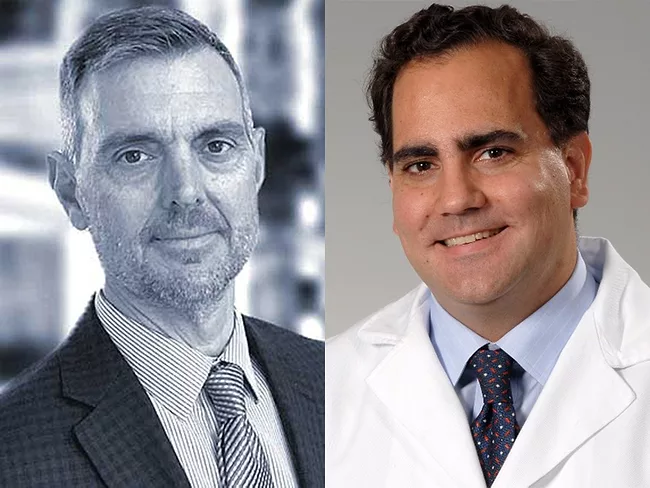
“They are not zombies, they are fallen angels.” That is view of Nick Johnston, a U.K-based banker who has come up with a new plan to rescue listed companies whose market capitalizations have fallen below the cash in hand after failures in clinical development programs.
A U.S. FDA CDER official is among the first to say the quiet part out loud in proposing a Sept. 12 deadline for the agency to respond to Vanda Pharmaceuticals Inc.’s request for summary judgment or a hearing on CDER’s refusal to approve tradipitant to treat gastroparesis.
Europe was a bigger counterpart to China in pharmaceutical dealmaking than the U.S. last year, speakers at Chinabio Partnering Forum said April 23, and the trend is likely to continue in 2025 with the shuttering of U.S. capital and volatility ailing global markets.
On Jan. 21, economist Jay Bhattacharya spoke publicly for the first time since becoming the current NIH director, addressing the NIH Council of Councils in an open session. The goal of Bhattacharya’s remarks seemed to be to reassure troubled staffers. His reassurances, however, were given in the face of another blow to NIH research.
If U.S. sectoral tariffs on biopharmaceuticals become a reality and most country-by-country tariffs on other medical products resume, manufacturers may have to rethink their use of U.S. free trade zones to turn foreign-sourced active pharmaceutical ingredients and other components into finished products for the U.S. market.
Tired of waiting for the U.S. Congress to get around to making meaningful reforms to pharmacy benefit manager (PBM) practices, states are beginning to take the matter into their own hands. Arkansas recently became the first state to pass a law stopping PBMs, their affiliates or their parent companies from acting as a "fox guarding the henhouse" by being both a price setter and price taker, as the legislation puts it.
Harvard University has filed a lawsuit claiming the Trump administration’s freezing of its federal funding is unlawful and beyond the government’s authority. Announcing the move, Harvard’s president, Alan Garber, highlighted the impact of freezing $2.2 billion in grants – and the threat to freeze a further $1.1 billion – will have on the university’s biomedical research.
As pharma deals with the impact of U.S. NIH grant cuts and the imposition of tariffs, a lot of pressure is shifting to smaller and midcap companies, according to two executives who spoke on the newest BioWorld Insider podcast.
First quarter earnings reports from Johnson & Johnson and Abbott Laboratories provided some surprising insights into the likely hit med-tech companies will sustain with current tariffs. The main takeaway? The impact of the trade war with China is far greater than expected by most analysts.
Nearly three weeks into the job, U.S. FDA Commissioner Marty Makary provided a comprehensive overview of his vision for the much-reduced agency, even as he’s taking first steps to implement his agenda.
 RSS
RSS