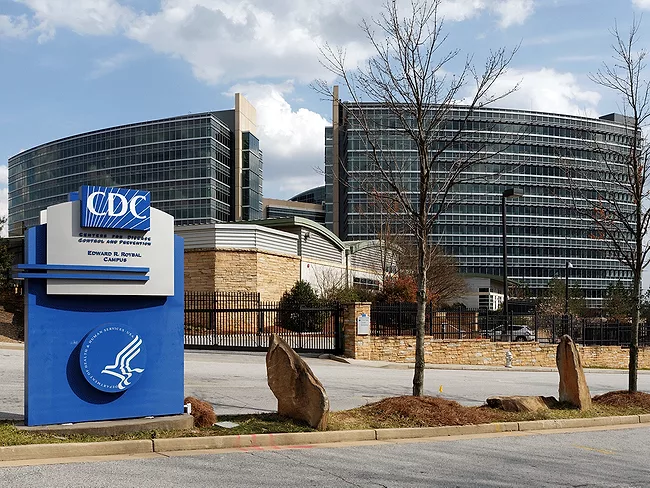
Shortly before the Senate Health, Education, Labor and Pensions Committee was to hold the first ever confirmation hearing for a U.S. CDC director March 13, it issued a statement saying the hearing was canceled due to the White House withdrawing its nomination of Dave Weldon, a physician and former congressman from Florida.
The pairing of Mallinckrodt plc and Endo Inc. is expected to create a pharma heavyweight that will generate $3.6 billion in 2025 revenue after the duo combines their generic pharmaceuticals businesses and Endo’s sterile injectables setup. Terms call for Dublin-based Endo shareholders to collect $80 million in cash and own 49.9% of the combined firm. Owners of stock in Mallinckrodt will hold the rest of the new entity in the arrangement, which bears an enterprise value of $6.7 billion and is expected to close in the second half of this year.
The Vivani Medical Inc. combination appears to be over less than three years since its inception after the company reported plans to spin off Cortigent, the division that develops brain implants. Vivani said it plans to create two focused companies dedicated to driving current and future value in their respective therapeutic areas.
Looking to shave $65 million from its annual expenditures while streamlining the first stage of its two-level grant review process, the U.S. NIH is proposing to centralize the peer review of all applications for grants, cooperative agreements and R&D contracts within its Center for Scientific Review.
Celltrion Inc. is on a biosimilar roll with the U.S. FDA this month, having gained clearance of Stoboclo and Osenvelt as products referencing Amgen Inc.’s biologic, denosumab (Prolia, Xgeva), along with Omlyclo becoming the first and only interchangeable biosimilar to omalizumab (Xolair, Genentech Inc. and Novartis AG).
Vivace Therapeutics Inc. closed a $35 million series D round led by RA Capital Management, an existing investor, and including other backers already on board: Canaan Partners and Cenova Capital. Proceeds will support the continued development of what the company describes as its first-in-class and best-in-class transcriptional enhanced associate domain autopalmitoylation (TEAD) inhibitor, VT-3989, with an initial focus on mesothelioma.
Ono Pharmaceutical Co. Ltd. struck a licensing deal with Ionis Pharmaceuticals Inc. for sapablursen, which is in phase II trials for polycythemia vera. Under terms, Osaka, Japan-based Ono gains an exclusive license to develop and commercialize sapablursen worldwide. Carlsbad, Calif.-based Ionis will be responsible for completing the ongoing phase II Imprssion study, while Ono will be responsible for subsequent development, regulatory filings and commercialization.
In what it says is the biggest obesity deal to date, Zealand Pharma A/S has signed up Roche AG to a potential $5.3 billion global collaboration and license agreement to develop petrelintide, an amylin analog that is currently in phase IIb development. The two companies will co-develop and co-commercialize petrelintide and combination products, including a fixed-dose combination of petrelintide and CT-388, Roche’s dual GLP-1/GIP receptor agonist.
In another real-life episode of “sponsor beware,” the owners of a clinical research facility pleaded guilty March 10 in U.S. district court to fraud charges resulting from their conduct of two clinical trials for potential asthma drugs.
Getting the Ensuring Pathways to Innovative Cures (EPIC) Act through the U.S. Congress to do away with the “pill penalty” in the Medicare drug price negotiations could require an epic effort, given the current politically fueled atmosphere on the Hill. With the Inflation Reduction Act (IRA), which created the negotiations, considered a signature achievement of the Biden administration, the negotiations have become, for many lawmakers, almost a sacred cow that can’t be touched. If anything, some of them want to expand the negotiations to more drugs and to the commercial market.
 RSS
RSS