With False Claims Act (FCA) whistle-blower lawsuits multiplying amid the complexity of regulations that often are unclear, the U.S. Supreme Court provided some clarity as to what constitutes a false claim in a unanimous opinion handed down June 1. But it’s not what the biopharma and med-tech industries were hoping for.
The U.S. FDA has granted 510(k) clearance to GE Healthcare Technologies Inc. for its Precision DL for PET/CT, an artificial intelligence (AI) and deep learning (DL)-powered software designed to sharpen quality and improve efficiencies in medical imaging. Part of the company’s Effortless Recon DL portfolio, the technology is available on GE’s Omni Legend PET/CT digital scanner.
Most enforcement activities in the U.S. related to physician participation in fraud deal with activities that run to six figures at most, but the U.S. Department of Justice (DOJ) reported recently that it has snared a much bigger fish.
The U.S. FDA has issued a final guidance for non-clinical performance testing for tissue containment bags used during power morcellation procedures, and the FDA had recommended in 2020 containment bags always be used during morcellation procedures. Despite the FDA’s advisory, a survey of surgeons published last year suggested that most of these procedures are not done with these containment systems, possibly because the rate of procedure-related complications is considerably higher when containment is used.
The U.S. FDA has awarded Locate Bio Ltd. a breakthrough device designation for its Ldgraft spine fusion product for the treatment of degenerative disk disease, paving the way to the first in human study later this year.
Boston Scientific Corp., has announced that it has abandoned its plans to acquire M.I. Tech Co. Ltd., of South Korea after opposition was announced by the U.S. Federal Trade Commission (FTC). The FTC lauded the news with a May 24 statement that cited the agency’s cooperation with other national regulatory authorities as a factor in scotching the proposed acquisition, the second time in recent weeks that government agencies have grounded mergers and acquisitions in the med-tech space.
Patent disputes over medical technology exert a significant influence on a company’s fortunes in the marketplace, and a recent decision by the U.S. Court of Appeals for the Federal Circuit reinforces yet again the importance of patent protection for device manufacturers. In a decision filed May 24, the Federal Circuit decreed that patents for catheters held by Teleflex Innovations were not rendered ineligible by what Dublin-based Medtronic plc had asserted was prior art, thus dealing Medtronic a blow in its efforts to have the five Teleflex patents in question rendered null.
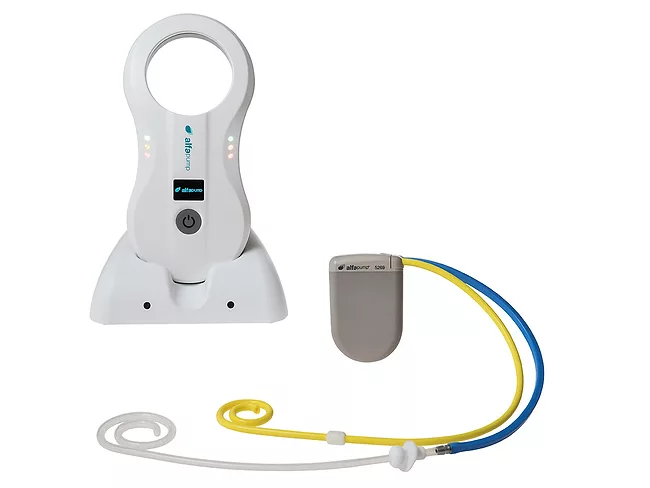
Sequana Medical NV is considering listing in the U.S. as it builds towards the commercialization of its Alfapump, CEO Ian Crosbie told BioWorld in an interview. The company has received a U.S. FDA breakthrough device designation for Alfapump, which treats recurrent or refractory ascites due to liver cirrhosis, and it completed a pivotal study in 2022. The company intends to file the data with the FDA by the end of this year, with the hope of getting premarket approval before the end of 2024.
The U.S. FDA granted clearance to two tests developed by Thermo Fisher Scientific Inc. to predict preeclampsia, Brahms PIGF plus Kryptor and Brahms sFlt-1 Kryptor. Both had previously received breakthrough designation. Preeclampsia, a hypertensive disorder, is the leading cause of maternal and fetal mortality and morbidity across the globe.
The U.S. Department of Justice announced that a judgment of more than $487 million has been lodged against Cameron-Ehlen Group Inc., of Bloomington, Minn., for alleged violations of the False Claims Act (FCA) in connection with the company’s distribution of products used in cataract surgeries. That final amount is more than 10 times the amount alleged to have been billed illicitly to federal health programs, a clear signal that inducement of this sort will be met with severe penalties.
 RSS
RSS