Fraud perpetrated on U.S. federal health care programs is the stuff of nightmares among U.S. enforcement agencies, and yet another pair of fraudsters have been rounded up by the Department of Justice (DOJ).
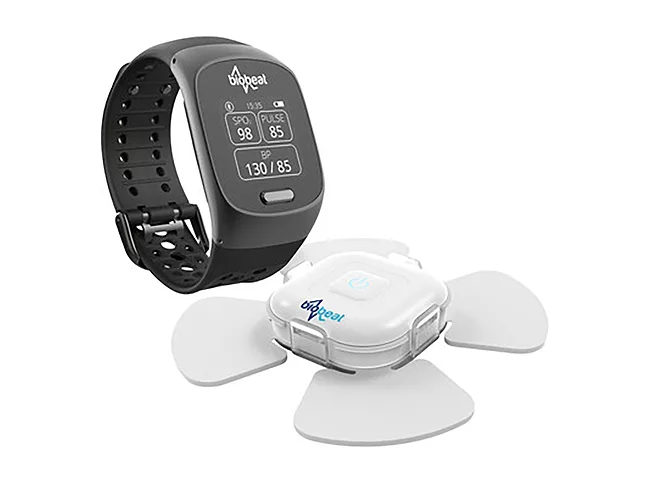
Biobeat Technologies Ltd. expanded its U.S. FDA-cleared remote patient monitoring offerings with a double nod from the agency for its sensors to monitor stroke volume and cardiac output. The two new indications join its capabilities for measuring the five vital signs assessed in any medical visit—blood pressure, blood oxygen saturation, pulse rate, respiratory rate and body temperature—all of which can be done using photoplethysmography (PPG) on sensors embedded on either a short-term chest patch or a more durable wrist monitor.
Depuy Synthes Inc., of Raynham, Mass., has agreed to pay $9.75 million to settle allegations that several members of its sales team had induced an orthopedic surgeon to use the company’s products in orthopedic procedures by offering free implants and surgical instruments. The fine comes under the guise of a False Claims Act violation but might have been substantially larger but for the fact that Depuy reported the issue to federal authorities.
For the second time in recent weeks, Apple Inc. has come out on the losing side of a patent dispute adjudicated by the U.S. International Trade Commission (ITC), this time at the hands of Masimo Corp. While an ITC administrative law judge (ALJ) found for Masimo in connection with one of the company’s patents, Cupertino, Calif.-based Apple was cleared of any infringement in connection with four other Masimo patents, and the ITC has yet to officially declare what sort of remedy it will impose on Apple over the dispute with Irvine, Calif.-based Masimo.
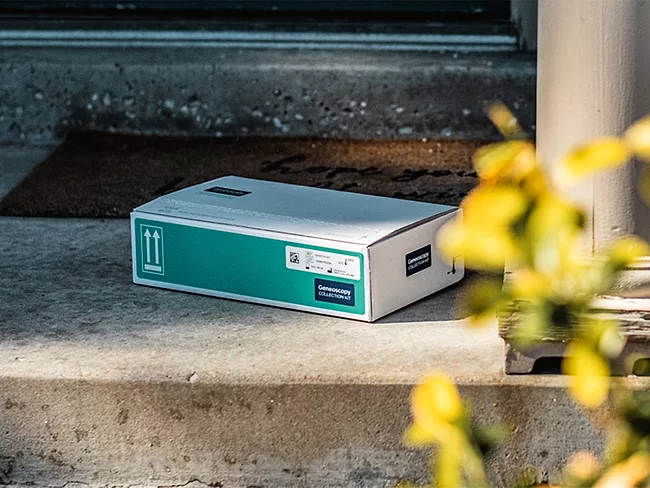
Diagnostics startup Geneoscopy Inc. said Tuesday it has completed a PMA submission for its noninvasive, stool-based, at-home screening test for the detection of colorectal cancer (CRC) and advanced adenomas (AA) in average-risk individuals. The filing is based on positive results from the company’s pivotal CRC-PREVENT trial that met all primary outcome targets, including sensitivity and specificity for CRC and AA.
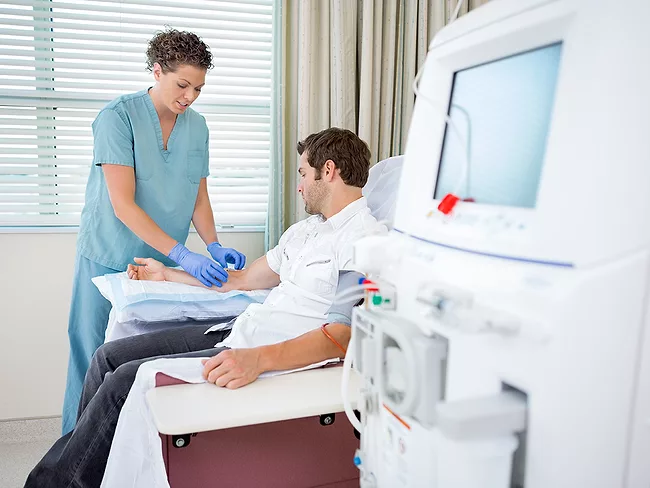
Vasc-Alert LLC’s surveillance technology successfully predicts which dialysis patients are at risk of experiencing stenosis, a study published in the Journal of Vascular Access shows. Patients assigned high scores by the company’s algorithm had seven times the risk of stenosis and blockage compared to those with low-risk scores.
Selux Diagnostics Inc. received U.S. FDA 510(k) clearance for its next generation phenotyping (NGP) system, a rapid antibiotic susceptibility test (AST) platform that determines a bacteria’s susceptibility to 14 specific antimicrobial agents in less than six hours. Prompt identification of the narrowest effective antimicrobial for an infection is critical to the battle to preserve the efficacy of critical antibiotics and slow the development of ‘superbug’ infections.
Magstim Inc. received U.S. FDA clearance for use of its Horizon 3.0 and E-z Cool Coil to treat adult patients diagnosed with both obsessive compulsive disorder (OCD) and major depressive disorder (MDD). The company’s non-invasive transcranial magnetic stimulation (TMS) therapy offers an option for patients who do not find adequate relief from the often life-disrupting symptoms of OCD with exposure therapy or medication.
The U.S. Department of Health and Human Services received low marks on its latest Government Accountability Office (GAO) report card for its oversight of high-risk research involving potential pandemic pathogens, but legislative fixes might be necessary to ensure that all the gaps are closed.
The U.S. FDA has given the green light to Abbott Laboratories Inc. for its Navitor next-generation transcatheter aortic valve implantation (TAVI) system for the treatment of patients with aortic valve stenosis who are at increased risk of open-heart surgery. Abbott won European approval of Navitor in May 2021.

 RSS
RSS