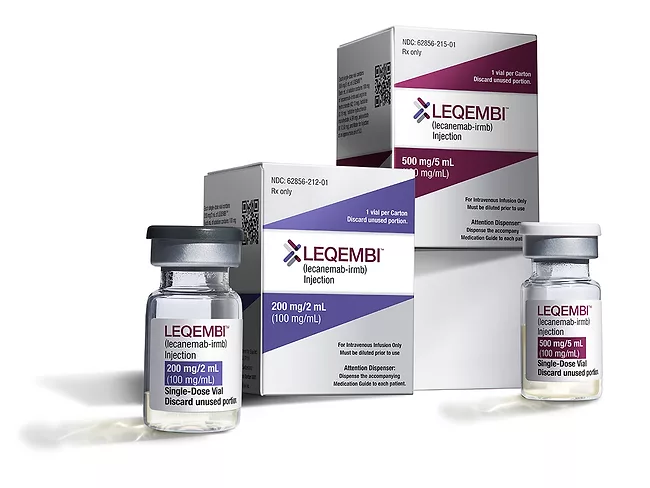
The black box warning appended to the label of Alzheimer’s disease (AD) drug Leqembi (lecanemab) took some on Wall Street mildly aback but failed to surprise others, as analysts mulled what the full approval, granted July 6 by the U.S. FDA, might mean for other developers in the space.
The U.S. FDA has approved a non-hormonal treatment from Astellas Pharma Inc. to reduce the number and severity of hot flashes. Veozah (fezolinetant), an oral, once-daily compound that targets the neurokinin-3 (NK3) receptor, is approved for treating moderate to severe vasomotor symptoms due to menopause. It’s the first NK3 receptor antagonist the FDA has greenlighted for the indication. The approval came on May 12, well before its May 22 PDUFA date. The PDUFA date was originally set for Feb. 22 but the FDA extended it, saying it needed more time to complete the NDA’s priority review. Veozah’s wholesale acquisition cost is $550 for a month’s supply and should be available by early June.
The U.S. Inflation Reduction Act (IRA) may look like domestic affair, but the drug price controls it is bringing in are set to impact the biopharma sector across the globe.
The U.S. International Trade Commission (USITC) is launching an investigation into the importation from China of certain thyroid hormone receptor-beta agonists, products containing them and the manufacturing processes being used.
With China taking steps to enact or propose amendments to more than 60 intellectual property (IP)-related laws and regulations over the past few years, drug and device companies doing business in the country need to keep abreast of the changes. Despite China’s efforts, most of the participants in the Feb. 9 U.S. Patent and Trademark Office’s quarterly China IP webinar indicated in a pre-webinar survey that they have yet to see much of an improvement in China’s enforcement and regulation of IP rights.
Proposed mergers with Chinese companies will likely be subject to increased scrutiny from the Committee on Foreign Investment in the United States (CFIUS) as evidenced by the temporary hold placed on the merger between F-star Therapeutics Ltd. and Sino Biopharmaceutical Ltd.’s Invox Pharma Ltd. that was announced in June 2022.
As expected, the U.S. FDA gave its go-ahead to lecanemab, an amyloid-beta binder for mild cognitive impairment caused by Alzheimer’s disease (AD) and mild AD from Biogen Inc. and Eisai Co. Ltd, which have assigned to the compound the brand name Leqembi.
The U.S. FDA has had a long-standing guidance dealing with drug manufacturing facilities that delay or deny FDA investigators’ attempts to inspect a manufacturing facility, but that policy was exclusive of device manufacturing facilities up until passage of the FDA Reauthorization Act (FDARA) of 2017. FDARA’s expansion of the policy to include device manufacturing facilities has prompted a rewrite of an existing 2014 guidance.
Ironically, one of the casualties of the COVID-19 pandemic is an overdue review and revision of U.S. dual use research of concern (DURC) policies, as well as the Department of Health and Human Services’ Potential Pandemic Pathogen Care and Oversight guidance. Consequently, several senators are asking the White House to halt all ongoing and new viral gain-of-function and DURC studies in the life sciences that involve enhanced pathogens of pandemic potential.
With only a year to go before 100% compliance with the U.S. Drug Supply Chain Security Act’s serialization provisions will be required from the beginning to the end of the drug supply chain, most biopharma manufacturers are pretty confident they’re ready for the Nov. 27, 2023, deadline. But distributors? Not so much. And they lay the blame at the manufacturers’ feet.
 RSS
RSS