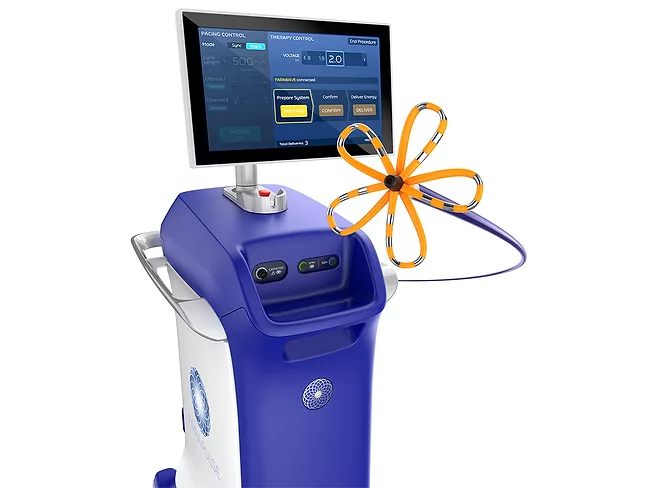
Growth in the first quarter for Boston Scientific Corp.’s blockbuster products, Farapulse and Watchman, pushed the company well over analysts’ expectations and gave management confidence to raise its guidance for the year to 15% to 17% up from 12.4% to 14.5%, despite a projected $200 million in tariff impacts.
The U.S. FDA has granted de novo clearance for Epiminder Pty. Ltd.’s Minder implantable device for continuously monitoring brain activity in patients with epilepsy.
The U.S. FDA’s authority to require cybersecurity measures in premarket submissions is a radical change for industry, but firms must document that they have erected solid cybersecurity measures.
In all practicality, U.S. FDA Commissioner Marty Makary’s recently announced policy directive removing industry representatives from the agency’s advisory committees may have little effect on the makeup of the drugs and devices committees, which typically include them as nonvoting members.
Tightening of U.S. regulation and capital is leading Chinese biotechs to alternative and new models of financing, ranging from cross-border licensing deals, M&As, the so-called newco model and overseas listings.
Synthetic Design Lab Inc., which emerged from stealth with a $20 million seed round and a platform technology aimed at advancing the antibody-drug conjugate (ADC) space, began with its founders identifying a single clear goal: how to deliver more payload to a target cancer cell.
“They are not zombies, they are fallen angels.” That is view of Nick Johnston, a U.K-based banker who has come up with a new plan to rescue listed companies whose market capitalizations have fallen below the cash in hand after failures in clinical development programs.
The use of Renalytix plc’s Kidneyintelx biomarker-based prognostic test led to increased and targeted use of sodium-glucose cotransporter 2 (SGLT2) inhibitors in patients at risk of diabetic kidney disease, compared to untested patients, according to data from a study.
Staffing cuts at the FDA’s device center led to speculation that the current user fee program may be fatally damaged, but Mark Leahey, president and CEO of the Medical Device Manufacturers Association, said in a meeting in Columbus, Ohio that there are too many resources for FDA at stake for the user fee program to be ended.
The Advanced Medical Technology Association released a policy proposal for AI in medical devices that took the U.S, FDA to task for its guidance for predetermined change control protocols for AI, stating that the guidance is “inconsistent with the statutory authority” for PCCPs.
 RSS
RSS