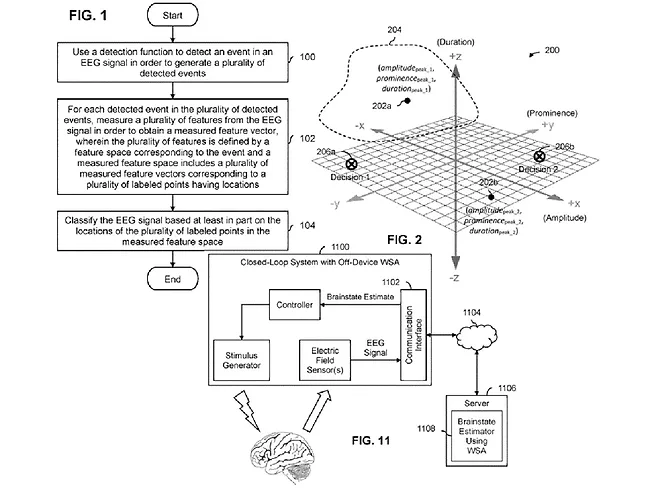
The first patenting from Encephalogix Inc. details its development of platform that uses machine learning and AI to analyze EEG data that is typically ignored.
Moderna Inc.’s shares (NASDAQ:MRNA) sank 19% to a $64.11 low in early trading Sept. 12 as investors learned during the annual R&D Day event of a $1.1 billion reduction to R&D and the U.S. FDA’s reluctance to support an accelerated approval filing for its individualized neoantigen therapy for melanoma.
The U.S. FDA issued warning letters to a pair of non-clinical testing labs located in China for violations of good laboratory practices, but the fall-out may reach existing marketing authorizations.
A drive to overcome the limitations of traditional antibodies led Toronto-based scientists Jean-Philippe Julien and Bebhinn Treanor to work toward discovering a multivalent, multispecific platform to develop therapies that can reach difficult targets. As a result, through the support of VC firm Amplitude Ventures, Radiant Biotherapeutics emerged in 2020 armed with what has become its Multabody platform.
Two leading glucagon-like peptide-1 (GLP-1) receptor agonists for obesity and type 2 diabetes – Novo Nordisk A/S’s semaglutide (Wegovy/Ozempic) and Eli Lilly and Co.’s tirzepatide (Mounjaro/Zepbound) – are advancing in China after taking the U.S. market by storm. China represents the world’s largest population of diabetes and obesity patients. Its GLP-1 market, valued at about $1.7 billion in 2023 according to Clarivate, is expected to grow as the number of obesity patients is projected to exceed 500 million by 2033.
Friday the 13th could be a make-or-break day in the U.S. for Intercept Pharmaceuticals Inc.’s Ocaliva (obeticholic acid). That’s the day the company will make its case before the FDA’s Gastrointestinal Drugs Advisory Committee for turning an 8-year-old accelerated approval into traditional approval.
Criminal and civil charges related to insider trading were filed Sept. 10 against Dishant Gupta based on his stock purchases of Epizyme Inc. in the months leading up to its acquisition by Ipsen SA.
Spectrawave Inc. surfed to a $50 million haul in its series B fundraising round for its Hypervue intravascular imaging system. The company appears to have captured the attention of at least one strategic investor, as Johnson & Johnson Innovation-JJDC Inc. led the round.
The FDA’s Sept. 5, 2024, draft guidance for the use of patient preference information (PPI) over the total product life cycle represents a new set of requirements for device makers when obtaining such information. Going forward, device makers may be required to provide more detail about patient heterogeneity, including when the benefit-risk calculation varies by subpopulation.
Another day, another insider trading deal involving biopharma stock. One of the latest U.S. SEC cases involves a retired dentist, Stephen Forlano Sr., who traded on a tip passed on through his son from a close friend who was an analyst at an investment firm handling a strategic financing collaboration with Harmony Biosciences Holdings Inc.
 RSS
RSS