Even as the court challenges continue, the first round of U.S. government price negotiations for selected Medicare Part D drugs officially began Oct. 1 with manufacturers of those drugs having to sign agreements to participate in the process. While the Centers for Medicare & Medicaid Services had yet to disclose, as of press time, how many manufacturers signed the negotiation agreements, all the companies with selected drugs reportedly had indicated they would sign by the deadline even as they pursue litigation.
Three years after Alnylam Pharmaceuticals Inc. gained U.S. FDA approval of the first treatment for rare disease primary hyperoxaluria type 1 (PH1), Novo Nordisk A/S solidified its own marketing clearance for RNAi therapy Rivfloza (nedosiran).
With Tofidence (tocilizumab-bavi), a monoclonal antibody from Biogen Inc., the U.S. FDA has approved the first biosimilar to the Roche Group AG’s Actemra (tocilizumab), a blockbuster with declining numbers. Tofidence was greenlighted Sept. 29 for treating rheumatoid arthritis in adults, and for treating polyarticular and systemic juvenile idiopathic arthritis in those ages 2 and older. It’s also the first biosimilar approved to treat systemic juvenile idiopathic arthritis.
Cordis Corp. covered its bets a bit as it closed the acquisition of M.A. Med Alliance SA (Medalliance) announced almost a year ago. While the total payment for the company could total $1.135 billion, it could take six years for the owners of privately held Medalliance to see most of the funds.
The U.S. FDA has finally let fly with a draft rule for regulation of lab-developed tests (LDTs), an 83-page document that delves into the legal controversies regarding whether the agency has the requisite statutory authority. However, Allyson Mullen, a director in the D.C. office of Hyman, Phelps & McNamara P.C., told BioWorld that the emergence of this draft rule doesn’t mean Congress won’t eventually be dragged back into the LDT fray, particularly if stakeholders litigate to overturn the draft.
After a long and bumpy path to approval, the U.S. FDA has finally given the green light to Cyclopharm Ltd’s Technegas combination product a day after the Sept. 29 PDUFA date.
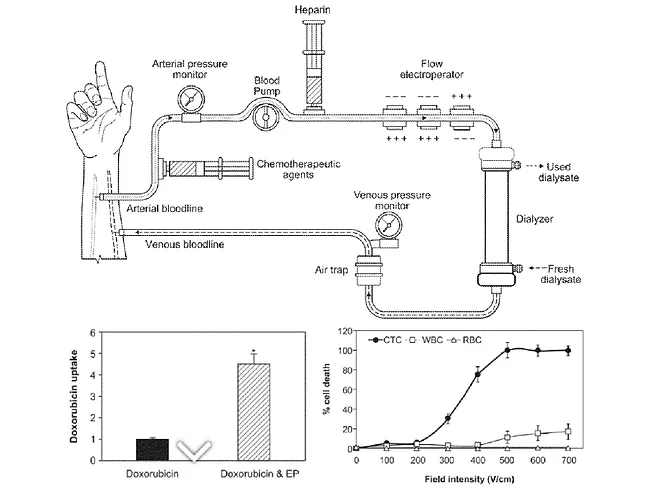
U.S. researchers reported seeking patent protection for methods to neutralize circulating tumor cells (CTCs) during hemodialysis to prevent cancer metastasis and reduce cancer-related deaths.
After a nearly year-long delay pegged to COVID-19 travel restrictions, the U.S. FDA has approved Amicus Therapeutics Inc.’s Pompe disease drug, introducing competition for Sanofi SA’s standard-of-care treatment and anticipating blockbuster sales. The combination of Pombiliti (cipaglucosidase alfa-atga) and Opfolda (miglustat) 65-mg capsules was approved for adults with late-onset Pompe disease, who weigh at least 40 kg and who are not improving on their current enzyme replacement therapy.
The Advanced Research Projects Agency for Health (ARPA-H) reported the opening of a series of regional offices that focus on both administrative and research assignments, a development that may bolster cures and treatments for tough-to-treat conditions. However, the U.S. House and Senate have different ideas about how much money the agency will receive in 2024, casting a cloud of uncertainty over how many projects the agency will be able to finance in the twelve months that will start on Oct. 1, 2023.
The fungus Candida auris has become an urgent clinical problem at a shocking speed. It was not even mentioned in the U.S. CDC’s 2013 reports on antimicrobial threats, but was one of five pathogens on the agency’s 2019 top-tier Urgent Threat List.
 RSS
RSS