Fractyl Health Inc. reported clinical updates on the Revita real world registry in Germany which has demonstrated clinical remission from type 2 diabetes (T2D) employing a device that resurfaces the duodenal mucosa, the innermost layer of the first portion of the small intestine, and a potential root cause of T2D.
Hypertrophic cardiomyopathy (HCM) might not be the talk of the town in the world of cardiology medical devices, but the condition has a devastating effect on a large number of lives, particularly in the case of early disease onset. San Francisco-based Viz.ai Inc. has won a de novo from the U.S. FDA for its algorithm for identification of patients at risk of HCM, the aptly named Viz HCM, a product the company believes will not only save lives but may save the U.S. health care system a large amount of money as well.
Bruker Corp. signed a definitive agreement to acquire functional cell biology company Phenomex for $108 million as part of its Project Accelerate 2.0 strategy, which increases focus on the company’s emerging proteomics and spatial biology business. Bruker offered $1 per share, a 150% premium over the 40 cents per share closing price of Phenomex stock on Aug. 16. The all-cash transaction is slated to close in the fourth quarter of 2023.
Delcath Systems Inc. reported that the FDA approved its Hepzato Kit for the treatment of adults with unresectable hepatic-dominant metastatic uveal melanoma (mUM). The FDA nod also triggered a second tranche of financing of approximately $35 million from a private placement in March.
Acorai AB received a U.S. FDA breakthrough device designation for its Heart Monitor, a noninvasive intracardiac pressure monitoring device for patients with heart failure. The Acorai Heart Monitor can estimate diastolic pulmonary artery pressure, systolic pulmonary artery pressure and mean pulmonary artery pressure in patients with Stage C heart failure who have been referred for hemodynamic monitoring.
The U.S. Centers for Medicare & Medicaid Services has proposed to terminate the coverage with evidence development requirement for the use of positron-emission tomography (PET) imaging for patients suspected of suffering from beta amyloids, a marker of Alzheimer’s disease (AD). However, CMS is also considering a removal of the coverage policy that limits each patient to a single PET scan per lifetime, although the proposal to allow Medicare administrative contractors (MACs) to determine coverage is drawing fire from industry and physician groups alike.
The U.S. FDA’s position on predetermined change control protocols (PCCPs) is still in draft form, even though at least one company has won a marketing authorization with a PCCP attached to the underlying artificial intelligence (AI) algorithm. While the agency is still on the fence about a PCCP that incorporates a potential change in the indication for use, regulatory attorney Brigid DeCoursey Bondoc told BioWorld that industry should not reflexively avoid proposing a PCCP with a such change so long as the proposal includes answers to the questions the FDA is sure to ask.
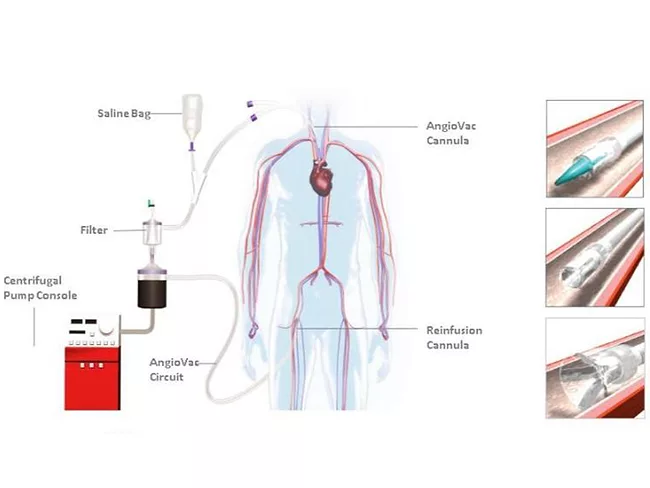
Lush vegetation is great for a gardener, but alarming for a cardiologist. For them, the news that Angiodynamics Inc. received U.S. FDA breakthrough device designation for its Angiovac system to remove vegetation from the right heart is surely cheering. Right heart vegetations--masses of fibrin, platelets and infectious pathogens--are indications of serious infective endocarditis.
It’s been 25 years since the U.S. FDA issued a final guidance on informed consent and nine years since it asked for comments on a draft guidance to supersede that 1998 guide.
Often when the U.S. FDA’s Office of Prescription Drug Promotion (OPDP) determines that the marketing of a drug crosses the line of misbranding, it hands the sponsor an untitled letter schooling it on how the promotional materials run afoul on safety or efficacy claims.

 RSS
RSS