Neuraxis Inc. has initiated a clinical study to evaluate the efficacy of its IB-Stim neuromodulation system in treating children with post-concussion syndrome (PCS). The aim is to see whether IB-Stim can ease the constellation of symptoms that occur after mild traumatic brain injury such as headaches, dizziness and problems with concentration and memory.
In response to the Biden administration announcing on Aug. 29 the first 10 medications up for price negotiations with the Centers for Medicare & Medicaid Services as part of the Inflation Reduction Act of 2022, U.S. Senate and House Republicans are firing back, calling the imposed “price-controls set by Washington bureaucrats” part of a scheme that “will lead to higher prices for new drugs coming to market, stifle the development of new cures and destroy jobs,” ultimately driving up costs for seniors.
After hitting the safety and efficacy endpoints in a pivotal study of wet age-related macular degeneration (AMD), Outlook Therapeutics Inc.’s CEO said he had not expected to receive a complete response letter (CRL) from the U.S. FDA. The BLA for ONS-5010 (bevacizumab-vikg) now is on hold, the company said, because the agency said chemistry, manufacturing, and controls management problems were getting in the way, along with “open observations from pre-approval manufacturing inspections, and a lack of substantial evidence.”
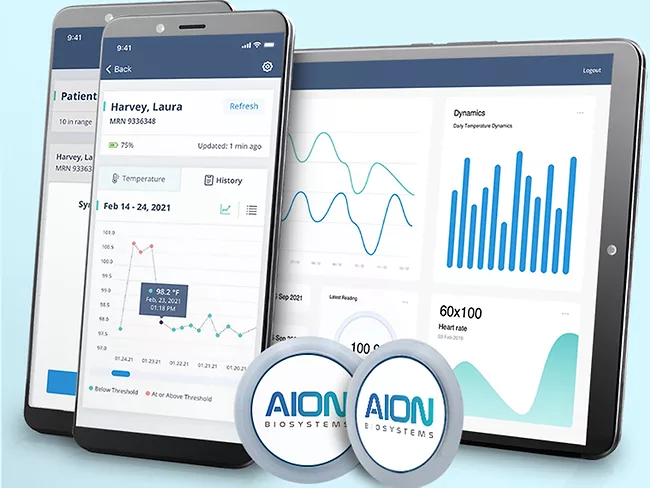
Aion Biosystems Inc. may be operating at a fever pitch right now, with FDA 510(k) clearance in hand for the company’s Itempshield device, which provides continuous measurement of body temperature. The company is targeting use of the quarter-sized device for patients with cancer and individuals in long-term care.
The list of 10 part D Medicare drugs listed by the Centers for Medicare & Medicaid Services (CMS) as eligible for negotiation raised some eyebrows on Wall Street, but proved mostly in accord with what the industry expected. Under the Inflation Reduction Act, Medicare can for the first time bargain with drug companies. The back-and-forth begins this year, carrying into next year, and the agreed-upon prices will take effect in 2026.
Cochlear Ltd. and Sensorion SA have published encouraging results on the combination of a molecule with a cochlear implant. Their proof-of-concept phase 2a study involved the combination of an orphan drug recognized in both Europe and the U.S. with cutting edge hearing aid implants to enhance the auditory capabilities of hearing aid users.
Babson Diagnostics Inc. has line of sight for the commercial launch of its Betterway blood testing ecosystem, which is a less invasive way of taking blood and requires only one-tenth of the sample volume of venipuncture without sacrificing quality or accuracy. The company said that once the collection device developed in partnership with Becton Dickinson & Co. (BD) is cleared by the U.S. FDA, Betterway will be launched in Texas, where it already has established partnerships with retailers and where its commercial lab is up and running. In addition, Babson has fully validated a broad set of miniaturized assays that are ready for commercial processing in its CLIA-certified, CAP accredited laboratory.
Theken Companies LLC reported the acquisition of Visionair Solutions Inc. from the Cleveland Clinic, a deal that adds pulmonary therapy to its broad portfolio with Visionair’s 3D platform for the creation of silicon stents for central airway obstructions (CAOs). Terms of the transaction, which has officially closed, were not disclosed.
Two papers published in Nature on Aug. 23, 2023, describe brain computer interfaces (BCI) with unprecedented capabilities for decoding brain activity into sentences, translating at speeds around half that of normal speech, and with vocabularies exceeding 1,000 words.
The U.S. FTC has recalibrated its challenge to Amgen Inc.’s $27.8 billion acquisition of Horizon Therapeutics plc while one of the biggest trade groups has voiced its concerns about the government’s role in the deal. An amicus brief from the Biotechnology Innovation Organization (BIO), along with the Illinois Manufacturers Association, the Chicagoland Chamber of Commerce and the Illinois Biotechnology Innovation Organization, calls the FTC expansion into such deals overreach that chills pro-competitive biopharma mergers.
 RSS
RSS