A quartet of companies on May 2 announced three complete response letters (CRLs) that left them scrambling to get back on the path to approval. Hutchmed Ltd.'s surufatinib met with word from the U.S. FDA that two positive phase III studies in China and a bridging study in the U.S. would not support approval of the drug for pancreatic and extra-pancreatic neuroendocrine tumors. A multi-regional clinical trial in the U.S. is needed, the regulator said, brushing aside China-only studies when seeking a U.S. approval.
Not satisfied with the findings of a World Trade Organization (WTO) dispute panel, Turkey informed the WTO April 28 that it has initiated arbitration proceedings to review those findings, which involve an EU complaint about measures Turkey employs concerning the production, importation and marketing of prescription drugs.
The U.S. Centers for Medicare & Medicaid Services’ (CMS) decision last month restricting coverage of a class of Alzheimer’s drugs to clinical trials meeting the agency’s standards still isn’t sitting well with some lawmakers.
Orphalan SA is laying the ground for a 2023 U.S. launch of Cuvrior for the treatment of Wilson’s disease, following FDA approval of the copper chelating drug. Cuvrior (trientine tetrahydrochloride) is a new salt of trientine that was designed to have superior properties to Syprine (trientine hydrochloride) from Bausch Health Companies Inc. and Cufence from Univar Solutions BV, which are approved as second-line treatments for the rare inherited copper transport disorder, in the U.S. and EU respectively.
The latest in a spate of draft and final guidances released recently by the U.S. FDA could help sponsors developing drugs to treat early stage solid tumor malignancies.
A quartet of companies on May 2 announced three complete response letters (CRLs) that left them scrambling to get back on the path to approval. Hutchmed Ltd.'s surufatinib met with word from the U.S. FDA that two positive phase III studies in China and a bridging study in the U.S. would not support approval of the drug for pancreatic and extra-pancreatic neuroendocrine tumors. A multi-regional clinical trial in the U.S. is needed, the regulator said, brushing aside China-only studies when seeking a U.S. approval.
The U.S. FDA has granted premarket approval for Transmedics Group Inc.’s OCS heart system for use with organs from donors after circulatory death (DCD). The approval expands on a prior FDA approval of the device for use with organs from donors after brain death in September 2021. Andover, Mass.-based Transmedics said its system can now be used for ex vivo reanimation, functional monitoring, and beating-heart preservation of donation-after-circulatory-death hearts.
Not satisfied with the findings of a World Trade Organization (WTO) dispute panel, Turkey informed the WTO April 28 that it has initiated arbitration proceedings to review those findings, which involve an EU complaint about measures Turkey employs concerning the production, importation and marketing of prescription drugs.
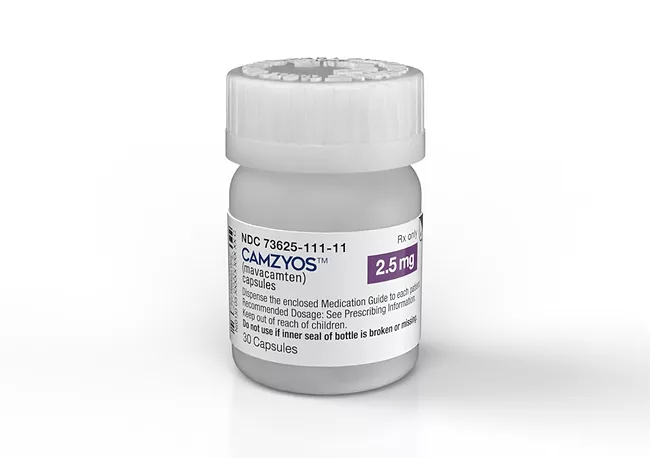
Bristol Myers Squibb Co.’s audacious $13.1 billion 2020 takeover of Myokardia Inc. appears to have paid off with U.S. FDA approval of the drug at the heart of the deal, mavacamten. The medicine, a cardiac myosin inhibitor for treating adults with obstructive hypertrophic cardiomyopathy (HCM), will be marketed under the brand name Camzyos.
In his second stint as U.S. FDA commissioner, Robert Califf discussed the challenges in leading a massive agency that has seen seven commissioners come and go over the past 10 years.
 RSS
RSS