Among the latest guidances pouring out from the U.S. FDA are ones addressing development programs for hormone analogues intended to treat advanced prostate cancer and prescription drug importation from Canada.
A rule forcing the FDA and other agencies in the U.S. Department of Health and Human Services (HHS) to evaluate and clean out old regulations will never see the light of day.
A lengthy trial over two generic drug manufacturers’ alleged role in fueling the opioid epidemic in West Virginia came to an end this week when the U.S. affiliate of Teva Pharmaceuticals Ltd. and Allergan, now part of Abbvie Inc., agreed to a settlement totaling more than $161.5 million.
Ignoring congressional sentiment, U.S. Health and Human Services Secretary Xavier Becerra announced the formal establishment of the Advanced Research Project Agency for Health as an independent entity within the NIH.
About $1.7 trillion in securities of China-based issuers listed on U.S. exchanges could face trading prohibitions in as little as two years, Y.J. Fischer, director of the U.S. SEC’s Office of International Affairs, warned during remarks at the May 24 annual meeting of the International Council of Securities Associations.
The U.S. FDA has rejected Verrica Pharmaceuticals Inc.’s drug-device combination to treat the viral skin disease molluscum for a third time, losing more ground to a potential rival from Novan Inc., because of continued manufacturing issues. There are no FDA-approved treatments for molluscum contagiosum, which leads to skin-colored or pink lesions and affects around 6 million people in the U.S. annually.
The U.S. FDA’s proposal to restructure the Quality System Regulation (QSR) with ISO 13485, the international quality system standard, is a major shift for affected industry, but there are strictly administrative issues associated with this proposal. Several of those who have commented to the docket have expressed misgivings as to the proposed 12-month compliance deadline upon issuance of a final rule.
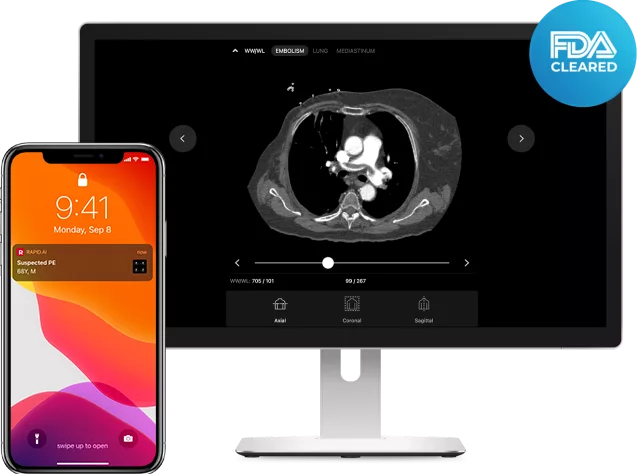
The transformation of cardiology continues with two U.S. FDA actions to promote the use of artificial intelligence (AI): a 510(k) clearance for Rapidai Inc.’s pulmonary embolism (PE) triage and notification product and breakthrough device designation for Anumana Inc.’s pulmonary hypertension (PH) early detection algorithm.
Dermavant Sciences Inc. has received its first FDA approval with the agency’s blessing of Vtama (tapinarof) for treating plaque psoriasis in adults. The treatment is also the first FDA-approved, steroid-free topical medication in its class in addition to being the first psoriasis novel topical chemical entity introduced to the market in the past 25 years.
The U.S. FDA’s approval, in recent years, of new medicines that can fight certain drug-resistant bugs makes it possible to conduct noninferiority trials of potential antibacterial therapies in patients with infections caused by those bugs since active controls are now available.

 RSS
RSS