Medtronic plc acted on the increase in M&A and expansion of its investment ecosystem touted at the J.P. Morgan Healthcare Conference earlier this month with a $90 million infusion into Brisbane, Australia-based Anteris Technologies Global Corp. The investment had been contingent on a public offering of stock by Anteris, which it completed on Jan. 22. Together, the new funds for the biomimetic heart valve company totaled $320 million.
The U.S. FDA’s October 2025 draft guidance for quality management system information in premarket filings may have struck some observers as an example of regulatory overreach, given the robust opposition to several key aspects of the draft on the parts of the Advanced Medical Technology Association and the Medical Device Manufacturers Association.
Nader Pourhassan, the former president and CEO of Cytodyn Inc., was sentenced Jan. 23 to 30 months in prison for his role in a securities fraud scheme to deceive investors about the Vancouver, Wash.-based company’s development of leronlimab as a treatment for HIV and COVID-19.
Although the American Academy of Pediatrics has been releasing guidances on vaccines for decades, the 2026 immunization schedule it issued Jan. 26 is creating some buzz given the U.S. CDC’s newly abbreviated childhood schedule that removed several routine recommendations.
Following a clinical hold last October of Intellia Therapeutics Inc.’s Magnitude and Magnitude-2 phase III trials of CRISPR/Cas9 gene editing therapy nexiguran ziclumeran (nex-z) to treat transthyretin amyloidosis with cardiomyopathy (ATTR-CM) and polyneuropathy (ATTR-PN), respectively, the U.S. FDA lifted the hold on Magnitude-2, pushing the company’s shares up by 22% in early trading Jan. 27.
Cardiff Oncology Inc. welcomed Mani Mohindru as interim CEO and simultaneously provided what the company dubbed a “positive” but stock-denting clinical update. The firm rolled out data from the 113-patient phase II trial called CRDF-004, designed to test the oral Polo-like kinase 1 (PLK1) inhibitor onvansertib in first-line, RAS-mutated metastatic colorectal cancer (mCRC). Shares (NASDAQ:CRDF) closed Jan. 27 at $2, down 94 cents, or 32%, as Wall Street took in the results.
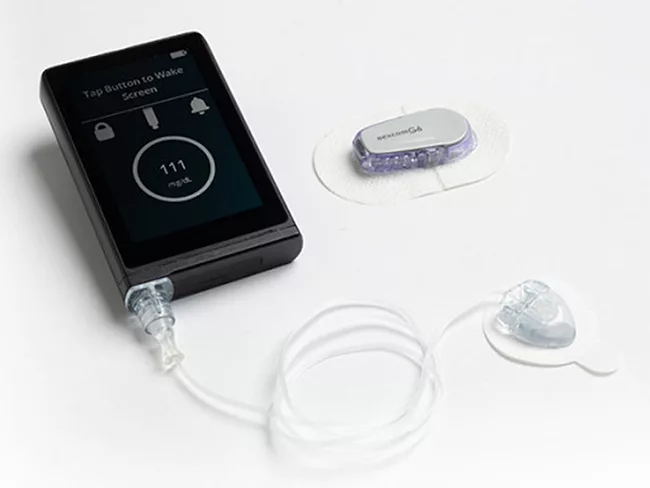
Beta Bionics Inc.’s preliminary results for its first full year as a public company offered an early read on developments and market positioning in the insulin pump and patch market, with analysts pointing to steady growth, rising pharmacy channel penetration and intensifying pressure as more products target both type 1 and type 2 diabetes.
The U.S. FDA’s Center for Biologics Evaluation and Research posted four warning letters to makers of HIV sample collection kits, an example of a shift in FDA enforcement in the IVD space that is still allowed after a historical loss in court.
The U.S. FDA’s device center posted a report on the TAP program, stating that the metrics available to date suggest the program is a rousing success. Still, there are a few key indicators that have not yet had time to emerge – such as product approvals and clearances, but those data points won’t emerge for another year or two at the inside.
After selling off amyotrophic lateral sclerosis therapeutics last month, Tanabe Pharma America Inc. emerged a forerunner in another rare disease space with positive top-line phase III data of dersimelagon (MT-7117) for erythropoietic protoporphyria/X-linked protoporphyria.
 RSS
RSS