The U.S. FDA’s final rule for regulation of lab-developed tests was destined to be controversial at best and exceptionally susceptible to legal challenge according to more than one legal opinion. The inevitable legal challenge succeeded wildly in a decision rendered in district court in March 2025, marking one of the rare instances in which the courts thwarted FDA rulemaking and thus is easily the regulatory story of the year for 2025. Attempts to regulate AI in the U.S. and Europe also dominated the regulatory landscape.
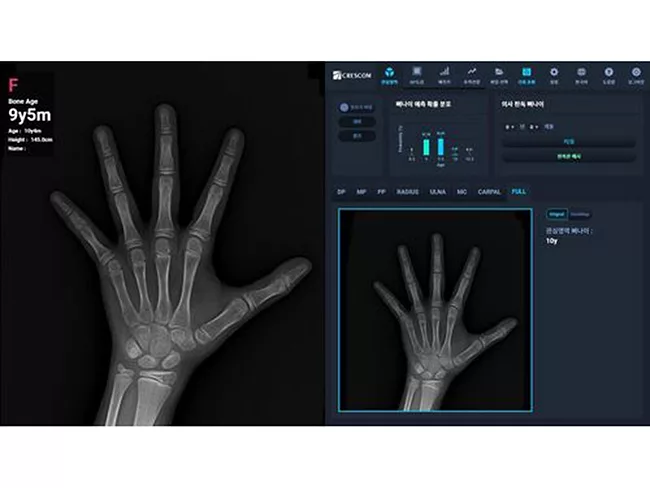
Crescom Co. Ltd., an AI musculoskeletal imaging company, gained U.S. FDA 510(k) clearance Dec. 24 for MediAI-BA, its AI-powered pediatric and adolescent bone age analysis software.
Classified as a class II medical device, MediAI-BA evaluates bone age and suggests predicted adult height based on growth plate status assessed by hand and wrist X-ray imaging. Prior clinical trial results demonstrated MediAI-BA had specialist-level accuracy, recording a mean absolute deviation (MAD) of 0.39 years.
In a letter to the hemophilia community, Pfizer Inc. reported a death due to cerebellar infarction and subsequent cerebral hemorrhage in a long-term extension trial participant taking the New York-based company’s tissue factor pathway inhibitor antagonist Hympavzi (marstacimab).
After being unanimously passed by the U.S. House Dec. 1, the bipartisan Mikaela Naylon Give Kids a Chance Act seemed to be headed for sure passage in the Senate before it adjourned late last week.
Six individuals, including an investment banker, face multiple U.S. charges stemming from an alleged $41 million insider-trading scheme, plus stock manipulation schemes involving biopharma companies. The charges are related to three overlapping securities fraud schemes that occurred between June 2020 and February 2024.
Shionogi & Co. Ltd. will acquire global rights to U.S. FDA approved amyotrophic lateral sclerosis therapy edaravone through a $2.5 billion acquisition deal with Tanabe Pharma Corp. Under the terms, Tanabe will form a new entity harboring both oral and intravenous (I.V.) infusion formulations of edaravone that are marketed in the U.S. as Radicava ORS and I.V. Radicava.
Needle-phobic obesity patients got their first workaround with the U.S. FDA clearance of Novo Nordisk A/S’ once-daily GLP-1 Wegovy (semaglutide) pill, the first of its kind.
Payers had their hands full in 2025 dealing with the raft of medical technologies that came through the globe’s regulatory review processes, although the nature of many of those challenges were conventional. On the other hand, payers struggled to keep pace with both the volume of conventional devices and the novelty of AI-driven devices in 2025, a problem that will carry over into the coming year.
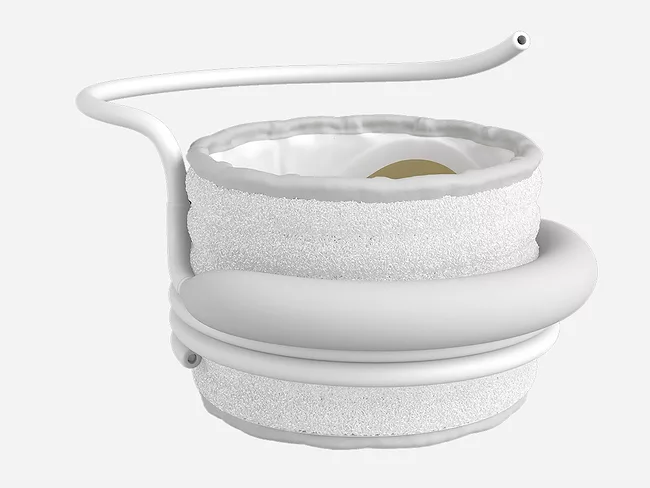
Edwards Lifesciences Corp. received U.S. FDA approval for its Sapien M3 mitral valve replacement system, making it the first transcatheter therapy utilizing a transseptal approach to be indicated for treatment of mitral regurgitation (MR). The Sapien M3 transcatheter mitral valve replacement system is indicated for the treatment of patients with symptomatic moderate-to-severe or severe MR or symptomatic mitral valve dysfunction who are deemed unsuitable for surgery or TEER by a multidisciplinary heart team.
The U.S. Securities and Exchange Commission announced Dec. 23 that Bryan Scott McMillen has agreed to pay a total of more than $140,000 due to allegations of insider trading in connection with Boston Scientific Corp.’s acquisition of Apollo Endosurgery Inc. The failure of federal authorities to prosecute McMillan under the criminal code may be a reflection of the relatively small sums he had illicitly obtained in the transaction. A Department of Justice investigation resulted in a conviction for $1 billion in health care fraud.
 RSS
RSS