Boston Scientific Corp. continued its journey down the acquisition highway with its announced plan to acquire stroke products maker Silk Road Medical Inc. for $27.50 a share, or approximately $1.16 billion.
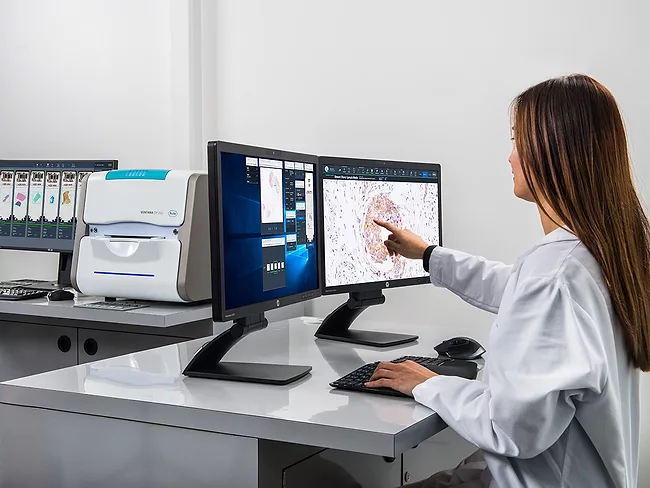
The U.S. FDA cleared Basel, Switzerland-based Roche Holding AG’s whole-slide imaging system, the Roche Digital Pathology Dx, for use as an aid in clinical diagnosis. The system helps pathologists review and interpret digital images of scanned pathology slides.
An interdisciplinary team of researchers from the University of Arkansas have filed for protection of an optical sensing platform and method for synovial fluid analysis to reduce diagnosis time leading to quicker results for doctors and patients. Their innovation allows for faster and non-destructive evaluation of biological samples.
For the time being, Madrigal Pharmaceuticals Inc.’s Rezdiffra (resmetirom) stands alone as the only U.S. FDA approved treatment for treating nonalcoholic steatohepatitis (NASH). But new and positive data from multiple companies show Madrigal may soon have company.
Becoming the first pneumococcal conjugate vaccine specifically designed for adults 18 and older, Merck & Co. Inc.’s 21-valent candidate, Capvaxive (V-116), gained U.S. FDA approval on its June 17 PDUFA date. The Rahway, N.J.-based company expects to take significant market share based on positive phase III findings from the Stride-3 trial. Analysts have estimated the product could reach $2 billion in annual global sales.
As competition rises in the Keytruda (pembrolizumab) biosimilar space, Celltrion Inc. is the latest to announce that it filed an IND application to the U.S. FDA to start a global phase III trial for its own Keytruda biosimilar, dubbed CT-P51. Incheon, South Korea-based Celltrion, which previously said it would differentiate from the pack by developing an easier-to-administer subcutaneous biosimilar of pembrolizumab, announced June 17 plans to start a global comparative phase III study of CT-P51 and Keytruda.
With all the criticism the U.S. NIH has been getting of late, it’s not surprising that yet another reform proposal for the research agency is brewing in Congress. In unveiling a proposed framework to reform the NIH, House Energy and Commerce Committee Chair Cathy McMorris Rodgers (R-Wash.) recognized the critical role the agency plays in life-saving medical research and innovation.
Elutia Inc. received U.S. FDA clearance for its antibiotic-eluting bioenvelope. Designed to prevent post-operative complications from the implantation of cardiac devices such as pacemakers and defibrillators, Elupro (formerly Cangaroo RM) combines slow release of the antibiotics rifampin and minocycline with a biomatrix that stimulates regeneration of a tissue pocket to surround and protect the device.
For the third time in as many years, Health Canada, the U.S. FDA and the UK Medicines and Health Care Products Regulatory Agency have teamed up to issue a set of recommendations for artificial intelligence used in or as a medical device.
Criticisms over the U.S. FDA’s use of advisory committees led the agency to hold a June 13 public hearing during which FDA commissioner Bob Califf said the agency is working to improve the experience of special government employees who take part in these hearings.
 RSS
RSS